 EasyTicket
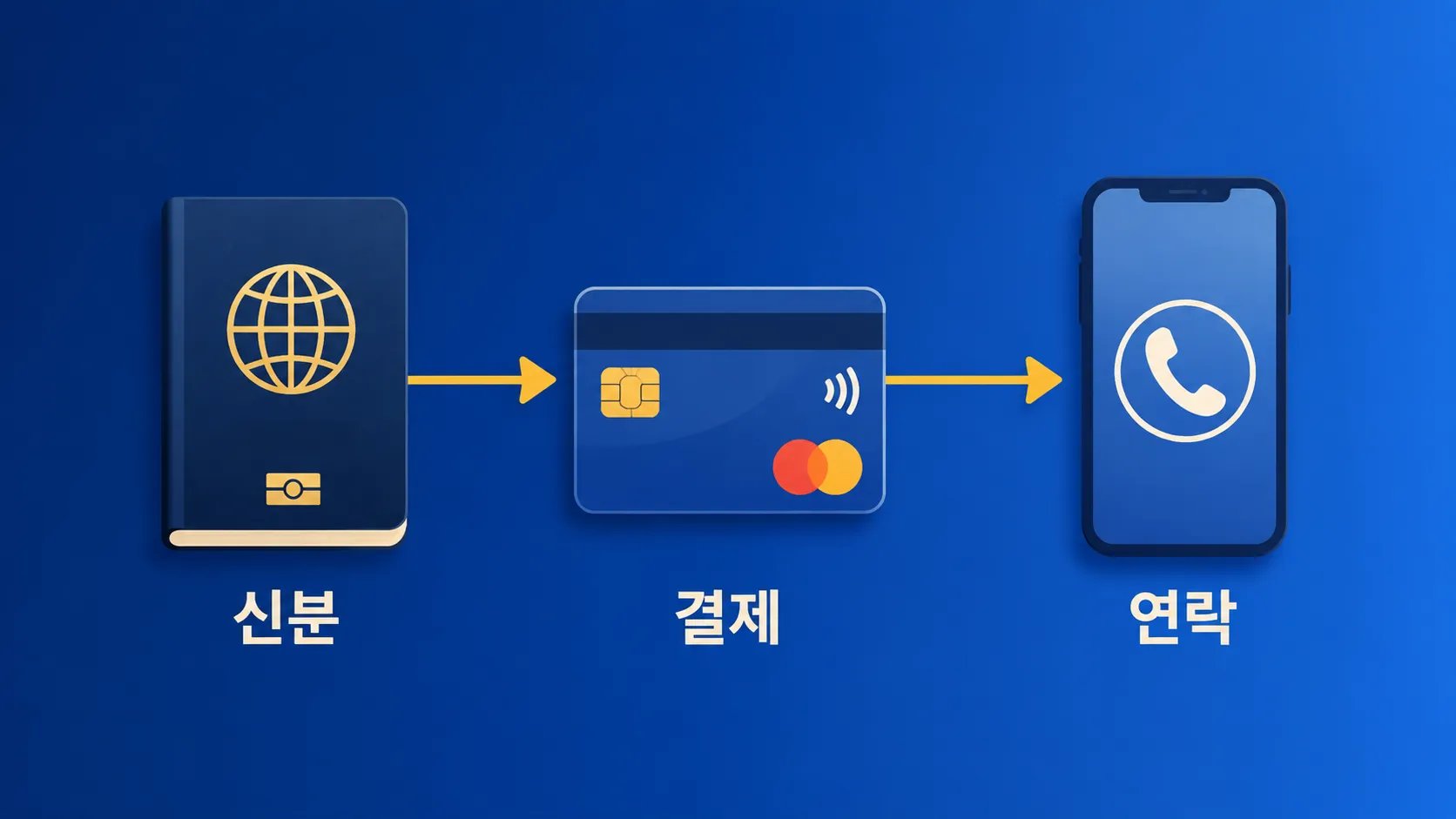
 Overseas travel essentials start with your passport, entry documents, payment methods, and mobile phone, before clothes. I’ve put the list in the order of what can block your departure or trip entirely if it’s missing; items you can manage without can wait.
✅ Your passport and entry documents come first
Check your passport’s validity first
Many countries require a passport valid for at least six months when you enter. Requirements vary, though, so check your destination under the Ministry of Foreign Affairs’ country-specific entry requirements. Compare the English name on your ticket with the romanized name in your passport, letter by letter. (Source: Ministry of Foreign Affairs Passport Information)
Keep visas and entry requirements together
Check your visa or electronic travel authorization, round-trip ticket, and accommodation address, and save them as PDFs or screenshots on your phone. When making an overseas travel essentials checklist, split the documents between a “passport pouch” and an “offline file” so you’ll still be able to cope if the internet goes down.
Don’t forget your travel insurance certificate
The Ministry of Foreign Affairs advises travelers to take out travel insurance before departure in case of accidents and illness abroad. If you’re insured, keep your policy certificate, coverage details, and emergency contact information offline.
📌 Payment and communication tools come next
Spread your payment cards across two cards
Keeping two cards from different payment networks and some small cash in separate places is practical. Check your card issuer’s overseas-use settings and make sure you can log in to its app before leaving Korea.
Prepare for phone verification too
Save screenshots of how to activate your eSIM or roaming service, the activation QR code, and your accommodation’s contact details. When you’re planning your itinerary, forgetting a charging cable or a way to verify your identity can throw off your route more than forgetting clothes.
✈️ Carry-on: what’s allowed and what’s prohibited
Don’t put power banks in checked baggage
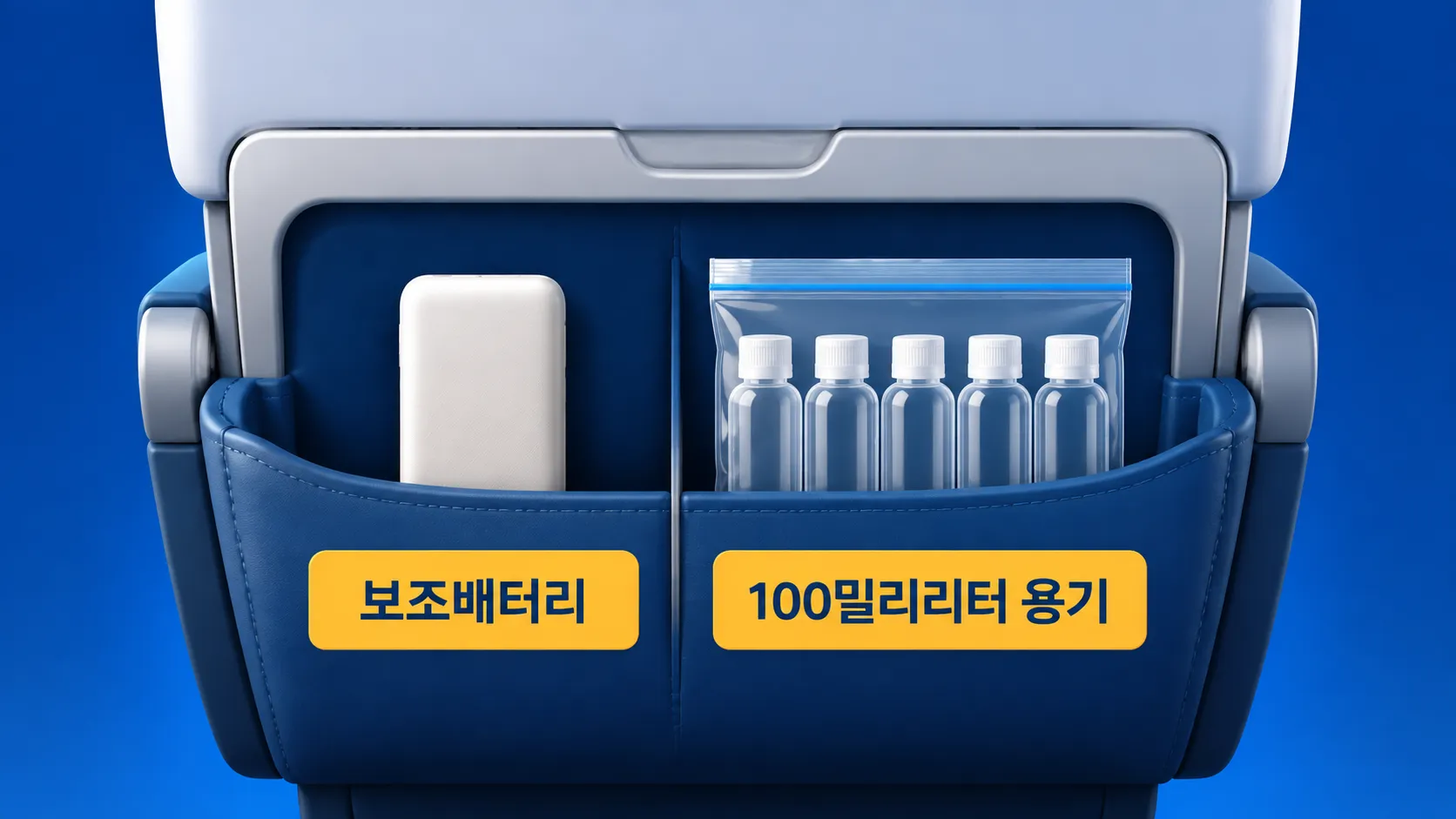
Under Incheon Airport guidance, each passenger may bring up to two power banks rated 160 Wh or less; those over 100 Wh and up to 160 Wh require airline approval. Power banks are prohibited in checked baggage; after insulating the terminals, keep them on your person or in the seat-back pocket. You also can’t use or charge them in the cabin or store them in the overhead bin. (Source: Incheon International Airport)
For liquids, look at the container size, not the contents
On international flights, liquids, sprays, and gels must be in containers of 100 ml or less each and fit into one 1 L clear zip-top bag to be carried on board. The table below reflects departures from Incheon Airport; check the destination country’s customs rules for bringing in food and medicines separately.
| Item | Carry-on | Checked baggage |
|---|---|---|
| Passport and airline ticket | Allowed; keep with you | Not recommended due to risk of loss |
| Power bank | Conditionally allowed if 160 Wh or less | Prohibited |
| Liquids and gels | Containers of 100 ml or less; 1 L bag | Allowed |
| Knives, hammers, and other hazardous items | Prohibited | Allowed depending on the item |
| Flammable gases and radioactive materials | Prohibited | Prohibited |
💡 Packing for an overseas trip takes just 3 steps
Pack what would stop your trip first
Start with your passport, visa, payment methods, mobile phone, and essential medicines; add your charger and travel adapter next. Check the destination country’s rules for bringing medicine in, including whether you need a prescription or English-language documentation.
Leave items you can buy locally until last
Items you can buy locally, such as clothes, toiletries, and an umbrella, come last. If space is tight, it’s safest to cut items that won’t affect your identification, payment, or communication.
📋 Final checklist 24 hours before departure
Check before you close your bag
- Original passport and validity
- Visa, electronic travel authorization, and entry requirements
- English name on your airline ticket
- Two cards and a small amount of cash
- Insurance certificate and emergency contact information
- Insulate the power bank terminals
- 100 ml liquid containers and a 1 L zip-top bag
Check once at each of three points
Check your passport and power bank three times in total: before leaving home, after arriving at the airport, and before checking your baggage. Comparing them with your baggage tag, these are the two items among your overseas travel essentials that cause the most trouble when their position in your bag changes.
🔍 Overseas travel essentials FAQ
If my passport is valid for less than six months, can I still leave the country?
Not all countries use the same standard. First check your destination’s required remaining passport validity and visa conditions under the Ministry of Foreign Affairs’ country-specific entry requirements.
Can I bring kimchi or gochujang in a small container?
Foods in liquid or gel form must also be in containers of 100 ml or less and fit in a 1 L zip-top bag. Even when food is allowed on the aircraft, the destination country’s quarantine or customs authorities may restrict it.
Can I put a power bank in the overhead bin?
No. Under Incheon Airport guidance effective April 20, 2026, keep it on your person or in the seat-back pocket, and don’t use or charge it in the cabin.
Overseas travel essentials aren’t about packing as much as possible—the key is making sure you have the items you can’t travel without. Check your passport’s expiration date and where your power bank is right now.