 EasyTicket
 Bottom line: for Japan, the best setup is a travel card for payments and a bank-app exchange with a 90% rate benefit for cash only. Airport counters and regular-card ATMs are best reserved for when you’re in a hurry.
💰 Comparing the Total Cost of Exchanging ¥100,000 for Japan
Calculation Basis
We fixed the assumptions at ¥100,000, a reference rate of 100 yen = KRW 900, a 1.75% cash spread, and USD 1 = KRW 1,400. This comparison model includes a 0% airport rate benefit and a ¥220 Seven Bank ATM fee; it isn’t an actual quote.
What the Fee Comparison Shows
| Method | Fee calculation | Total cost |
|---|---|---|
| Korean bank app cash | KRW 900,000 + remaining spread 0.175% | KRW 901,575 |
| Airport exchange counter | KRW 900,000 + 1.75% spread | KRW 915,750 |
| Local ATM, regular KB Mastercard | KRW 900,000 + 1% + USD 3 + JPY 220 | KRW 915,180 |
| Travel card payment | 100% rate benefit · payment fee waived | KRW 900,000 |
| Travel card ATM | Same conditions + local operator fee of JPY 220 | KRW 901,980 |
Regular-card ATM withdrawals also reflect the card network exchange rate and the telegraphic transfer selling rate. Check the real-time total on the ATM screen and in your card app.
The comparison makes one thing clear: whether you apply in advance and which card you use determine the cost.
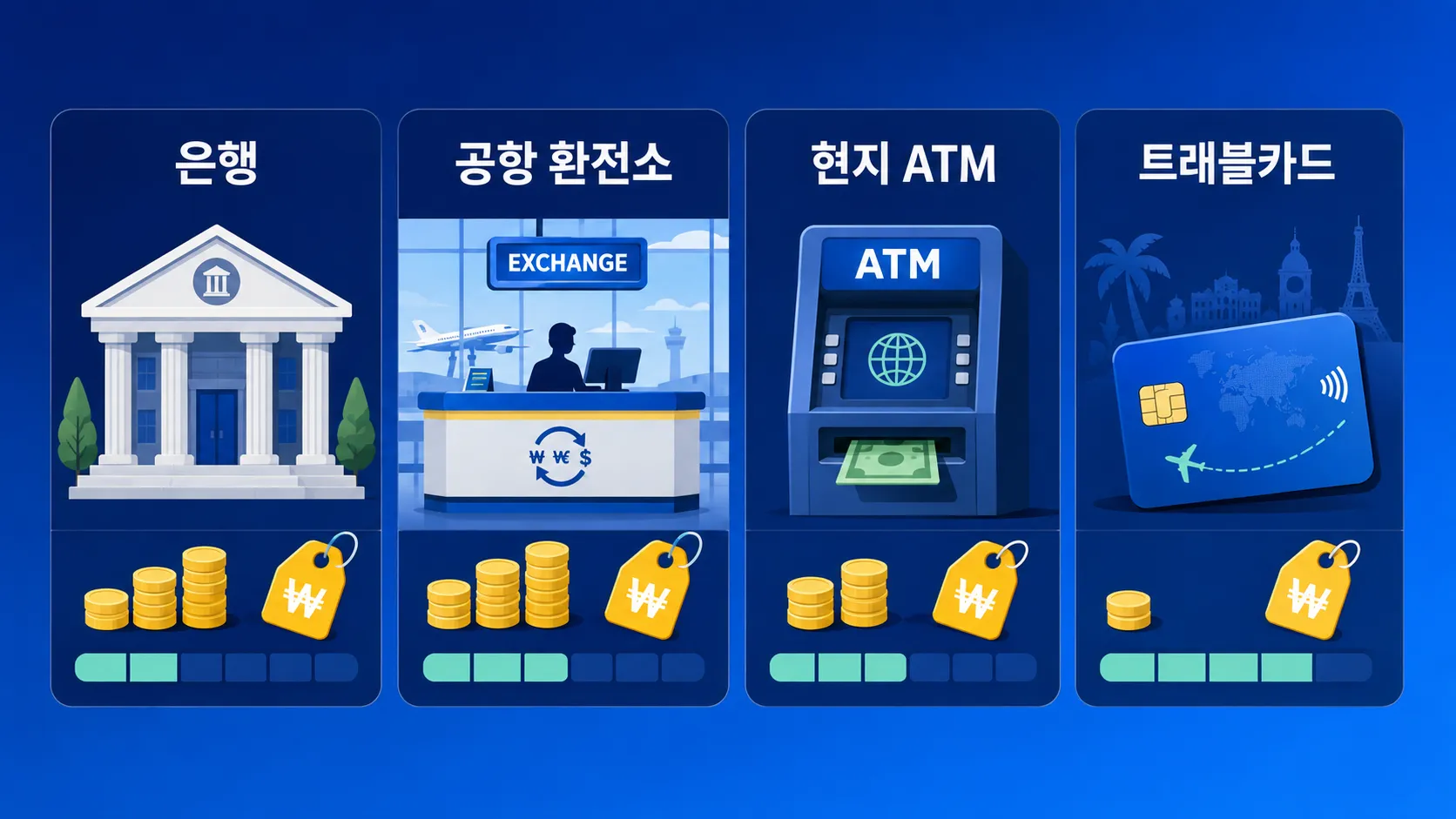
🔍 Fee Structures for Four Currency-Exchange Methods
Korean Banks and the Airport
KB’s online yen exchange offers a 90% rate benefit. Picking up your cash at the airport after applying in the app is different from exchanging money at an airport counter on the spot.
Local ATMs and Travel Cards
A regular KB Mastercard debit card adds 1% plus USD 3 per transaction. Travelog offers a 100% JPY rate benefit and waives the card issuer’s overseas payment and ATM fees, but the local operator fee is separate.
✅ Recommended Ways to Prepare in Korea
Exchange in the App, Then Pick Up at the Airport
KB offers a 90% rate benefit on yen and pickup at Incheon Airport. You can’t collect it in the duty-free area after immigration, so pick it up beforehand.
Split the Roles of Cash and Cards
Use cards at restaurants and convenience stores, and cash at small shops and for transit-card top-ups. Also check your card PIN and overseas-use settings.
⚠️ How to Use ATMs in Japan and What to Watch Out For
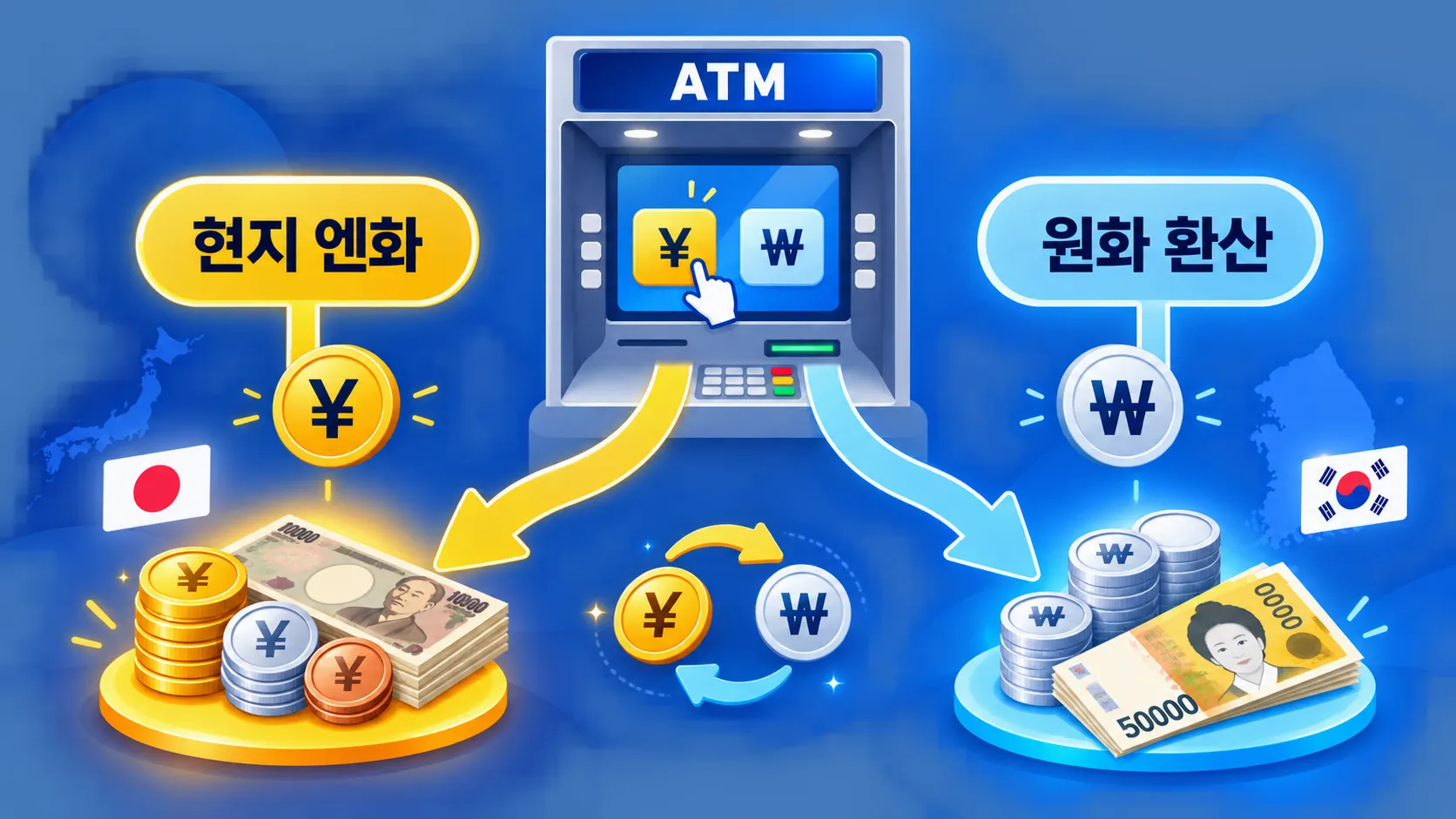
Choose Yen for DCC
If you’re asked to choose between won and yen as the payment currency, choose yen. Paying in won is DCC, where the ATM operator’s exchange rate is used to finalize the transaction.
Seven Bank Limits and Hours
Foreign-issued cards have a per-transaction limit of JPY 100,000, and Visa and Mastercard generally work 24 hours. Check the fee for your specific card before the transaction is approved.
🍜 Cash Strategy for Food Purchases
Osaka and Hiroshima Food Routes
If you’re looking for okonomiyaki in Osaka and Hiroshima, or monjayaki restaurants in Tokyo’s Tsukishima, check the payment-method signs at the entrance first.
Backup Cash for When Cards Don’t Work
The Japan National Tourism Organization (JNTO) says cash-only spots still exist at small shops and in regional areas. Keep some cash for topping up transit IC cards too.
📋 Choosing by Pros and Cons + Pre-Departure Checklist
Recommendations by Situation
For low fees, choose a travel card; for cash, use a bank app with a 90% benefit; for emergency withdrawals, an ATM works best. Airport counters come with a high convenience premium.
Pre-Departure Checklist
- Check the app’s actual applied yen exchange rate
- Confirm the airport pickup location and hours
- Set up overseas use and the PIN for your card
- Choose yen payment at the ATM
❓ Japan Currency Exchange FAQ
Is Picking It Up at the Airport Always More Expensive?
Not necessarily. If you apply through the app with a 90% rate benefit, airport pickup uses the app’s terms too.
Can I Withdraw JPY 100,000 from a Local ATM?
Seven Bank’s limit is JPY 100,000, or JPY 30,000 for magnetic-stripe transactions, but your card limit and fees are separate.
How Can I Use Up Leftover Yen?
Use cash first for meals and transport, and check the re-exchange fee before converting any remaining card balance back to won.
For this Japan currency exchange, go with cards as the main option and cash as backup, and check the applicable exchange rate just before you leave.