 EasyTicket
 If the goal is a once-in-a-lifetime Mount Fuji photo, a good order is Arakurayama Sengen Park in the morning and Oishi Park for lake views. I’ve laid out time-of-day tactics and transport costs so clouds don’t ruin your shots.
Comparing the Roles of Two Kawaguchiko Photo Spots
| Shooting Spot | What the Frame Highlights | Basic Access | Confirmed Cost |
|---|---|---|---|
| Oishi Park | Lake Kawaguchi · Mount Fuji · seasonal flowers | 30-minute bus ride from Kawaguchiko Station | Free admission |
| Arakurayama Sengen Park | Chureito Pagoda · Mount Fuji · cherry blossoms | 30-minute walk from Shimoyoshida Station to the viewpoint | Free admission; one-way train fare from Kawaguchiko Station 310 yen |
Oishi Park Is All About a Wide Lake Composition
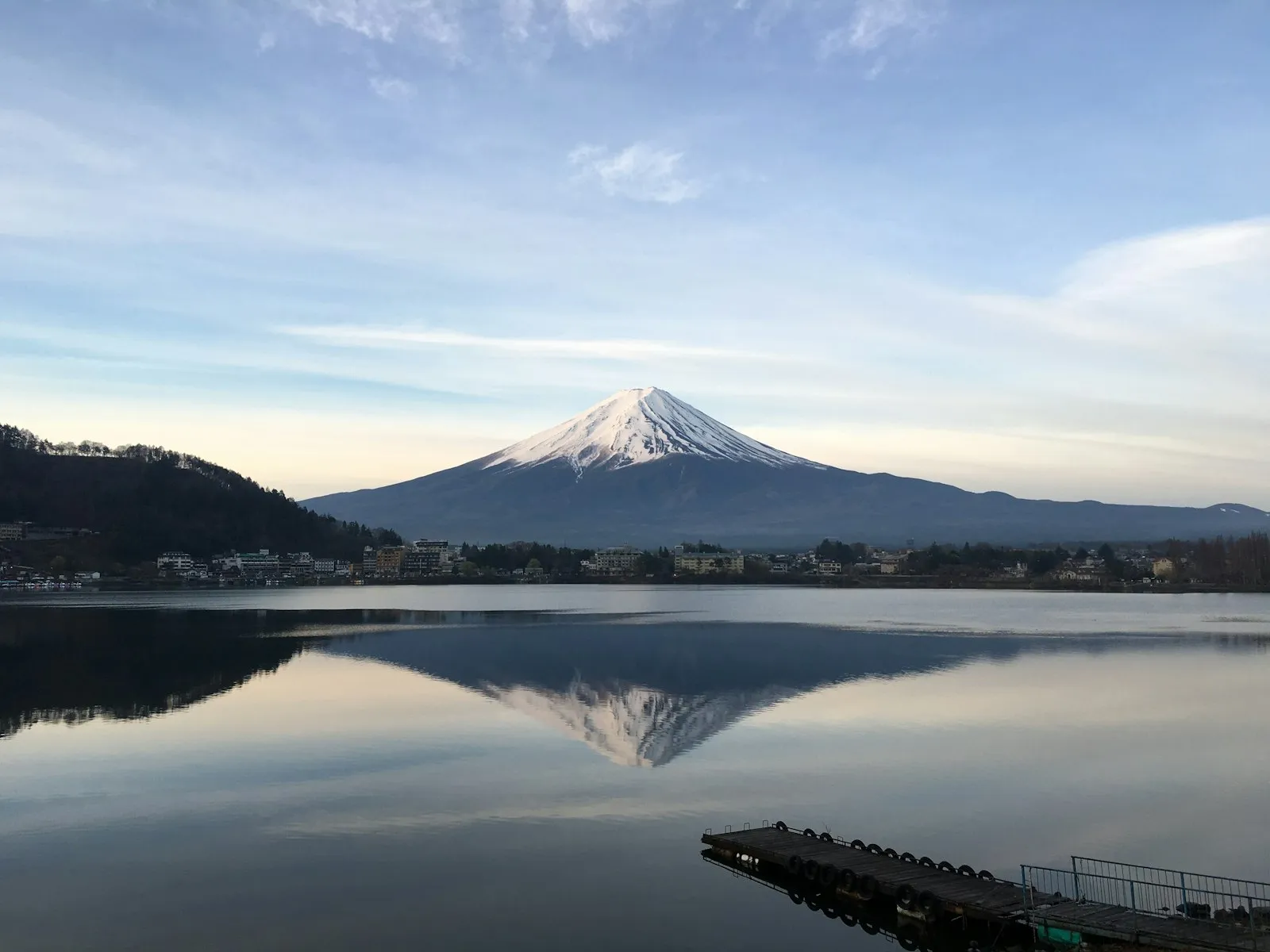
Oishi Park is a Kawaguchiko photo spot where you can capture the lake and Mount Fuji together. Instead of filling the frame with cherry blossoms alone, use the open lake and seasonal flowers in the foreground so Mount Fuji doesn’t feel cramped.
Arakurayama Is the Signature Cherry-Blossom Frame
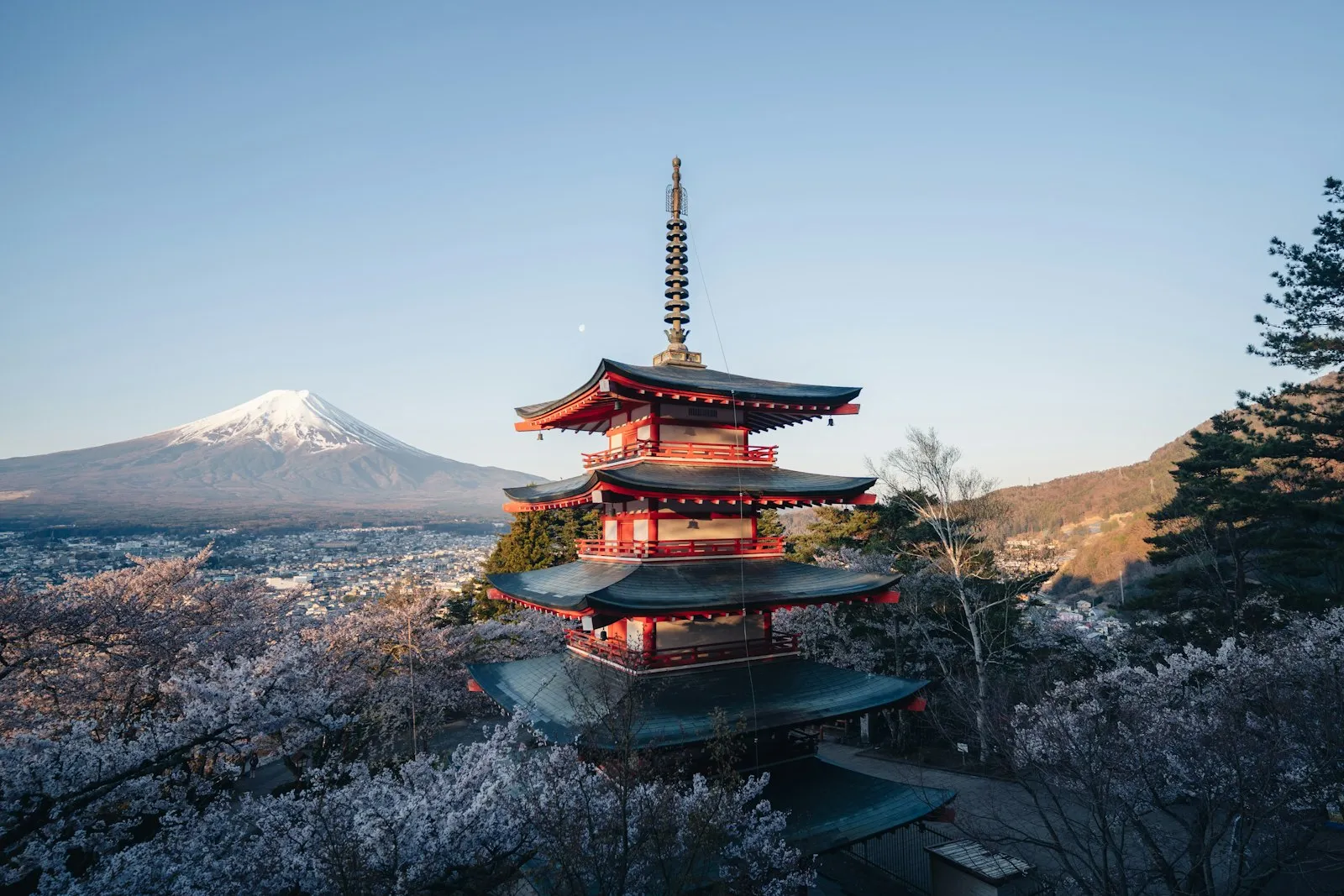
Arakurayama Sengen Park brings the Chureito Pagoda, Mount Fuji framed by cherry blossoms, and the townscape together in one shot. If you’re willing to deal with the stairs and wait, it’s one of the best places to aim for an unmistakably Japanese Mount Fuji-and-cherry-blossom photo.
Oishi Park is for lake scenery, while Arakurayama Sengen Park is for the Chureito Pagoda and cherry blossoms. Rather than repeating the same kind of photo, treat the two places as one set.
How to Plan Mount Fuji Cherry-Blossom Views by Time of Day
Just After Sunrise~Morning: Prioritize Arakurayama
You can’t put a precise number on the odds of seeing Mount Fuji. Still, it’s best to assign the period just after sunrise through the morning to Arakurayama Sengen Park, and count the queue for the viewpoint as part of your shooting time. During cherry-blossom season and on clear days, a line may form to enter the viewpoint.
Midday~Sunset: Move to Oishi Park
Clouds are often the biggest scheduling headache, because they can roll in as the day goes on. At the far end of Oishi Park’s parking lot, a live camera shows Mount Fuji, weather, and crowd levels. Check it just before setting out and again before moving on; if the mountain is hidden, switching from photography to café or meal time is the efficient move. The Chureito Pagoda is illuminated from around sunset until 10 PM.
How to Photograph Oishi Park
Keep the Lake Wide and the Foreground Flowers Low
At Oishi Park, try including the lake horizon and flower paths instead of zooming in on just Mount Fuji’s summit. The Kawaguchiko Natural Living Center bus stop connects directly to the park, so the route stays simple even for travelers carrying camera gear.
Leave Plenty of Time for the Bus Ride
The bus from Kawaguchiko Station to Oishi Park is listed as a 30-minute ride. Admission is free, but leave extra time before and after shooting for setting up your gear and walking along the lakeshore.
Arakurayama Sengen Park Cherry-Blossom View Strategy
Plan for 398 Steps to the Viewpoint
The climb to the viewpoint is 398 steps. Since the walk from Shimoyoshida Station to the viewpoint is listed as 30 minutes, leave large suitcases at your accommodation or the station’s luggage storage and bring only your camera bag.
Keep the Pagoda Centered
Among Kawaguchiko’s photo spots, this is a place where it’s important to settle on a composition quickly if you’ve already waited in line. Place the Chureito Pagoda in the lower center of the frame, and adjust your position so the summit of Mount Fuji and cherry branches don’t crowd the space above it. On clear days and during cherry-blossom season, plan around the possibility of a wait at the viewpoint.
Comparing Transit Passes, Currency Exchange, and eSIM Costs
Choose a Pass Based on How Often You’ll Ride
| Option | Adult Fare | Validity / Coverage |
|---|---|---|
| Kawaguchiko, Saiko, and Motosuko 1-Day Pass | 1,500 yen | Unlimited rides on covered loop buses |
| Kawaguchiko, Saiko, and Motosuko 2-Day Pass | 2,000 yen | Unlimited covered loop-bus rides for two days |
| Mount Fuji–Fuji Five Lakes Pass | 3,300 yen | Covers buses for two days and the train segment from Kawaguchiko Station~Shimoyoshida Station |
If you’re only making a round trip to Oishi Park, compare the pass with paying for individual rides. If you’re combining it with Arakurayama Sengen Park on the same day, be sure to check whether the train segment is included. The Mount Fuji–Fuji Five Lakes Pass includes the Kawaguchiko Station~Shimoyoshida Station segment, making it convenient for linking the two photo spots. (Source: Fujikyu Bus)
Divide Roles Among Cash, a Travel Card, and an eSIM
A new TOICA card costs 2,000 yen: 500 yen is a deposit, leaving 1,500 yen in usable balance. New cards can be purchased with cash only, and you can top up up to 20,000 yen. However, bus passes and individual transport services may have different payment rules, so check first whether the pass is available via mobile or at a counter, and carry cash separately. (Source: JR Central)
An eSIM matters when you need to check the Oishi Park live camera, maps, and train or bus timetables locally. Before leaving home, check your travel card’s transaction currency and fee terms; on a cherry-blossom photography day, prioritize maps and camera backups over data-saving mode.
Precautions and Checklist for Your Once-in-a-Lifetime Mount Fuji Shot
Vehicles Don’t Go All the Way to the Park Entrance
Visitors are asked to refrain from driving as far as the plaza in front of the Chureito Pagoda at Arakurayama Sengen Park. P1 parking is expected to be crowded during cherry-blossom season, and it’s a 5~10-minute walk from the P2, P3, and P4 parking lots to the park entrance.
Check Safety Around Dawn and Sunset
Fujiyoshida City posts information about bear sightings around the park. Visitor numbers may drop especially in the early morning and around sunset, so instead of heading alone into secluded areas, move on right after taking your photos.
- Check the summit of Mount Fuji on Oishi Park’s live camera just before departure
- Pack light for Arakurayama’s 398 steps
- Build the viewpoint wait into your schedule during cherry-blossom season
- Check the bus-pass coverage and whether the train segment to Shimoyoshida Station is included
- Check your cash, transit payment method, and eSIM data
FAQ: Common Questions That Come Up at Kawaguchiko Photo Spots
Is Parking Easy at Arakurayama Sengen Park During Cherry-Blossom Season?
P1 can be especially crowded during cherry-blossom and autumn-foliage seasons. Check P2, P3, and P4 from the official guidance first, and build the 5~10-minute walk to the park entrance into your schedule. It’s safest to check the official notice again each year for traffic restrictions during the blooming period.
Can I Photograph Both Oishi Park and Arakurayama Sengen Park in One Day?
Yes, but for a photography-focused itinerary, it’s better to start at Arakurayama Sengen Park and move to Oishi Park. Even visiting only these two involves a 30-minute walk from Shimoyoshida Station to the viewpoint and a 30-minute bus ride to Oishi Park, so don’t leave out time to sort through your photos.
Does the Mount Fuji–Fuji Five Lakes Pass Suit These Two Places?
If you’ll use buses and the Kawaguchiko Station~Shimoyoshida Station train segment over two days, the 3,300-yen pass is the direct option. If you’re only visiting Oishi Park or won’t ride much, compare actual rides against the 1-day 1,500-yen and 2-day 2,000-yen loop-bus passes.
For Mount Fuji cherry-blossom photos, you’re more likely to be satisfied by completing one scene at a time during the hours when the mountain is clear than by cramming in lots of places. Split the two Kawaguchiko photo spots by role, and start by checking the live camera just before you leave.