 EasyTicket
 If the Northern Lights are your top priority in Iceland, November~February offers longer nights for viewing. But if you also want a rental-car trip around the Ring Road, October or March is a better-balanced choice between darkness and winter driving.
📌 Comparing Iceland’s Northern Lights Season: October~March
The official season isn’t the same as the best time to go
The official Northern Lights season runs from late August through late April. But if you’re planning to combine the Northern Lights with the Ring Road, it’s more practical to compare October~March rather than the edges of the season. When planning an itinerary, the darkest months may look like the obvious choice, but you also need to consider how much daylight you’ll have for sightseeing and driving and what the roads will be like.
It’s not polar night, but the days are very short
Reykjavik lies just south of the Arctic Circle, so it doesn’t experience a strict polar night when the sun never rises. Around the winter solstice, though, daylight lasts just over 4 hours, making it difficult to finish sightseeing and long drives in the middle of the day.
| Period | Aurora conditions | Ring Road considerations | Best for |
|---|---|---|---|
| October and March | Within the official viewing season, with plenty of darkness | Snow and icy roads are still possible | Travelers who want both the Northern Lights and a road trip |
| November~February | Longer nights mean more time for viewing | Short days, ice, and a higher risk of sudden closures | Experienced winter drivers or travelers who prefer guided tours |
🔍 How to Improve Your Chances of Seeing the Northern Lights
Check the clouds before the Kp index
Seeing the Northern Lights in Iceland requires both darkness and clear or partly clear skies. The Icelandic Meteorological Office’s map marks clear areas in white and cloudy areas in green, while showing the activity index on a scale from 0~9. You can still see the lights when the index is as low as 2, so waiting only for a high number can make you miss your chance.
Keep 10 p.m. to 1 a.m. free
Official tourism guidance says the Northern Lights often appear around 11 p.m. on average, so it recommends staying outside from 10 p.m. to 1 a.m. Rather than putting all your hopes on one night, leave viewing windows open across several nights and plan to change destinations based on the day’s cloud map.
🚙 Ring Road rental cars: pros, cons, and winter-driving calls
Set your turnaround rules before aiming to complete 1,322 km
The Ring Road, marked as Route 1 on maps, is a 1,322-km circular road. In winter, unpredictable weather, icy roads, and short days can put even experienced drivers at risk, and storms can lead to sudden road closures. An official road closure isn’t a schedule delay—it’s a signal to stop driving.
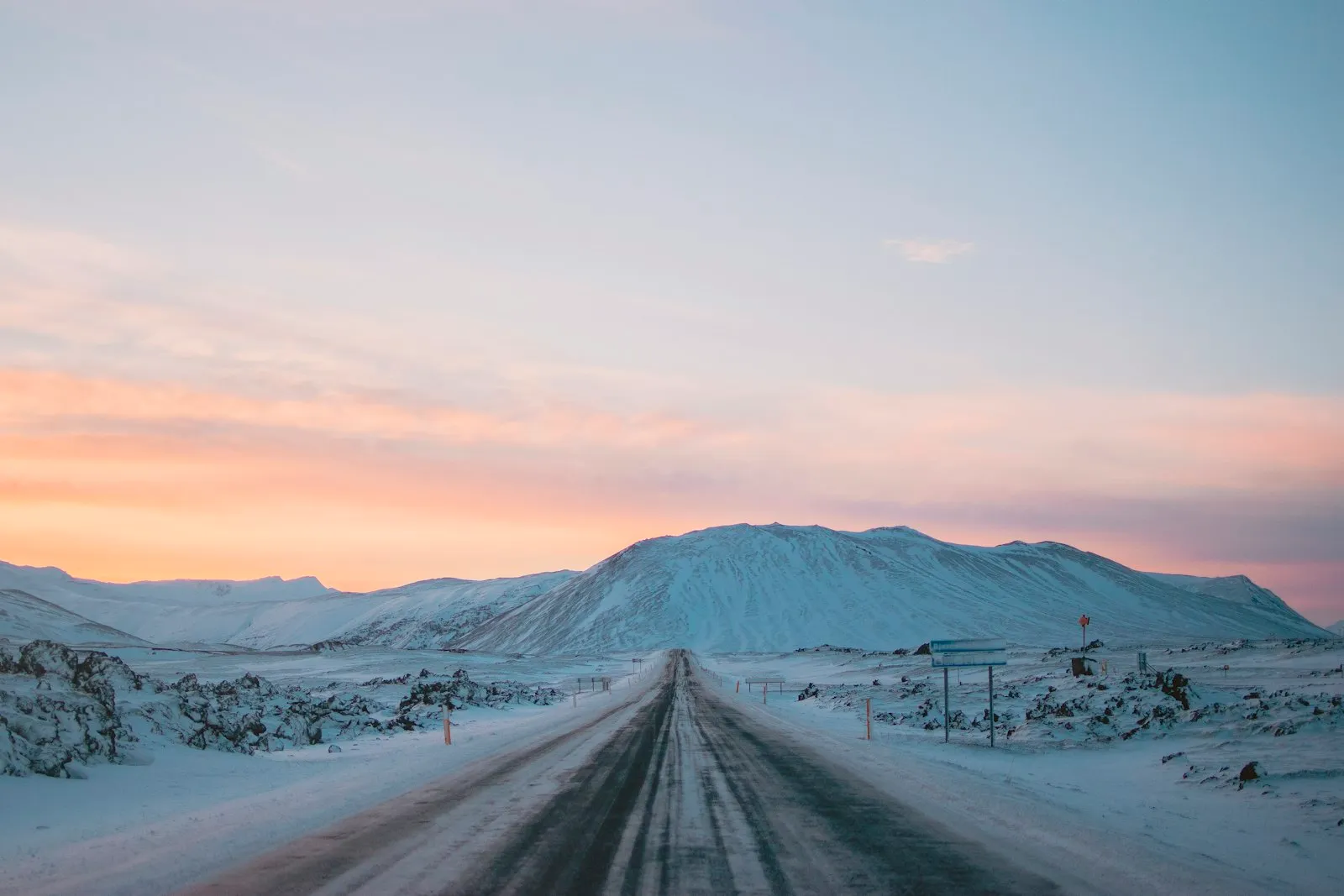
A 4WD won’t eliminate ice or strong winds
When choosing a rental car for the Ring Road, check the contract for winter tires, drivetrain, insurance excess terms, and emergency contact details before comparing vehicle class. If you’re not comfortable driving on winter roads, base yourself in Reykjavik and take a Northern Lights tour; for self-driving, keep your route short, such as in southern Iceland. It’s the safer option.
🧊 Ice-cave tours and what to eat in Reykjavik
Book ice caves as guided tours
The season for natural ice caves varies with temperature and weather, but generally runs from November through May. It overlaps well with the Northern Lights season in Iceland, though tours may be adjusted depending on glacier conditions. Instead of insisting on a same-day round trip from Reykjavik, combine the tour with a stay near Vatnajökull or Jökulsárlón to cut down on long night drives.

If weather gets in the way, warm up with local food
In Reykjavik, local favorites include kjötsúpa, a soup made with lamb and root vegetables, and Icelandic hot dogs called pylsur, made with a mix of lamb, pork, and beef. Add a stop at Hlemmur Food Hall or Bæjarins Beztu Pylsur while waiting out the weather, and you’ll have less reason to head back onto the roads.
⚠️ Pre-departure safety checklist
Keep your bookings flexible
- Spread Northern Lights viewing opportunities across several nights
- Schedule the ice-cave tour so it doesn’t coincide with your departure day
- Check the Ring Road rental car’s winter tires and emergency contact number
- Prepare a backup itinerary for Reykjavik or southern Iceland
Check three maps together every day
Before setting out, check the Icelandic Meteorological Office’s weather and cloud map, Umferdin’s road-surface and closure information, and SafeTravel’s safety alerts, in that order. Comparing the official sources side by side makes it clear that a plan based only on the aurora map can easily miss road hazards. The emergency number for dangerous situations is 112.
❓ Iceland’s Northern Lights FAQ
Which is better for Iceland’s Northern Lights: October or March?
Both months fall within the official viewing season and pair well with a Ring Road trip. There is no fixed chance of success, so choose based on the number of possible viewing nights, how much flexibility you have to move with the cloud forecast, and your winter-driving experience—not airfare prices.
Can a 4WD rental car take you onto a closed Ring Road?
No. A 4WD only helps with traction; it can’t solve poor visibility, ice, or strong winds. If a road is closed or the weather warning intensifies, stay at your accommodation or shorten your route.
Can I visit an ice cave on my own?
Glaciers are constantly moving, and cave conditions change from season to season. Visit natural ice caves on a tour with a professional guide who checks conditions, and read the refund and change policies before booking in case of same-day cancellation.
The key to improving your chances of seeing Iceland’s Northern Lights isn’t picking a single darkest month; it’s securing several clear nights and an itinerary that lets you stop when roads become dangerous. Before committing to a long-haul flight, be honest about whether your desire to see the lights matches your driving experience.
Image credits2
- 📷 Jonatan Pie / Unsplash
- 📷 Bailey Zindel / Unsplash