 EasyTicket
 If seeing the Milky Way with the naked eye is your goal, visit the Yeongyang Firefly Observatory on a clear night after checking the new moon and moonrise and moonset times. Set up camp during the day, then pair the 30-minute observation program with outdoor stargazing at night.
Why It’s Asia’s First Dark Sky Park
Why the 2015 designation matters
The Yeongyang International Dark Sky Park in Suha-ri, Subi-myeon, was designated in 2015 as Asia’s first International Dark Sky Park. It protects the dark natural environment around the Yeongyang Firefly Ecological Park and the Wangpicheon basin, and it remains on DarkSky International’s official list of sites.
A Milky Way spot made for campers
The Yeongyang Firefly Observatory is at 129, Banditburi-ro, Subi-myeon, Yeongyang-gun, Gyeongsangbuk-do. Surrounded by mountains and valleys, it has little artificial light nearby, but the access road is dark too, so it’s safer to finish setting up camp and checking your route before sunset.
How to Choose a Moonless Date
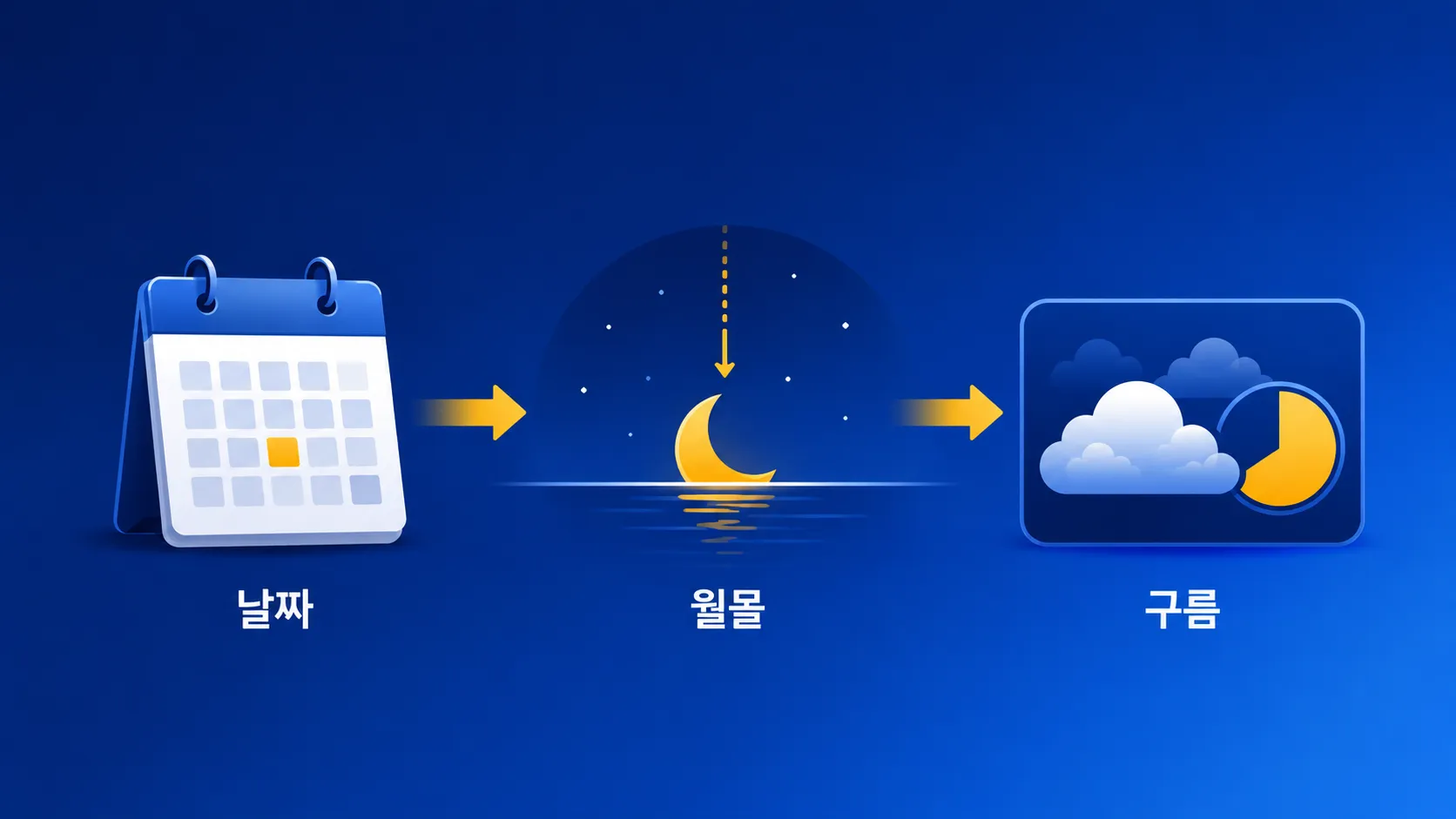
Step 1: Find the new moon first
Use the Korea Astronomy and Space Science Institute’s “Monthly Astronomical Phenomena” to shortlist dates marked new moon. Since the moon is in the same direction as the sun at this time, it’s a good starting point for reducing moonlight at night.
Step 2: Match moonrise and moonset to your observation time
Around a crescent moon, aim for after moonset; around a waning crescent, aim for before moonrise. After comparing the calendar with the rise-and-set table, I found it more practical to check whether the moon is above the horizon from 20:20~22:00 rather than simply avoid the full moon.
Step 3: Check the clouds with the Starlight Forecast
Finally, check the clouds and viewing conditions in the Yeongyang International Dark Sky Park’s “Starlight Forecast.”
Your chances of seeing the Milky Way with the naked eye are highest when the new moon, moonrise and moonset, and the Starlight Forecast all line up.
- Check the new moon period
- Check moonrise and moonset during your observation window
- Check the Starlight Forecast
- Turn your smartphone screen brightness down to minimum
- Pack a headlamp and cold-weather gear
Programs vs. Naked-Eye Stargazing
Operating hours and admission fees
Based on the official visitor information updated August 31, 2026. Tickets can’t be reserved online and are sold on site on a first-come, first-served basis. (Source: Yeongyang-gun Ecological Park Office)
| Category | Hours | Individual Admission |
|---|---|---|
| Daytime | 13:00~18:00 | Adults 4,000 won · teens 3,000 won |
| Nighttime | 19:30~22:00 | Adults 4,000 won · teens 3,000 won |
| Rainy weather | During operating hours | 2,000 won per person |
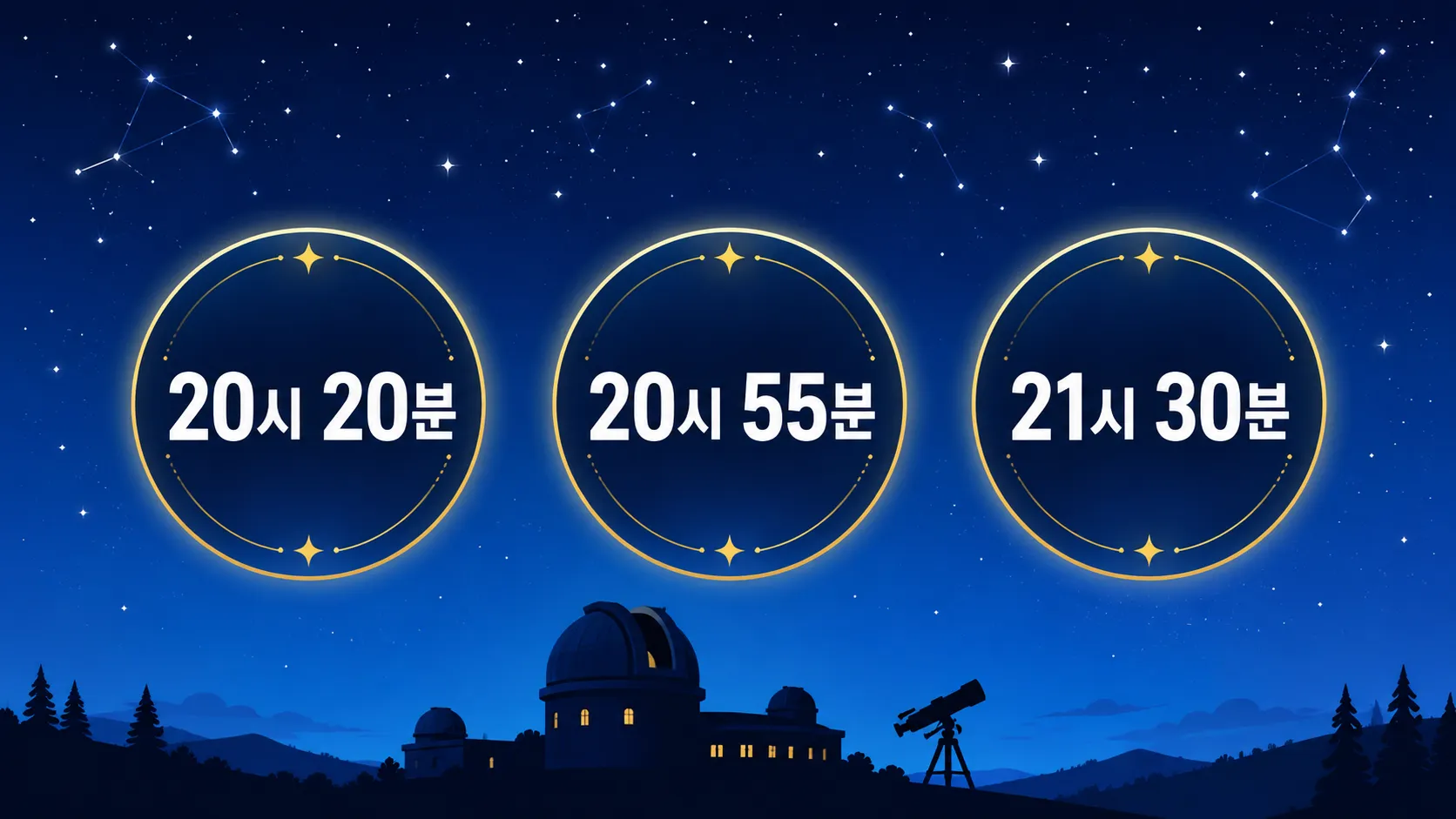
| Night observation | 20:20·20:55·21:30 | 30 minutes per session |
Teens are ages 5~18, and children 4 and under enter free. The observatory is closed on Mondays, the day after public holidays, January 1, and the day of Chuseok.
What can you see in the observation rooms?
The main observation room houses a 600mm reflecting telescope, while the auxiliary observation room has refracting and catadioptric telescopes, among others. On clear days, you can observe the moon, planets, nebulae, star clusters, and galaxies; the 38-seat planetarium shows videos of seasonal constellations.
Comparing the 30-Minute Telescope Session with Naked-Eye Stargazing
A telescope is better for seeing the details of a particular celestial object, while naked-eye stargazing is better for taking in the Milky Way and constellations across a broad sweep of sky. If clouds roll in, actual astronomical observation isn’t possible, so only indoor programs may run.
Recommended Subi-myeon Stargazing Route for Campers
Finish setting up camp before sunset
Finish setting up your gear and eating dinner first, then save the observatory address in your navigation app. Subi-myeon’s dark environment is its main draw, so be especially alert for pedestrians and wildlife when driving.
Buy your ticket on site at 19:30
If you’re following the EasyTicket itinerary, I’d choose the 20:20 first session. That leaves time to turn off the lights after the observation and look at the sky with the naked eye. Finish buying your ticket at least 5 minutes before the observation begins.
Firefly Ecological Park and Yeongyang’s Local Food
Check on firefly tours in June and August
Nighttime firefly tours run as separate programs during the June and August emergence periods, and participation is free. At the Firefly Ecological Park, avoid strong flashlights and camera flashes, and check the observatory and exploration notices separately.
Eumsik Dimibang is the food highlight
For a daytime activity, consider adding a tasting of traditional Eumsik Dimibang dishes or a cooking class at the JangGyeHyang Culture Experience Center in Seokbo-myeon. Check availability first so it doesn’t overlap with the observatory’s nighttime session, and you can experience a taste of Yeongyang beyond camp food.
Visitor Notes and FAQ
Can I reserve nighttime observation at the Yeongyang Firefly Observatory online?
Online reservations aren’t available; tickets are sold on site on a first-come, first-served basis. Arrive well before your desired session—at least 5 minutes ahead.
Can I still use the 600mm telescope when it’s cloudy?
On cloudy days, actual astronomical observations aren’t possible. In rainy weather, the planetarium and exhibition hall are available for 2,000 won per person.
Can I see fireflies and the Milky Way on the same night?
If moonlight and weather cooperate in June or August, when firefly tours operate, you can plan to see both. However, neither firefly activity nor a naked-eye view of the Milky Way is guaranteed, so check the day’s notices for each and the Starlight Forecast.
Check the new moon → compare moonrise and moonset → check the Starlight Forecast → buy your ticket on site at 19:30. Keep bright lights to a minimum and give your eyes time to adjust to the dark, and you’ll enjoy Yeongyang’s starry night more fully.
Image credits1
- 대표 이미지 - 한국관광공사 (출처표시)