 EasyTicket
 If you visit the Korean Folk Village in Yongin thinking “I’ll just wander around and see everything,” it’s easy to miss Samdo Pangut, the traditional wedding parade, and the character street shows entirely — every one of them. Each performance runs only once a day, at a fixed time. So EasyTicket worked backward from the performance schedule to design your viewing order. If you’re visiting with kids, follow this order and you can catch every essential show without any wasted waiting around.
Why Check the Performance Schedule First?
The real charm of the Korean Folk Village isn’t the rides — it’s the living Joseon-era village. Actors dressed as a local magistrate, a beggar, a tavern keeper, and a nine-tailed fox act out impromptu scenes all over the village, while scheduled stage shows like Samdo Pangut and Pungmul Hangarak run at set times. The catch: most of these stage shows happen only once a day.
So if you just grab a map at the entrance and wander wherever your feet take you, it’s easy to spend your morning at one end of the village and miss Samdo Pangut at the performance hall on the other end completely. That’s especially disappointing with kids in tow, since these live shows are exactly what they love most.
The moment you enter, pick up today’s performance schedule at the main information desk. Outdoor shows can shift times or get canceled due to weather or other circumstances, so the same-day printed schedule is always your most accurate source.
The Korean Folk Village is open daily from 10:00 a.m. to 10:00 p.m. (the later closing applies Friday, Saturday, Sunday, and public holidays). Given how much energy kids burn through, it’s easiest to arrive right at opening, spend the morning exploring the village, and steadily work through the stage shows over the afternoon and evening.
The Day’s Performance Schedule at a Glance
Here’s the lineup of standing stage shows that anchor the day. Keep these times, and everything else falls into place naturally.
| Performance | Time | Location | Days |
|---|---|---|---|
| Eoseo Osio (Welcome Greeting) | 10:00 | Market Village No. 1 | Daily |
| Samdo Pangut | 12:00 | Performance Hall (Folk Village No. 37) | Daily |
| Baengnyeon Gayak (Wedding Parade) | 14:00 | Market Village | Daily |
| Pungmul Hangarak | 16:00 | Performance Hall (Folk Village No. 37) | Daily |
| Uri Garak Joeulssigo | 16:30 | Special Stage | Daily |
| Eolssigu Jeolssiguya | 18:30 | Market Village | Fri, Sat, Sun, holidays |
| Yeonbun | 20:30 | Performance Hall (Folk Village No. 37) | Fri, Sat, Sun, holidays |
These times are for the standing performances. Spring and fall festivals and the extended night-opening season add more shows and shift the timing, so it’s worth confirming against the same-day schedule too.
Morning Course: Open with Eoseo Osio, Build to Samdo Pangut
Arriving right at the 10:00 a.m. opening lets you make the most of your morning. The first show is Eoseo Osio, held at Market Village No. 1.
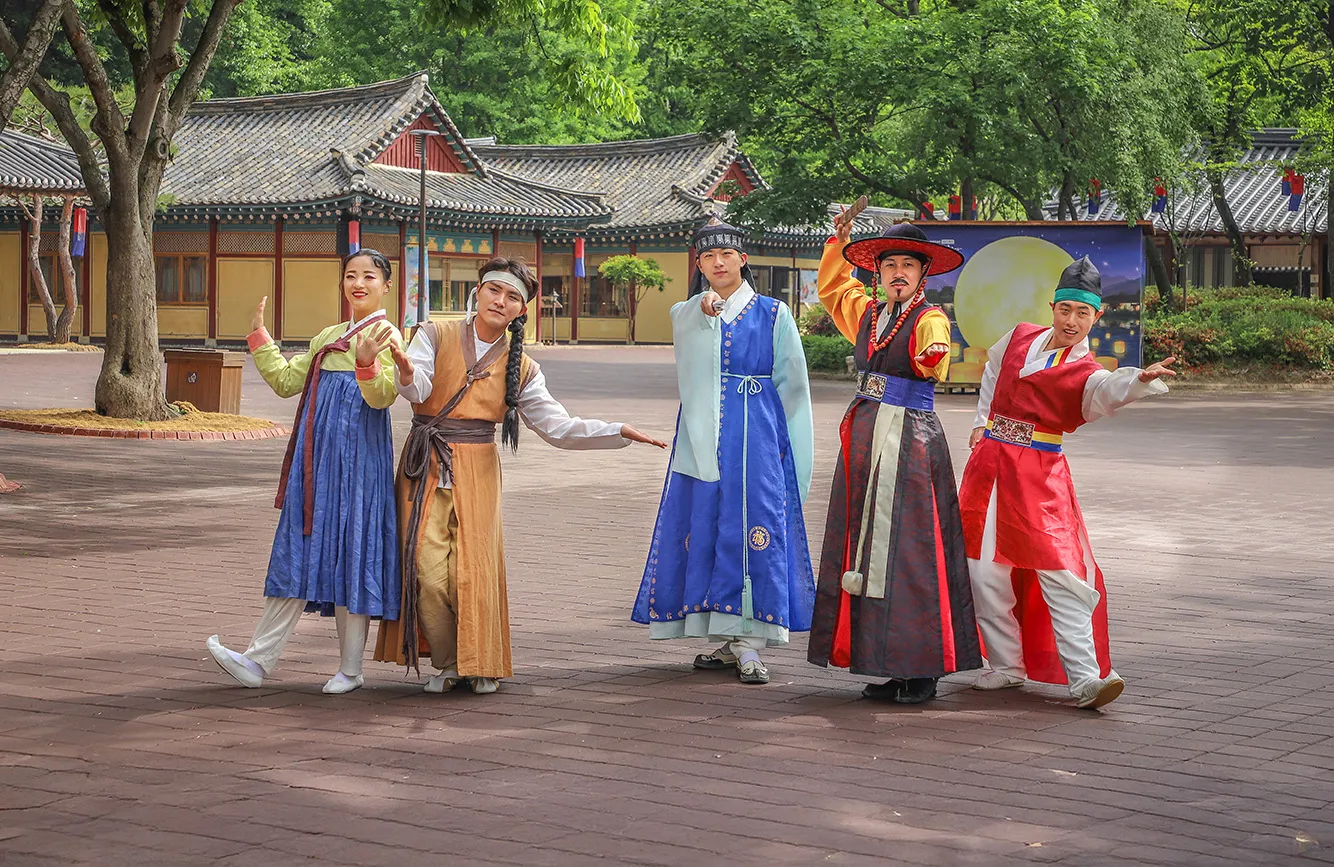
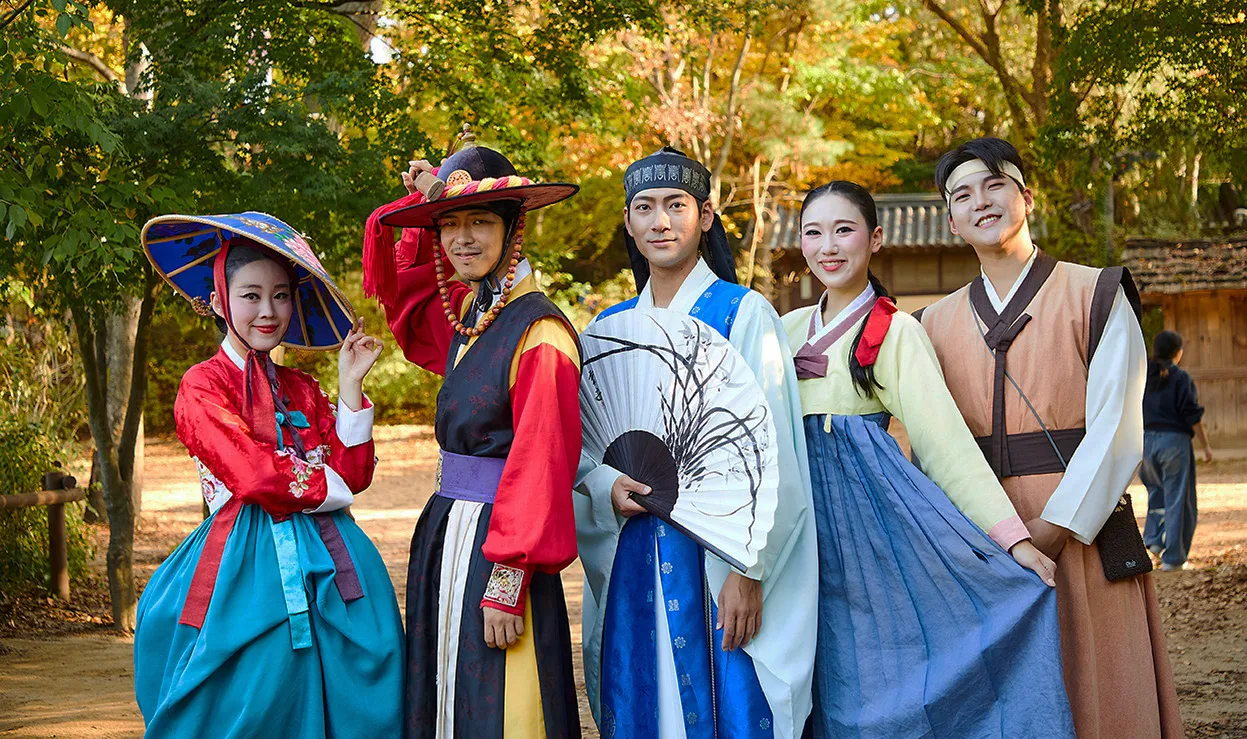
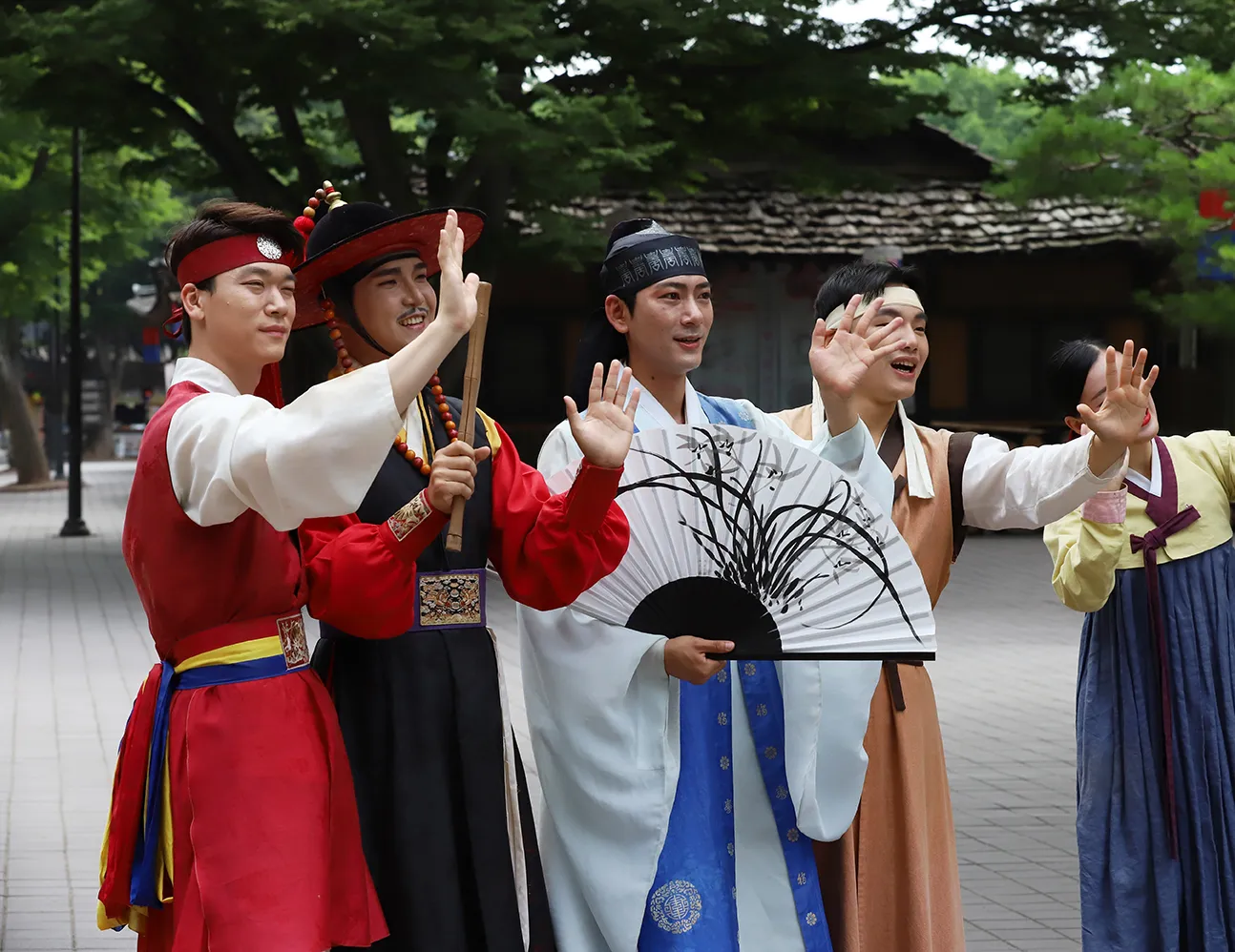
- 10:00 Eoseo Osio — A welcome performance that greets visitors right as the gates open. Since it’s held at Market Village No. 1, it works naturally as your first show of the day
- 10:00–12:00 Stroll the village — Use the two hours before Samdo Pangut to wander the old marketplace street and the thatched-roof village, where you’ll cross paths with the character actors
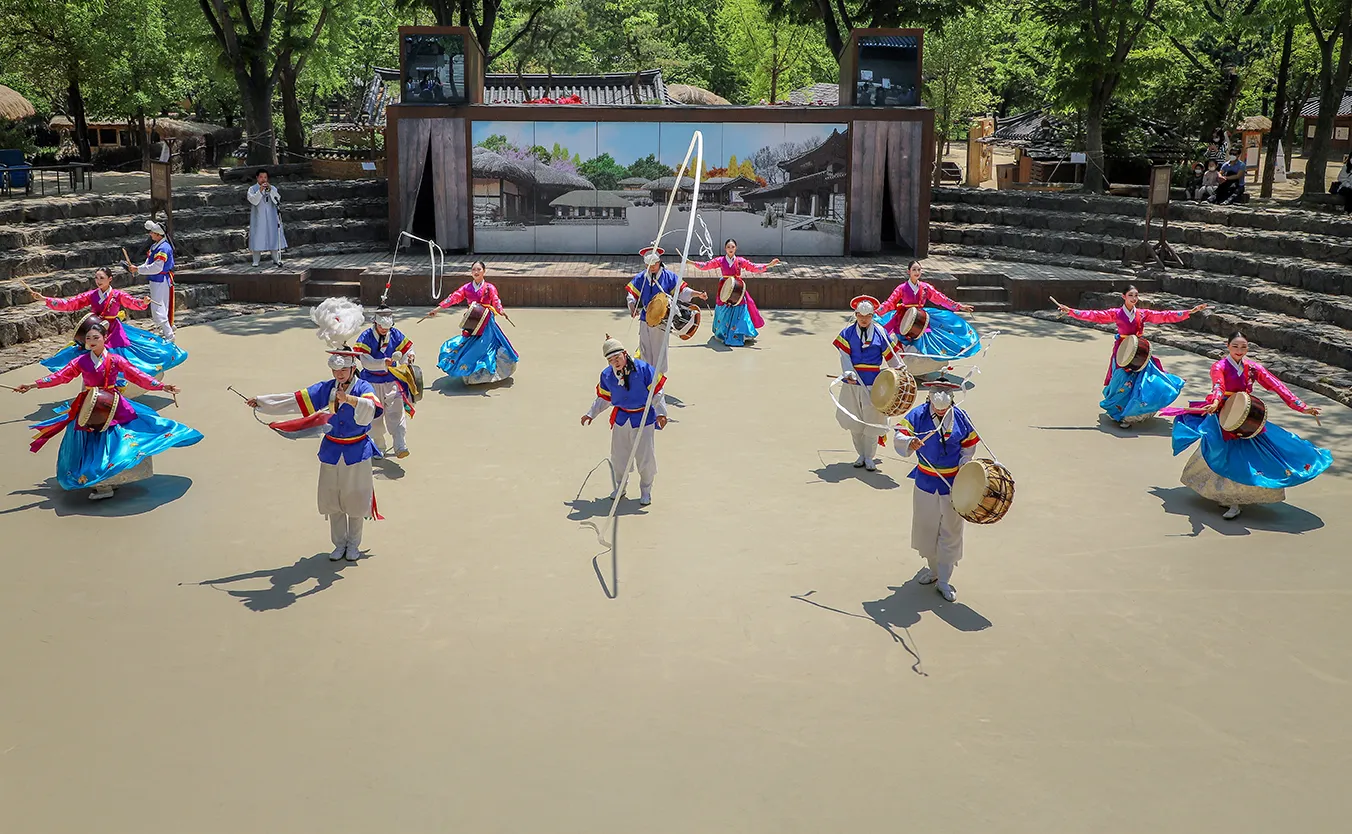
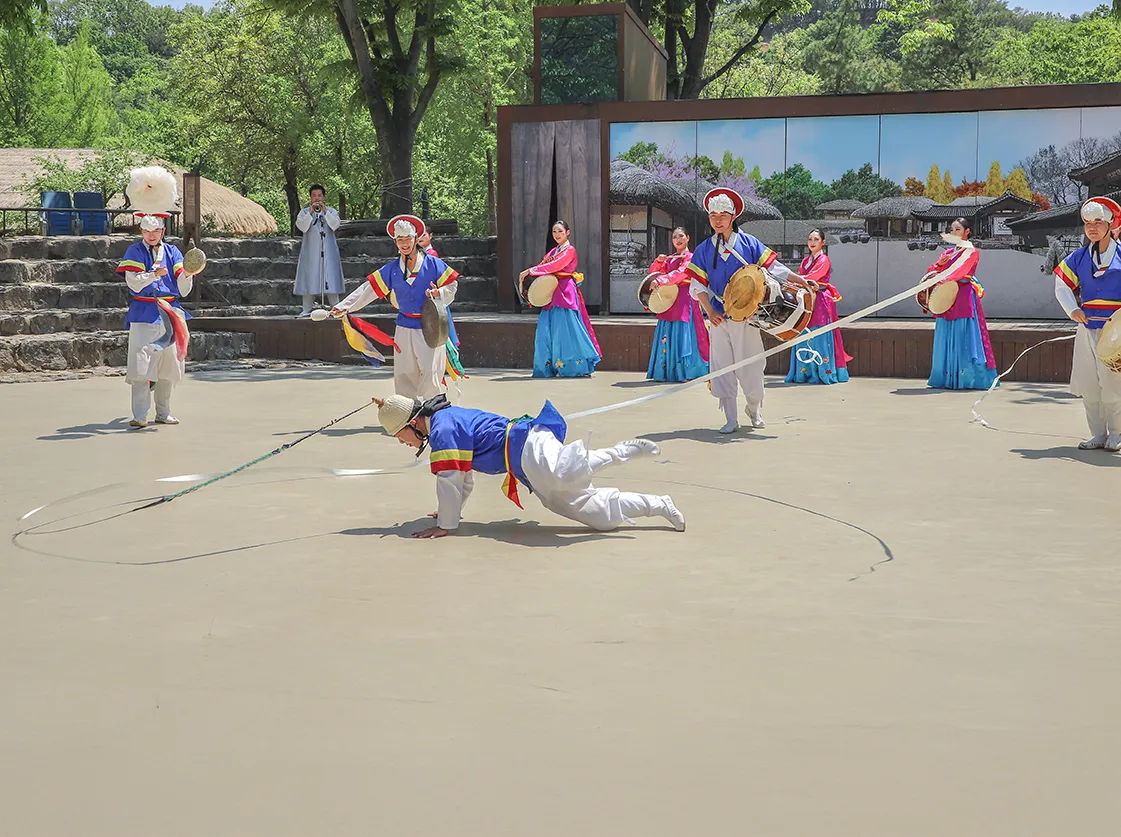
- 12:00 Samdo Pangut — Held at the performance hall in Folk Village No. 37. With dynamic acts like beona (spinning a dish on a stick) and yeoldubal sangmo (twelve-strand ribbon hat spinning), it’s a show kids can’t take their eyes off
The Samdo Pangut venue sits deep inside the village at No. 37, so head over before noon to claim a front-row spot where your child can see the stage clearly.
Midday Course: The Baengnyeon Gayak Parade and Character Street Shows
Grabbing lunch at a tavern along the old marketplace street — gukbap (rice and soup) or pajeon (scallion pancake) are good picks — keeps your route from doubling back. Once you’re fed, aim for Baengnyeon Gayak at 2:00 p.m.
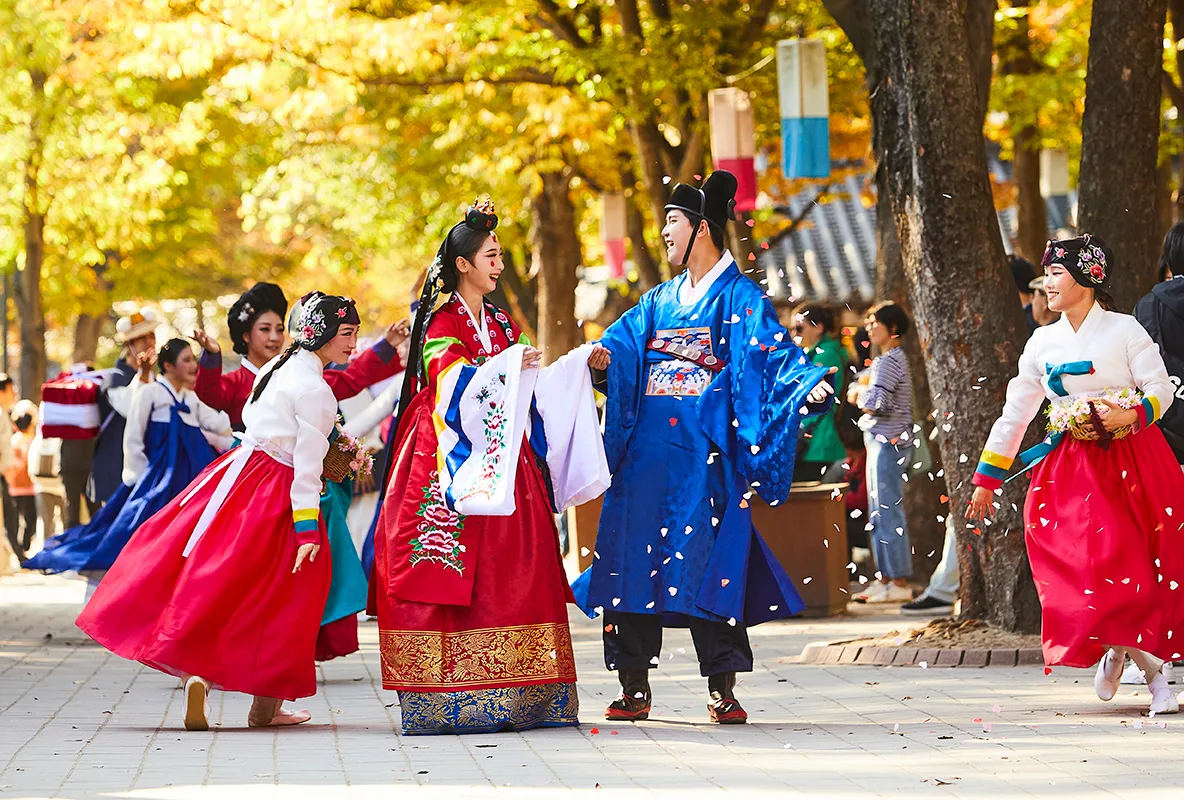
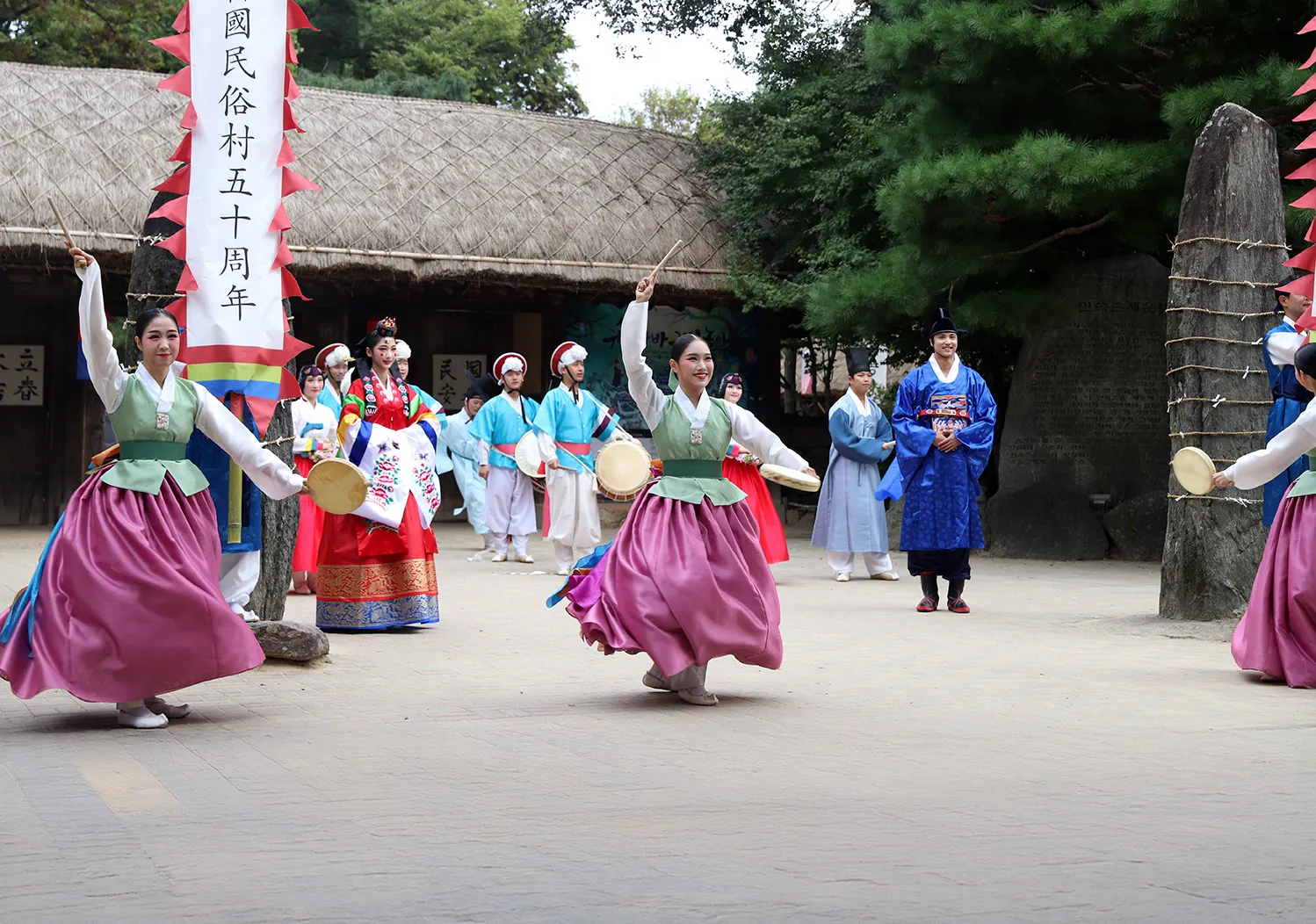
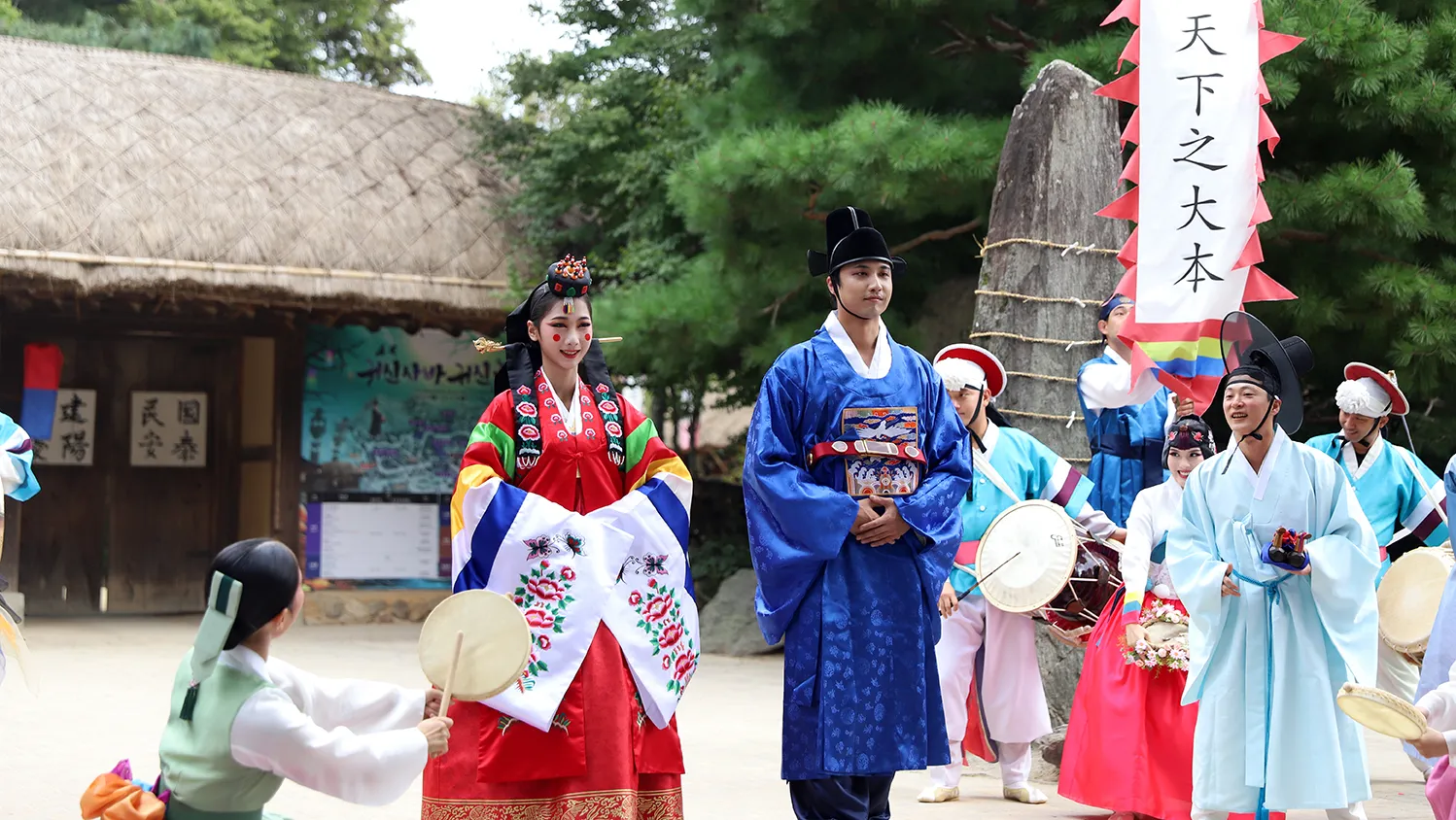
- 14:00 Baengnyeon Gayak — A traditional wedding procession that winds through Market Village, playing out a bride and groom’s wedding with Korea’s own brand of humor. Since you watch it on foot as it moves along, it’s an easy, low-pressure show to catch with kids
On top of that, as you walk through the village, “cast” characters like a beggar, a tavern keeper, a nine-tailed fox, and a wild madcap will strike up conversation out of nowhere. They pose for photos, ask your child’s name, and toss out sly banter with a straight face — and this is the real charm that sets the Korean Folk Village apart. There’s always a crowd hoping for a photo with them.
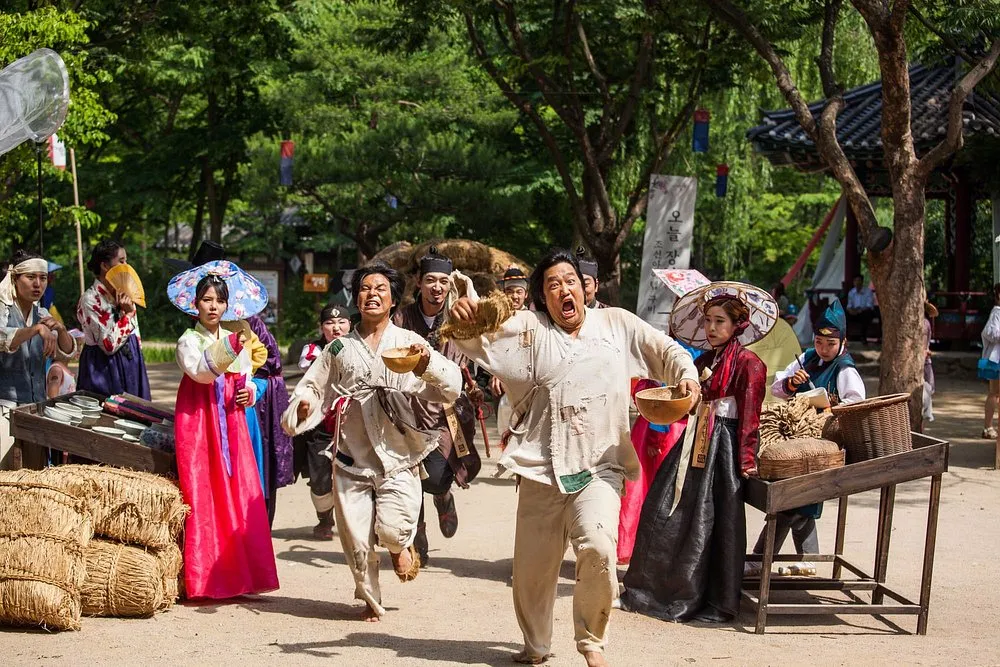
The character street shows have no fixed stage — they happen improvised, as the actors roam the village. So use the gaps between the scheduled stage shows (10:00 a.m.–12:00 p.m. and 2:00–4:00 p.m.) for these character encounters and traditional experiences, and your day stays full from start to finish.
Afternoon Course: Pungmul Hangarak Straight Into Uri Garak Joeulssigo
The 4 p.m. hour packs two shows back-to-back, so you can cover a lot of ground. Just plan your route, since the two shows are at different venues.
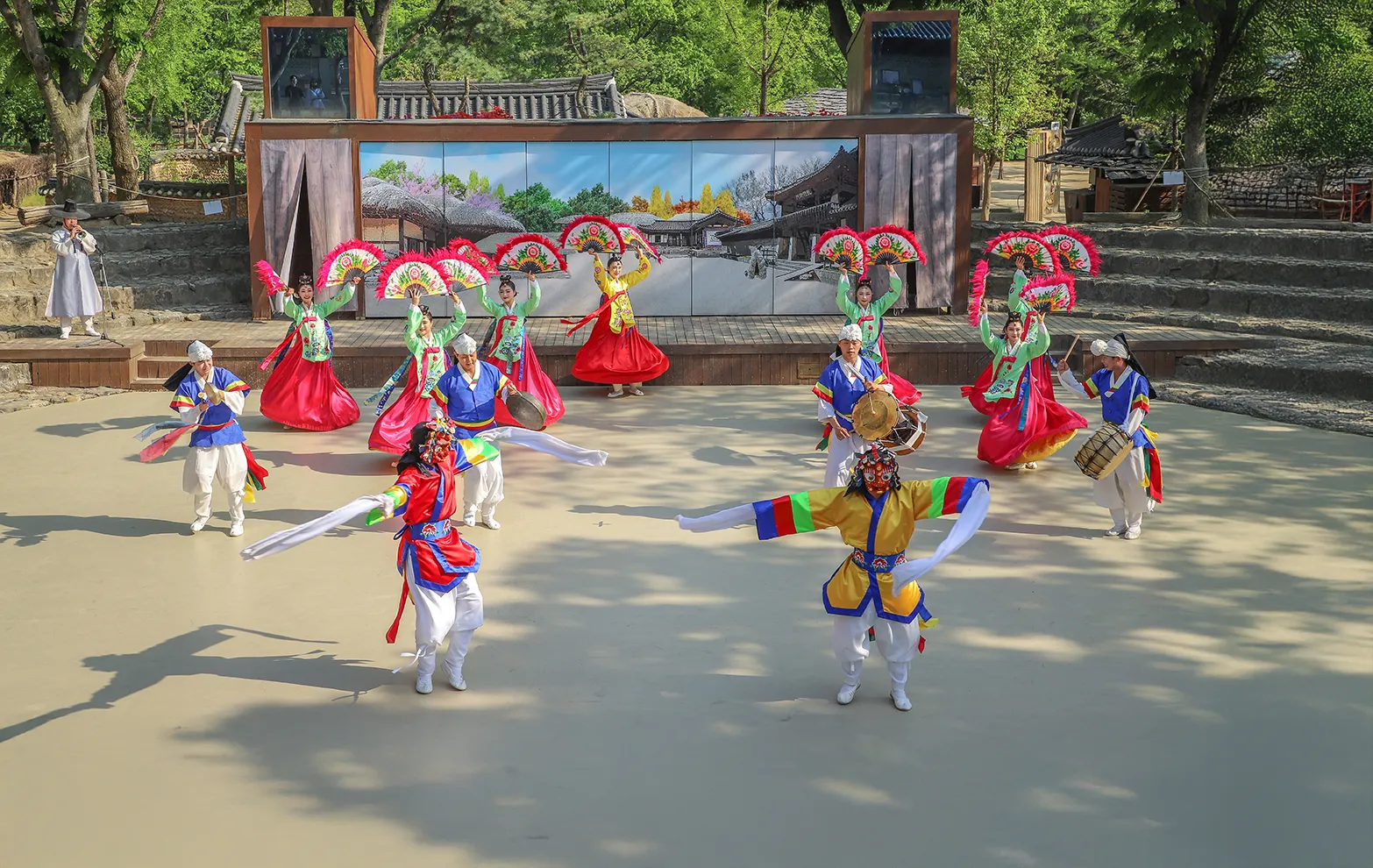
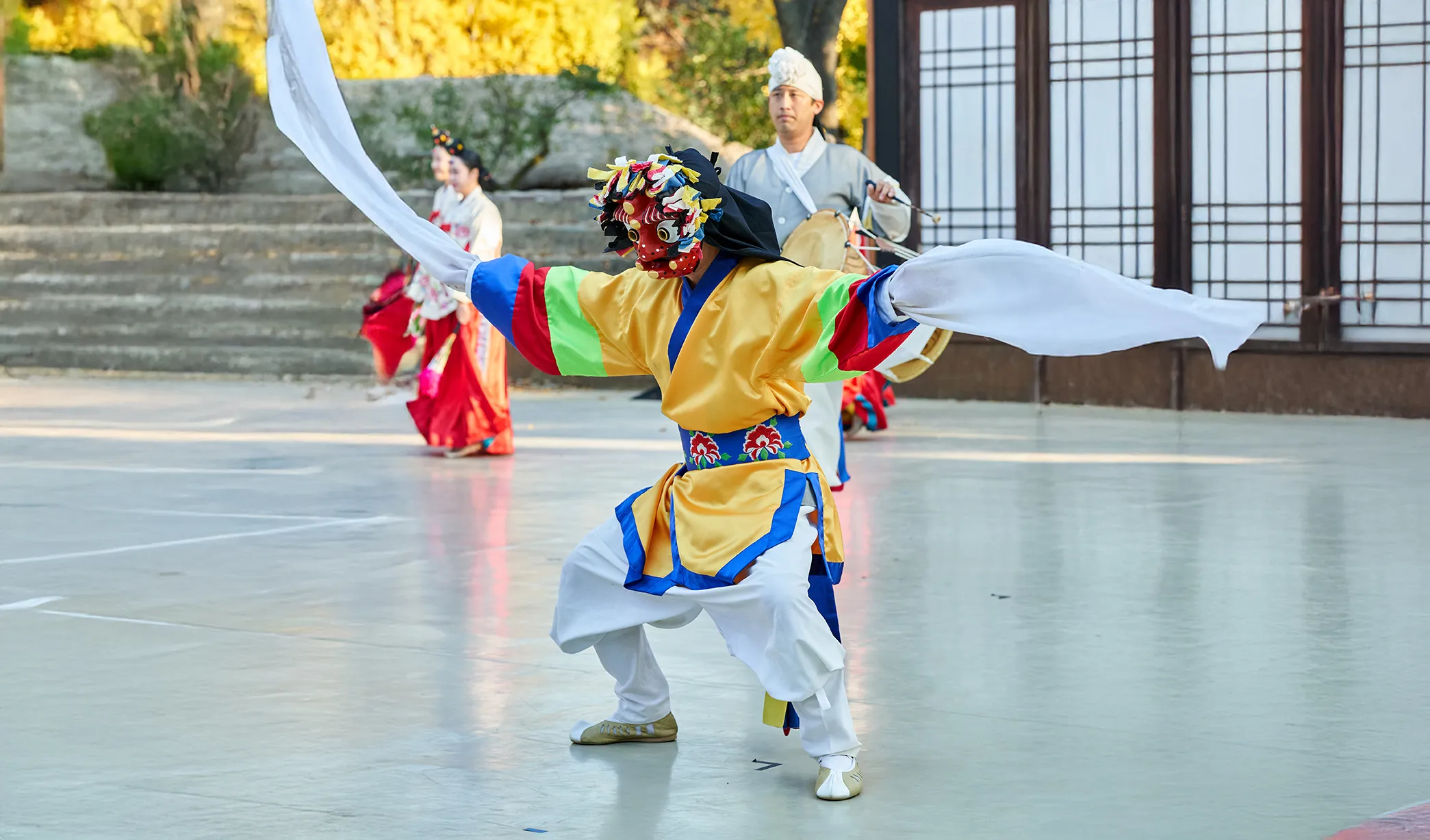
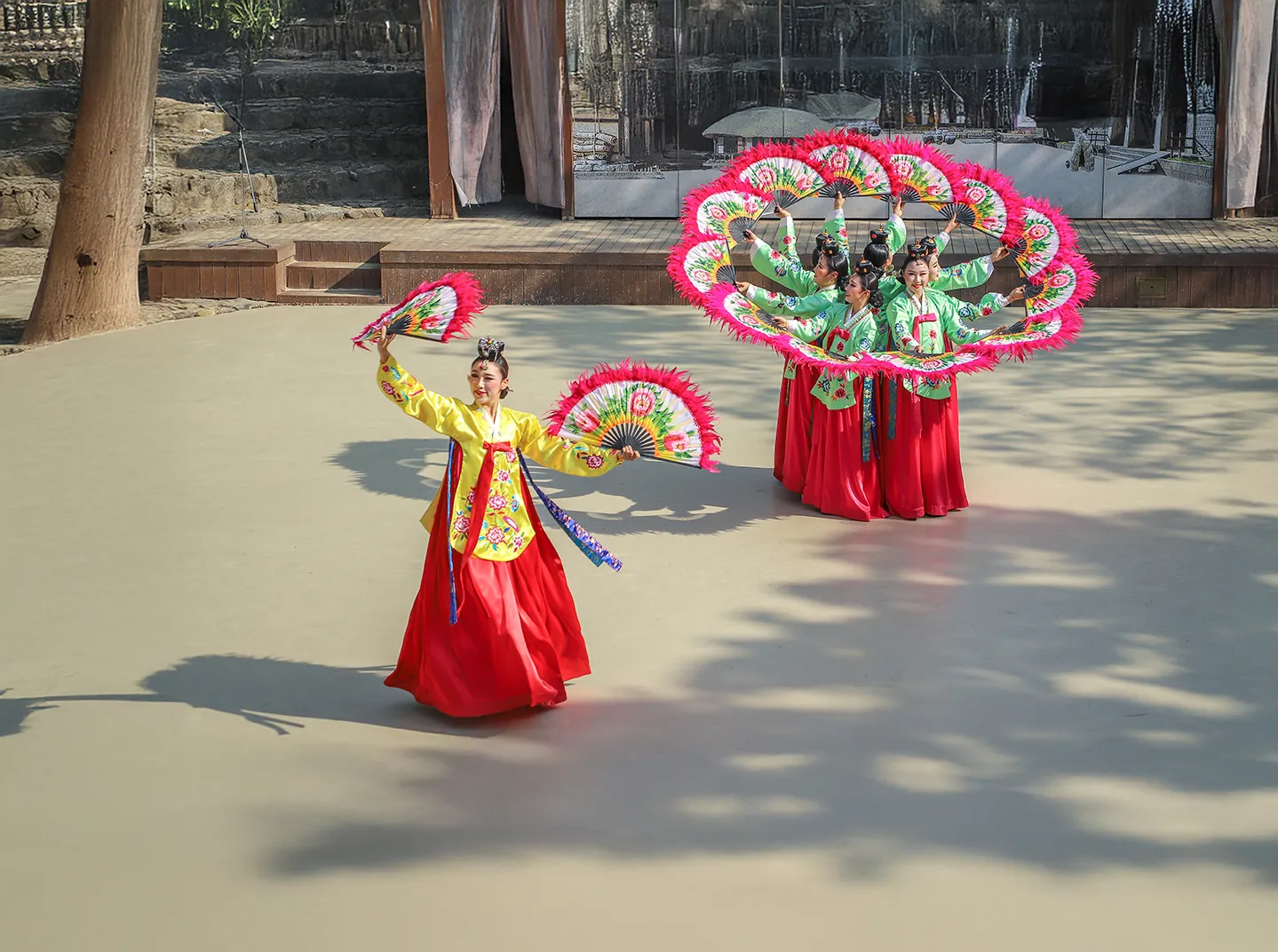
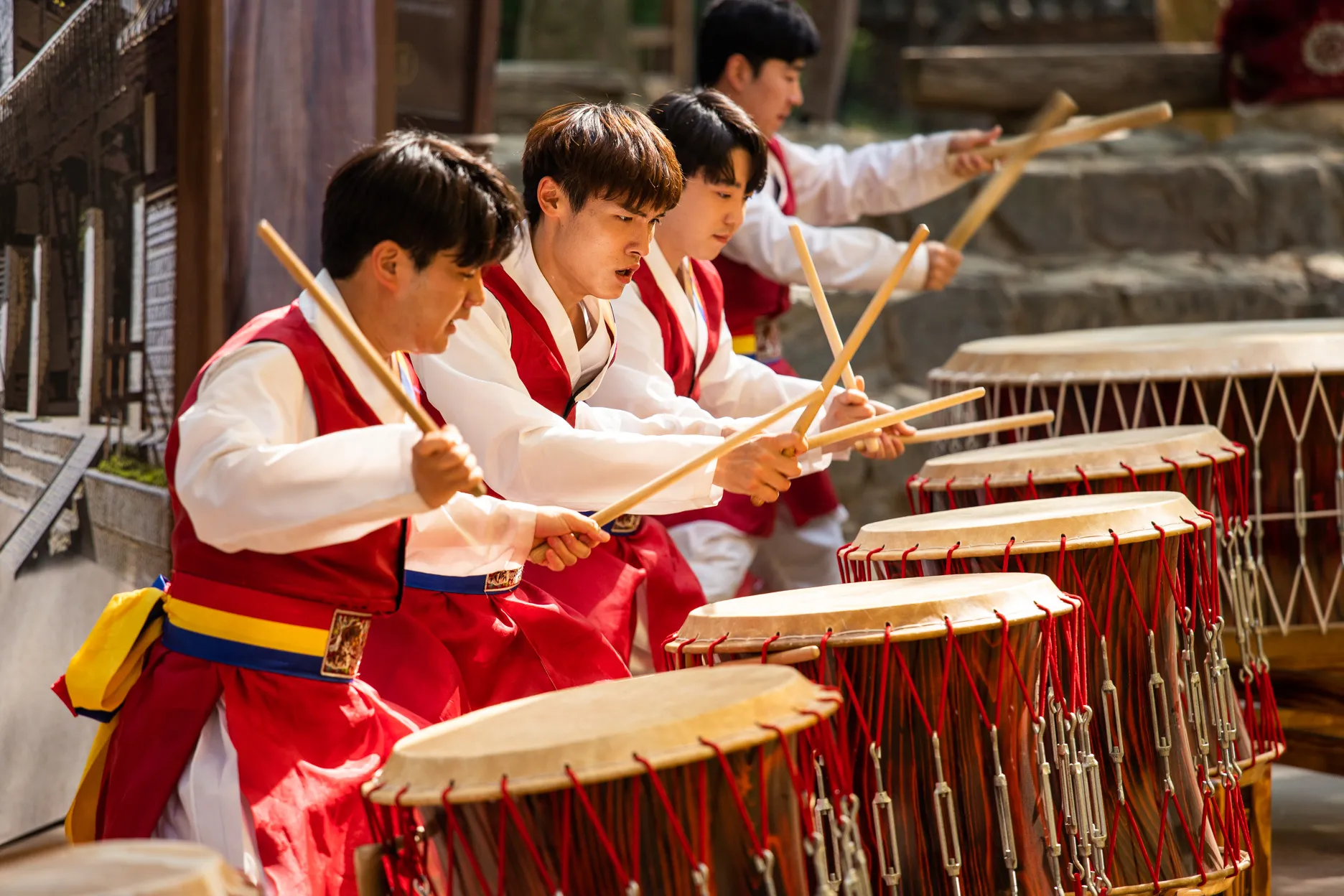
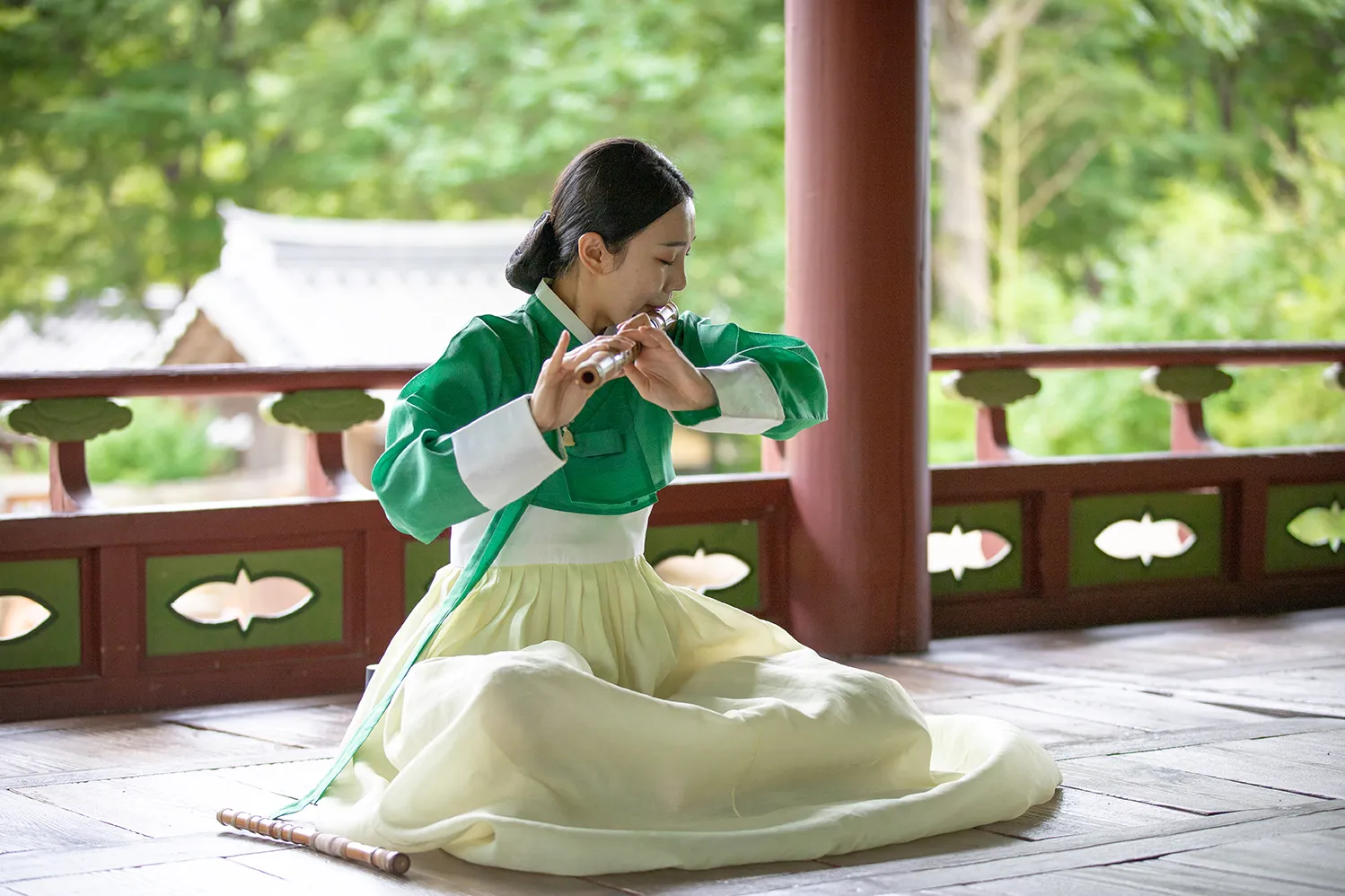
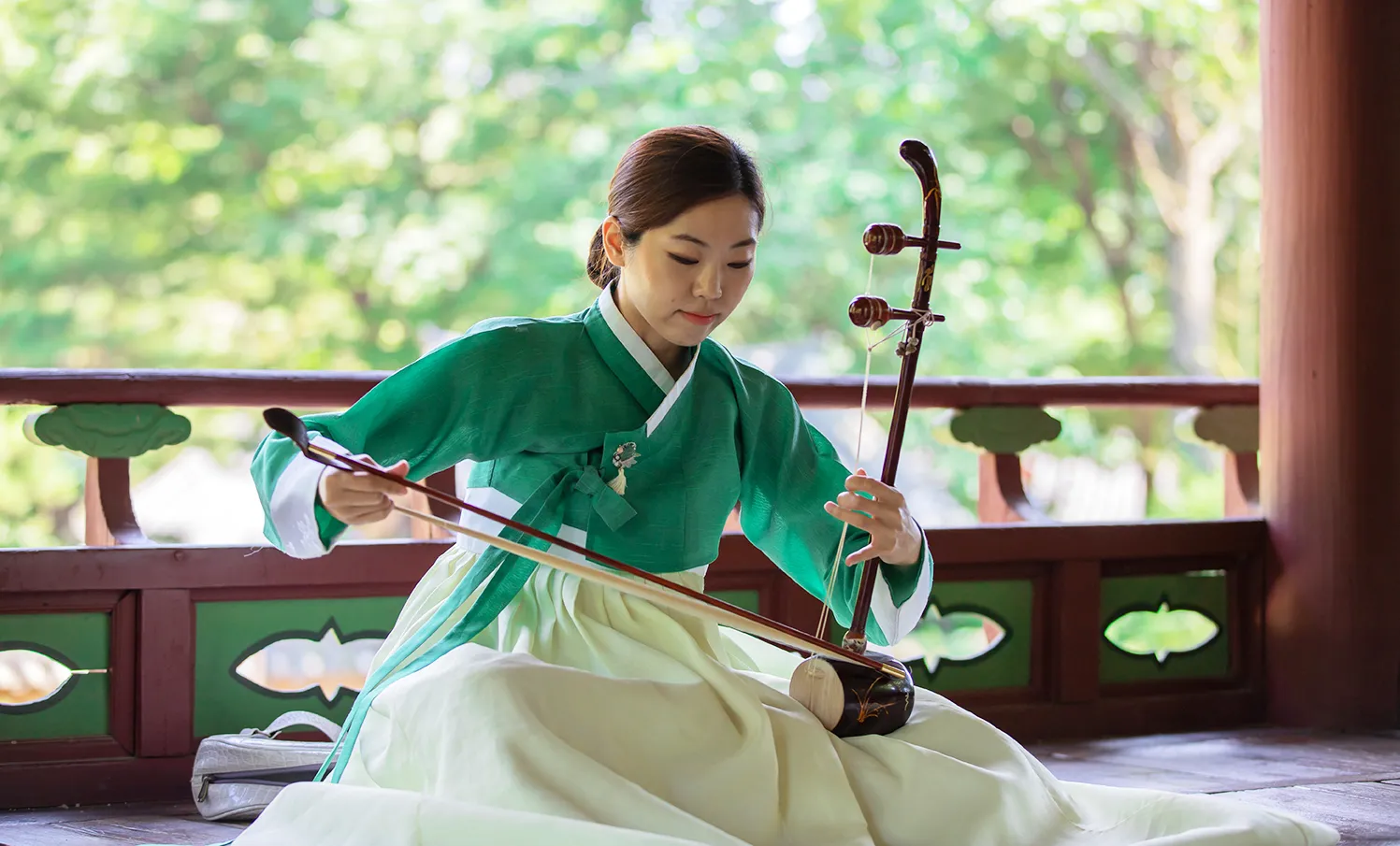
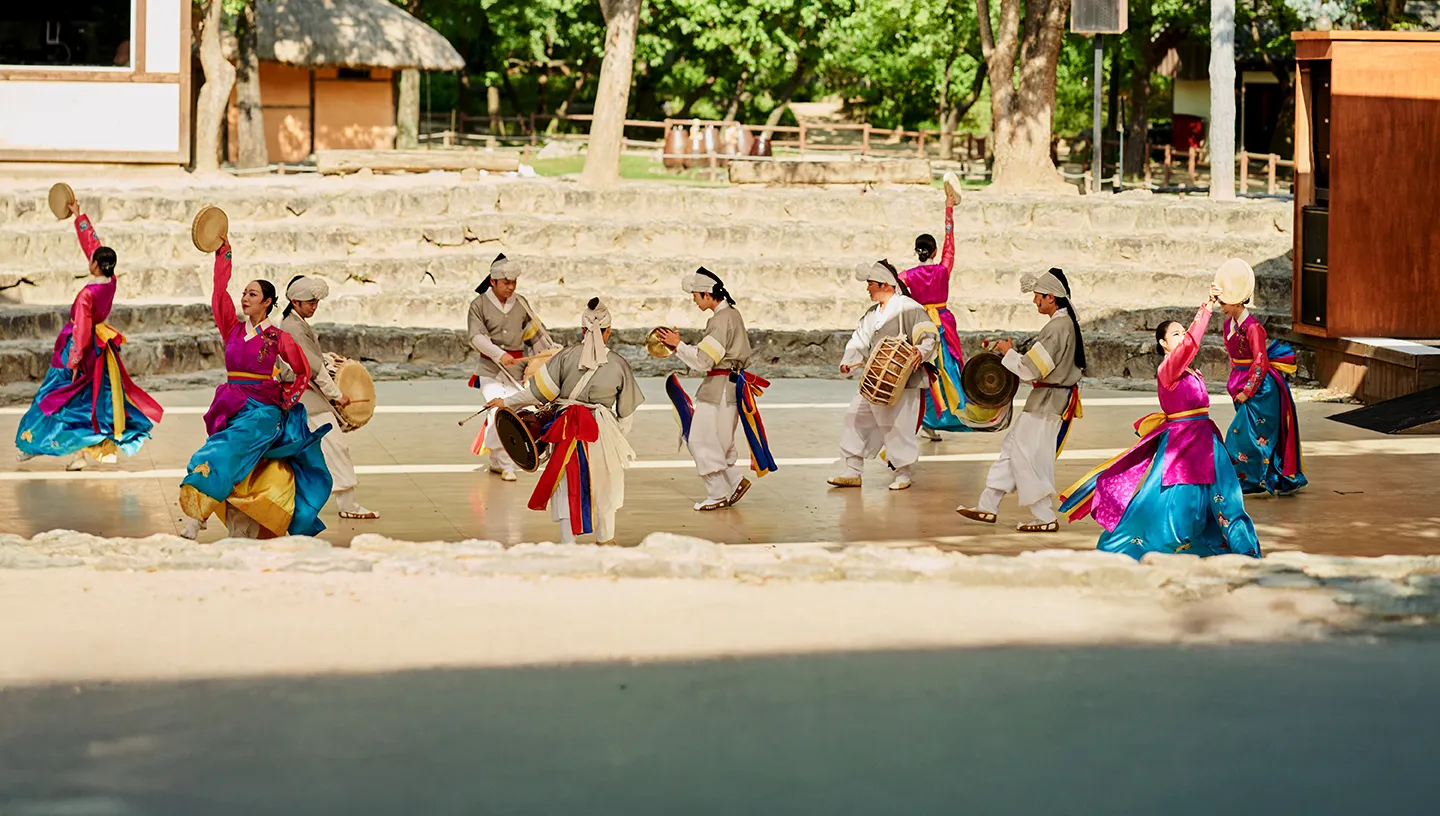
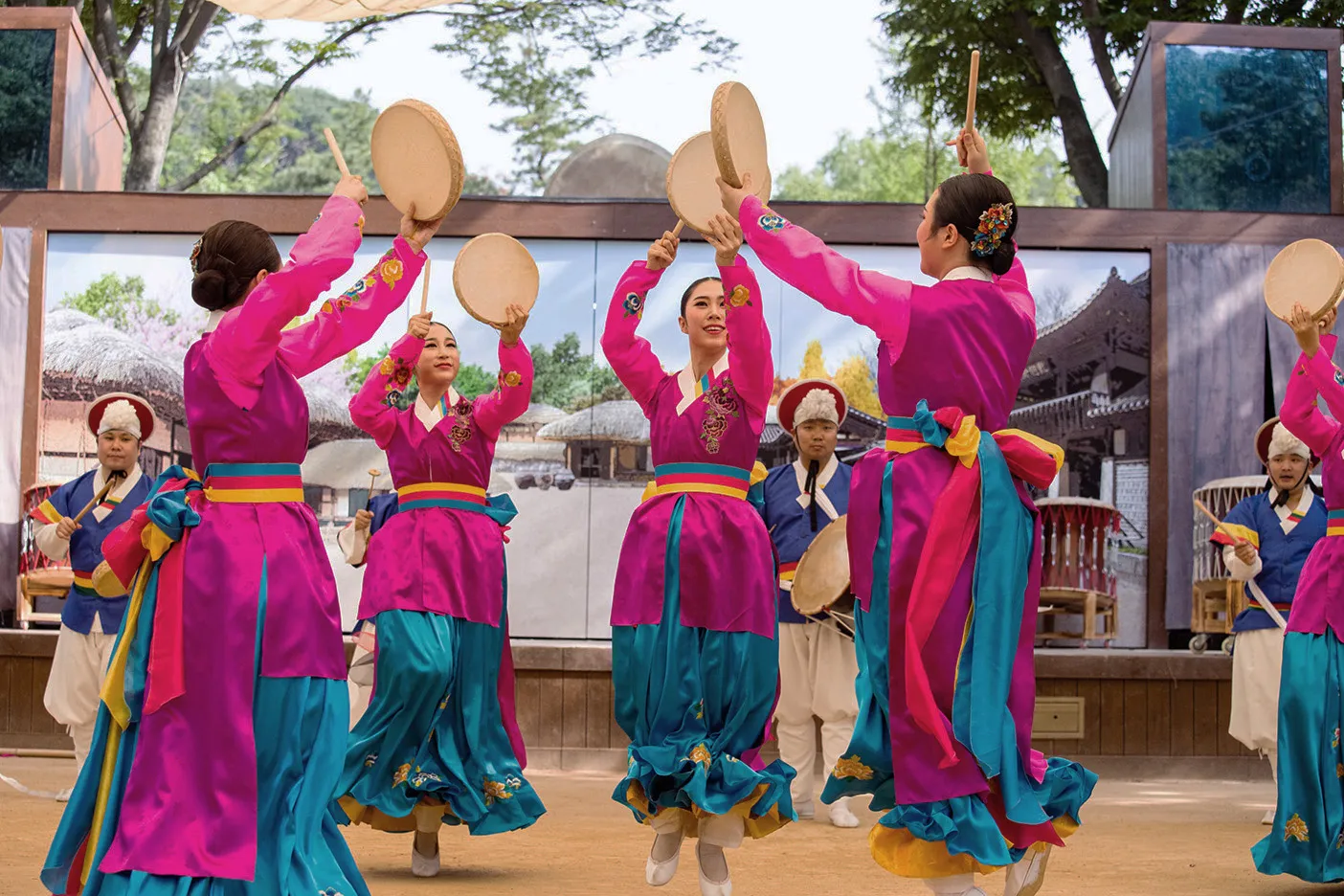
- 16:00 Pungmul Hangarak — A rousing pungmul (Korean folk percussion) performance at the Folk Village No. 37 hall. Between the kkwaenggwari (small gong), janggu (hourglass drum), and sangmo (spinning ribbon hats), it’s perfect for kids to clap along to
- 16:30 Uri Garak Joeulssigo — Once Pungmul Hangarak wraps up, head to the Special Stage. This show unspools traditional Korean folk music with real energy, a great way to close out the afternoon
- Traditional culture experiences — Folk games like neolttwigi (Korean seesaw jumping), tuho (arrow-pitching), and jegichagi (Korean shuttlecock kicking) let your child join in hands-on. Wearing hanbok while you walk the village makes for great photos too, and you get a discount on admission when you wear one
You’ll need to get from Pungmul Hangarak (Hall No. 37) to Uri Garak Joeulssigo (Special Stage) within 30 minutes, so while watching Pungmul Hangarak, stake out a spot on the side closer to the Special Stage. The traditional experiences run on a looser schedule, making them a good way to fill the gaps between shows.
If You’re Aiming for the Night Hours Too (Fri, Sat, Sun, Holidays)
If everyone’s stamina holds up, extending into the night hours is another option. The Korean Folk Village stays open until 10:00 p.m. on Fridays, Saturdays, Sundays, and public holidays, and two more standing performances run only during those night hours.
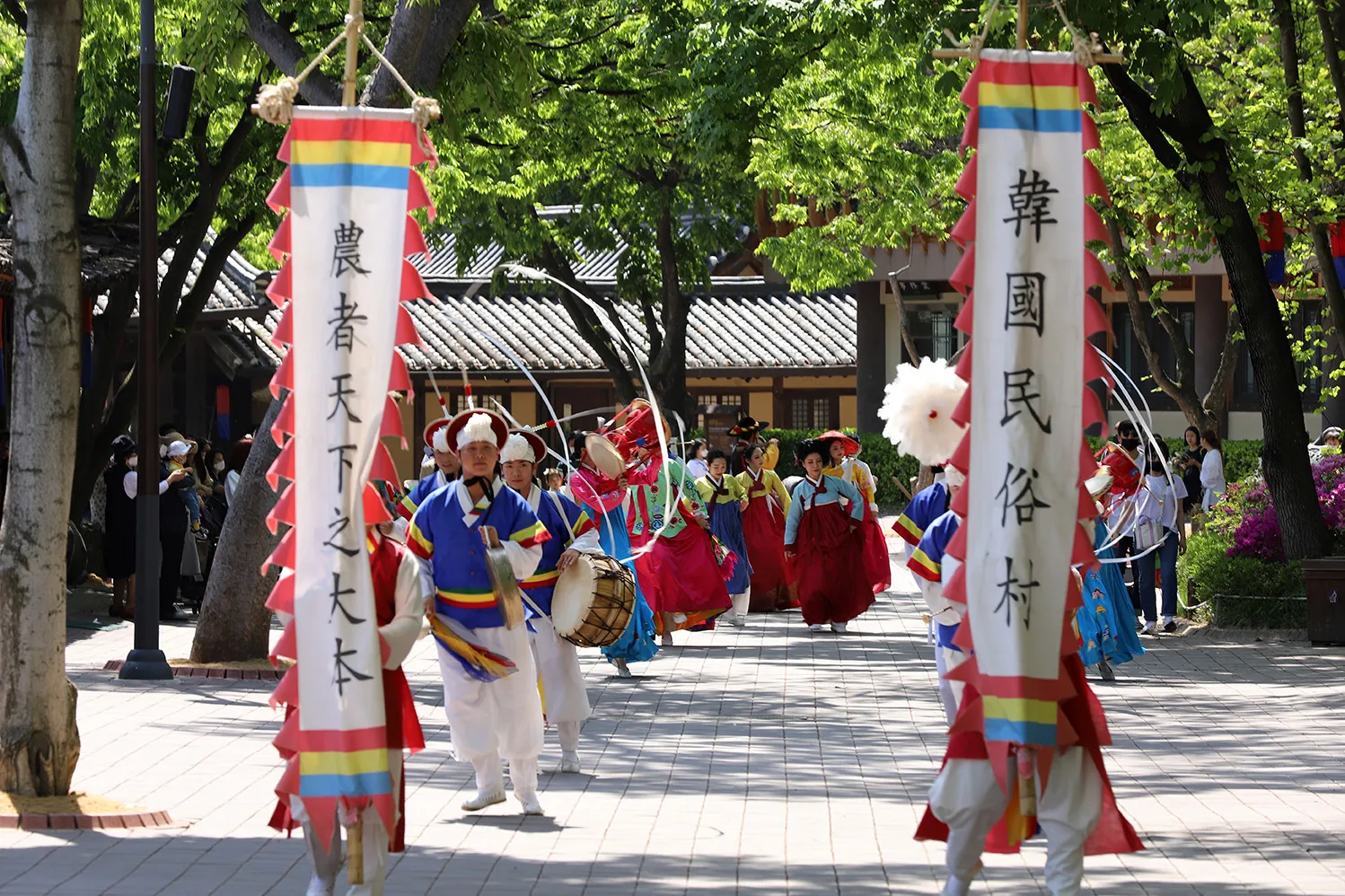
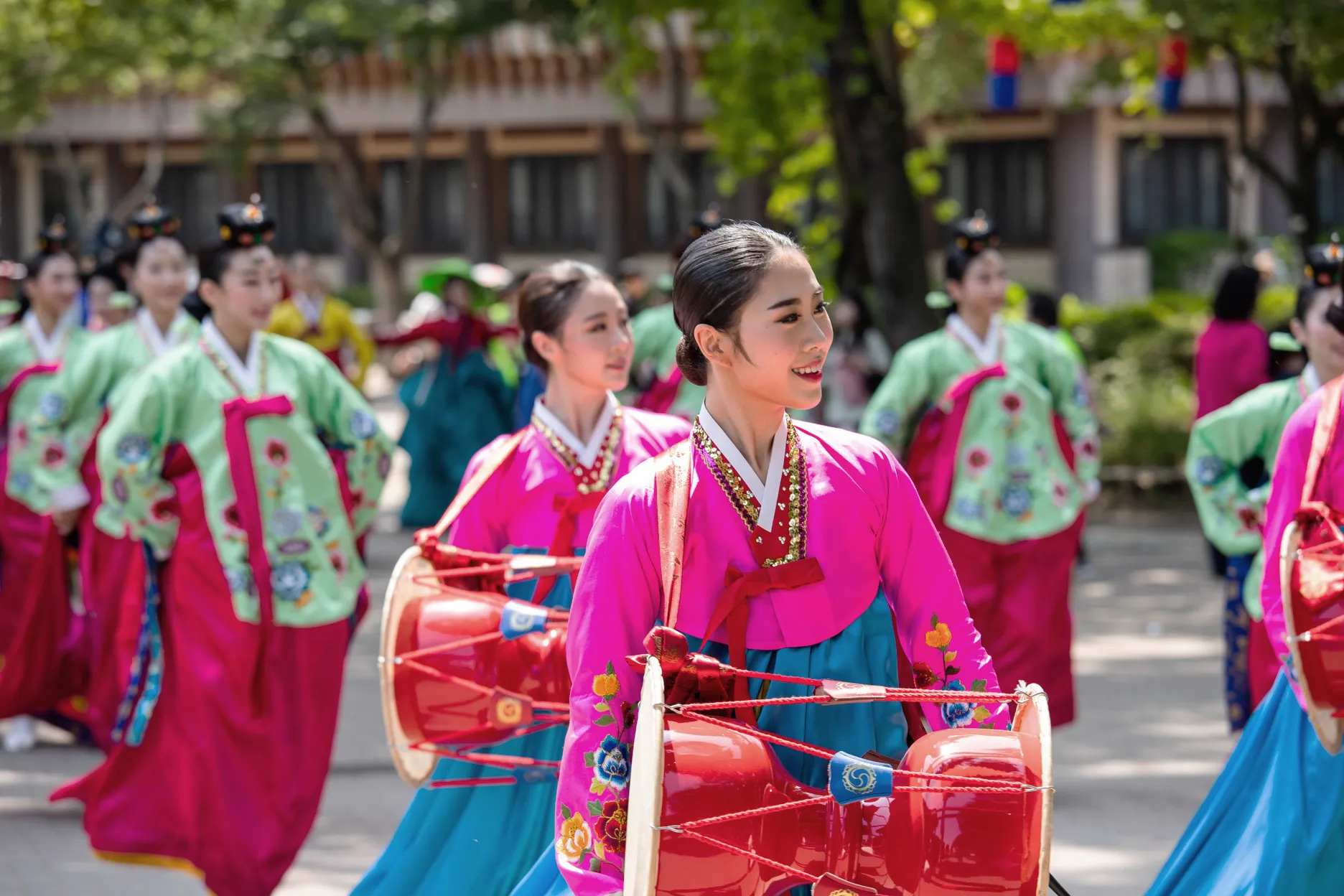
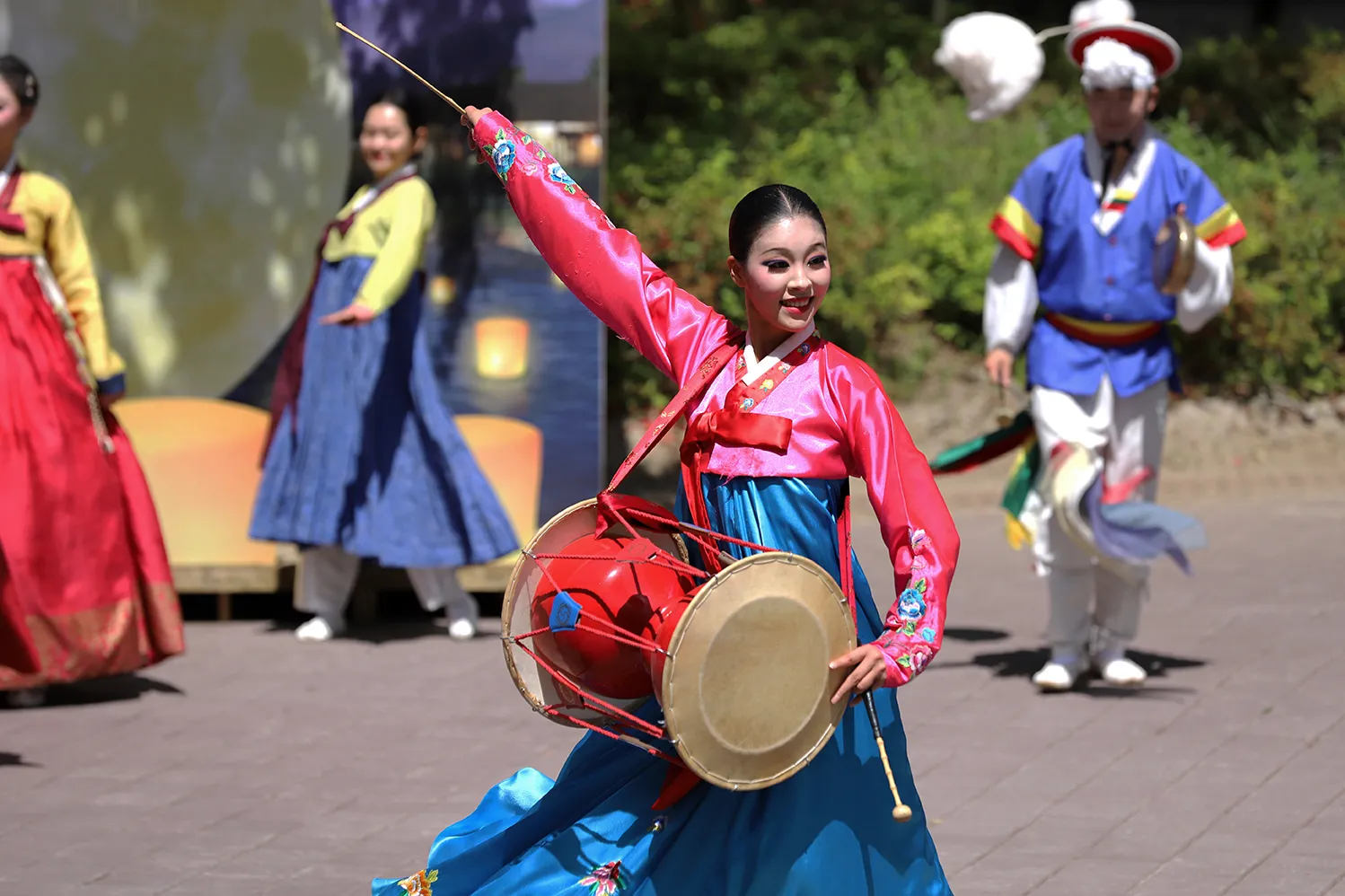
- 18:30 Eolssigu Jeolssiguya — An evening show in Market Village. It adds a festive mood right as the sun sets and the lanterns come on
- 20:30 Yeonbun — A special nighttime performance at the Folk Village No. 37 hall, enjoyed in a village atmosphere completely different from daytime
That said, with kids along, pushing all the way to the 20:30 show might be too much. Touring from morning opening straight through the day tends to drain everyone’s energy by evening. So we’d suggest picking one of two approaches: ① pack the daytime course in fully and wrap up after the early-evening Eolssigu Jeolssiguya, or ② arrive later in the afternoon and aim for the night atmosphere and the Yeonbun show.
In spring, seasonal festivals like “Welcome to Joseon” take place. During these periods, character actors and street shows increase substantially, so if you’re a fan of the street theater, timing your visit to festival season is well worth it. Check the official website before you go to see which festivals and performances are running that day.
Getting There and Admission
Public transit gets you there without much trouble. A car is more convenient with kids along, but here’s a route for car-free families too.
| Method | Route | Notes |
|---|---|---|
| Subway + bus | Suin-Bundang Line, Sanggal Station Exit 3 → Bus 37 | About 30 min |
| Bus (from Suwon) | Suwon Station Exit 4 → Transfer to Bus 10-5 | — |
| Bus (from Jukjeon) | In front of Shinsegae Department Store at Jukjeon Station → Transfer to Bus 30 | — |
| Car | Gyeongbu Expressway, Suwon-Singal IC exit | About 15 min |
Admission comes as an all-inclusive pass covering both the folk village tour and the amusement park section. Booking online ahead of time gets you a standing 20–30% discount, so it’s worth buying through Naver Reservations or an open-market site rather than at the gate. For exact pricing and whether night tickets are available, check the official website once more before your visit, since rates shift with the season and festivals.
Frequently Asked Questions for Family Visits
Do any performances overlap?
Pungmul Hangarak at 16:00 and Uri Garak Joeulssigo at 16:30 sit right next to each other. Since they’re at different venues (Hall No. 37 → Special Stage), the key is moving the moment Pungmul Hangarak ends. With kids along, prioritize the daytime Samdo Pangut (12:00) and Baengnyeon Gayak (14:00).
Where can we find the character actors?
They don’t have a fixed stage — they roam the old marketplace street and the lanes around Market Village. Characters like the beggar, the magistrate, and the nine-tailed fox aren’t on the printed schedule, so the only way to meet them is to stroll the village slowly and cross paths with them. You’re more likely to spot them wherever the daytime crowds gather.
Can outdoor or night shows get canceled?
Yes. Outdoor performances can have their times changed or get canceled if it rains or the wind picks up. Night shows like Eolssigu Jeolssiguya and Yeonbun run only on Fridays, Saturdays, Sundays, and holidays, so if you’re visiting on a weekday, build your plan around the daytime shows instead. Be sure to check the same-day schedule right after you enter.
We’re traveling with a young child — will a full day be too much?
You’ll be fine if you lock in just the essentials — morning Eoseo Osio, daytime Samdo Pangut, and Baengnyeon Gayak — and fill the rest of the day at an easy pace with seated folk-game experiences. Strollers can have a rough time on the hills and dirt paths, so bringing a baby carrier along helps.
Once you build your day around the performance schedule, the Korean Folk Village is a place kids can enjoy from morning to night without a dull moment. Just remember the big-picture flow — morning Eoseo Osio and Samdo Pangut → midday Baengnyeon Gayak and character street shows → afternoon Pungmul Hangarak and Uri Garak — and fine-tune it against the day’s printed schedule.
Image credits1
- 용인_한국민속촌 (9) - 한국관광공사 (출처표시)