 EasyTicket
 If your heel stings the moment you take your first step in the morning, it could be a sign that you need new shoes. Plantar fasciitis shoes aren’t just about being soft — what matters most is arch support and stability. Easyticket reviewed medical resources directly and boiled it down to 5 selection criteria.
Why Do Plantar Fasciitis Shoes Matter?
The plantar fascia is a thick band of fibrous tissue that runs from the heel to the toes. Wearing shoes with poor shock absorption for a long time causes micro-damage to build up in this area, leading to inflammation. On the flip side, just switching to a shoe with good arch support improves weight distribution and can noticeably reduce pain.
Softer isn’t automatically better. Cushioning that’s too mushy can collapse the arch and actually make symptoms worse.
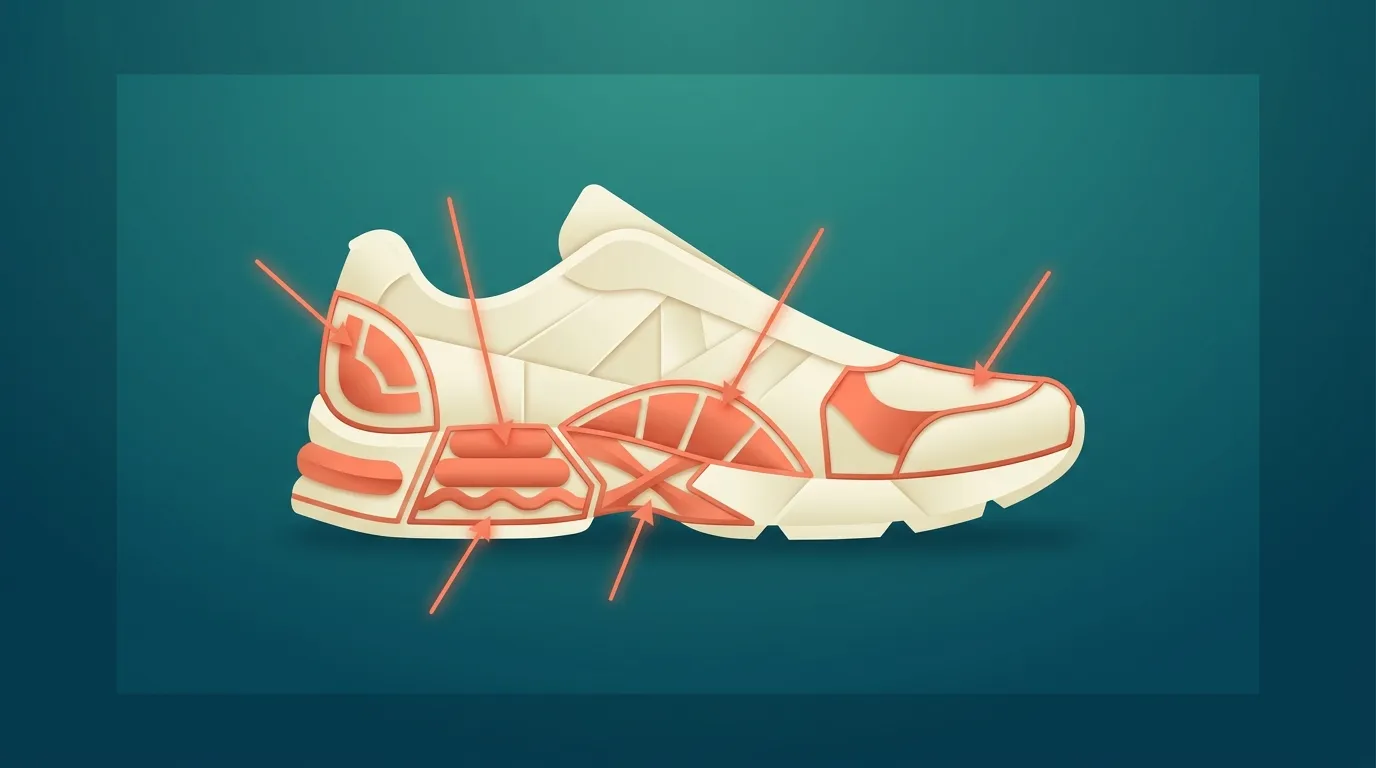
5 Criteria for Choosing Plantar Fasciitis Shoes
1️⃣ Arch Support
This is the first thing to check. When you flip the shoe over and look at the insole, the middle section should be slightly raised to support the inner arch of your foot. If you have flat feet or a low arch, adding an orthotic insole is also a good idea.
2️⃣ Firm Heel Counter
This is the cupped part that wraps around your heel. When you press it with your finger, it shouldn’t crumple easily — that’s what keeps your foot from wobbling side to side as you walk. Avoid floppy slip-ons or soft canvas sneakers.
3️⃣ Adequate Cushioning and Heel Height
A heel height of about 2.5–3cm is recommended (source: medical guidelines). Completely flat shoes transmit impact straight into the heel, which isn’t ideal, while heels over 5cm put extra strain on the forefoot.
4️⃣ Torsion Stability
Hold the toe and heel of the shoe and try wringing it like a dish towel — the midsole shouldn’t twist easily. Ideally, only the forefoot should flex naturally.
5️⃣ Room in the Forefoot and Toe Box
There should be enough room for your toes to spread naturally. If it’s too narrow, your walking pattern breaks down and puts extra strain on the arch. It’s best to try shoes on in the evening, when your feet are slightly swollen, before deciding on a size.
Office Shoes vs. Walking Shoes
Priorities differ depending on how you’ll use the shoes. Someone who sits all day and only walks briefly needs a different shoe spec than someone who logs over 10,000 steps commuting to and from work.
| Category | Office | Walking |
|---|---|---|
| Priority | Lightweight + arch support | Cushioning + stability |
| Recommended heel height | 2–3cm loafers/sneakers | Walking shoes around 3cm |
| Cushion thickness | Thin to medium (10–15mm) | Medium to thick (15–25mm) |
| Weight | Under 250g recommended | 280–320g is fine |
| Insole swap | Orthotic insole required | Stock insole + supplemental insole |
Recommended Brand Lineup
No single brand is the definitive answer, but there are lines that come up often in podiatrist guides. What matters most is whether it fits your foot shape and walking pattern.
Walking / Running
- Hoka Bondi — Among the highest shock absorption thanks to a thick midsole
- Brooks Adrenaline GTS — A strong choice for overpronation
- Asics Gel-Kayano — Balanced stability and cushioning
Everyday / Walking
- New Balance 990 Series — Everyday stability
- Saucony Omni Walker — Purpose-built for walking
Even within these brands, specs vary by model. Cushioning and heel-to-toe drop differ from product to product even within the same brand, so try them on in-store before deciding.
Pre-Purchase Checklist
Check these items before you shop, whether in-store or online.
- Is the middle of the insole slightly raised (arch support)?
- Does the heel cup feel firm when pressed?
- Is the heel height in the 2.5–3cm range?
- Does the midsole resist twisting?
- Is the toe box roomy enough for toes to spread without pinching?
- Did you size based on your feet in the evening, when they’re swollen?
- Does the weight and cushioning match your intended use (office/walking)?
Flip-flops, thin flat shoes, and heels over 5cm all make symptoms worse. If you’re in pain, it’s best to avoid wearing them even briefly.
FAQ ❓
Q. Does switching just the insole help?
It helps to some degree. But if the shoe itself is floppy, the insole’s effect is cut in half, so the best combination is a solid base shoe + a reinforcing insole.
Q. Custom insoles vs. off-the-shelf — which is better?
If the deformity is severe or the pain has lasted more than 6 months, a custom prescription from a medical provider is recommended. For mild symptoms, it’s fine to start with an off-the-shelf arch-support insole.
Q. I’m in pain — is it okay to exercise in sneakers?
Rest comes first during the acute phase. Once the pain subsides, start with cushioned sneakers and short-distance walking, paired with calf and sole stretches.
Q. Which brand is best?
There’s no single correct brand. The top priority is choosing based on your own arch height, body weight, and how far you walk.
Foot pain affects how you feel every day. If the shoes you wore today felt heavy and floppy, go back through the 5 criteria above and check again. One small swap could make that first step in the morning feel noticeably lighter.