 EasyTicket
 A lot of people say deciding where to go is more exhausting than the trip itself, right? Lately, a random travel method where you spread out a paper map, throw a pen, and go wherever it lands has been spreading fast among Korea’s MZ generation (Millennials and Gen Z). We’ve put together a look at this “analog, spontaneous travel” trend — a break from digital fatigue — along with tips for enjoying it safely.
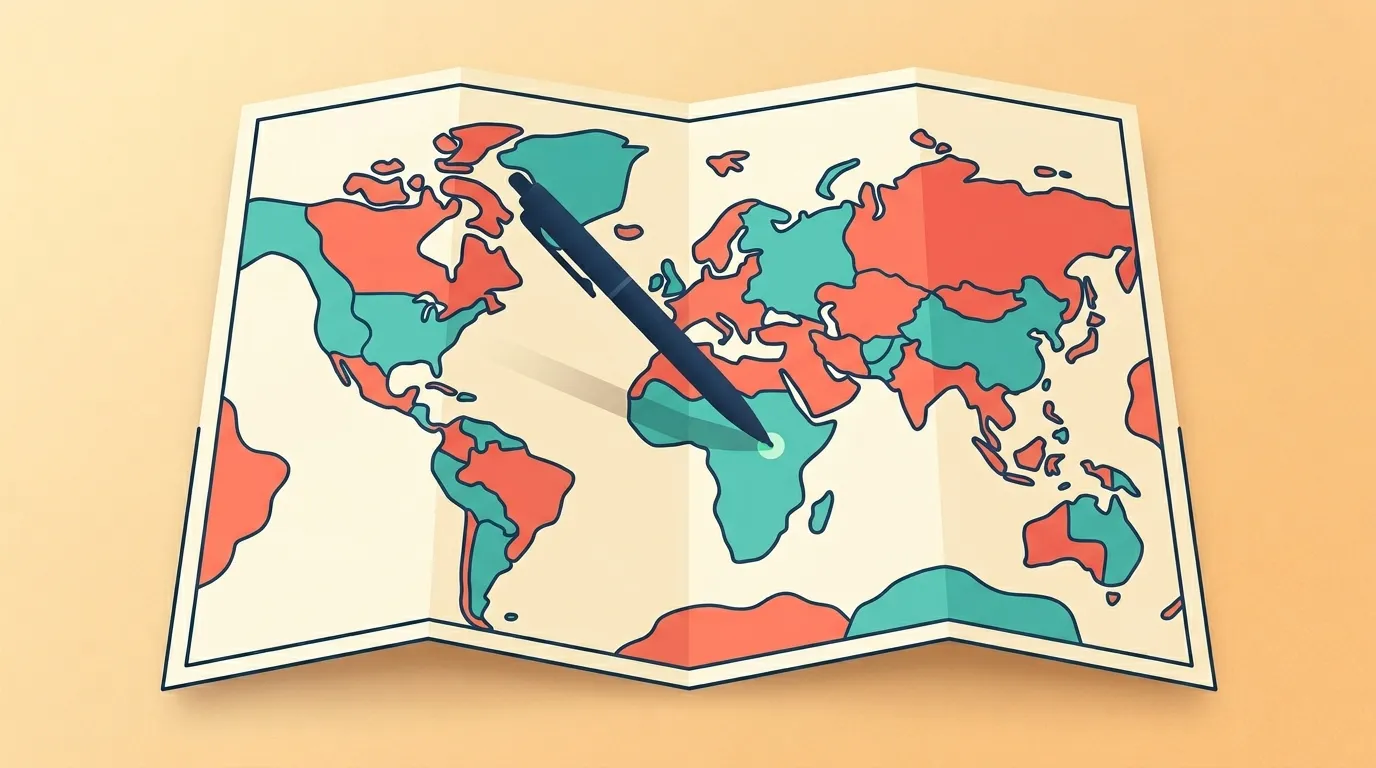
The Pen-Toss Map Trick: A New Travel Trend Among Korea’s MZ Generation
Maybe it’s a reaction to spending so much time staring at screens, but spreading out a paper map and throwing a pen to pick a spontaneous destination has been showing up a lot more often in social media reels and short-form videos. It carries a more analog feel than an app-based roulette wheel, and many say that makes the thrill of “not knowing what’s coming” feel even more intense.
A Break from Digital Fatigue
For a lot of people, the whole process — opening an app, comparing options, reading reviews, and finally booking — is exhausting in itself. Throwing a pen skips all of that in one move, making it the simplest way to plan a spontaneous trip. It’s like a breath of fresh air in an age of information overload.
The Real Appeal Is the Analog Feel
The texture of a paper map, the little tap of the pen landing, the moment you and a friend check the result together — it all makes for great video content, too. Because it works so well as something to watch, it’s spreading naturally across social media.
Fewer Regrets About the Outcome
Since you’re essentially handing the decision over to the pen, wherever it lands starts to feel like “that’s just fate.” That psychological ease makes it much less intimidating for anyone trying a spontaneous trip for the first time.
How to Start the Pen-Toss Map Method
If you’re trying this for the first time, just follow the steps below. All you need is a single map.
Get a Map
A single map of South Korea, sold at bookstores or stationery shops, is all you need. If it’s too big, it’s hard to line up your pen throw, so around A2 size works well. An administrative map with clear city and province borders is best.
Toss Lightly from 1–2 Meters Away
Stand back a bit and toss gently. Throwing too hard can be dangerous, so a felt-tip pen or pencil with a blunt tip is the safer choice. Don’t use a dart.
Read the Result at the City/County/District Level
If the pen lands somewhere too remote, like deep in the mountains, set a rule in advance to round to the nearest town or township. Having a clear standard for reading the result means fewer regrets later.
Only Look Up Departure Time and Transportation
From this point on, search like you normally would. Spontaneous about where to go, careful about how to get there — that balance is the secret to enjoying pen-toss travel for the long run.
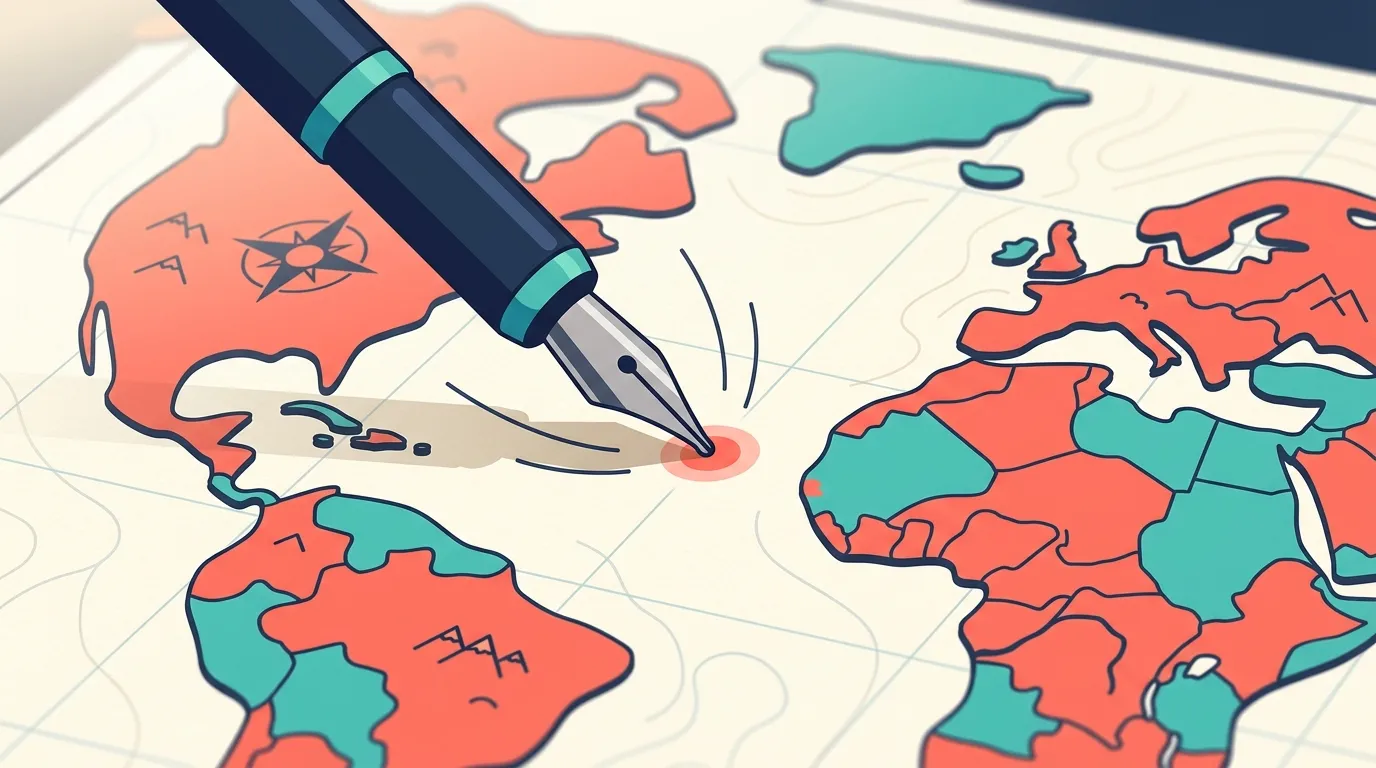
5 Ways to Get More Out of the Pen-Toss Method
If the basic method starts to feel repetitive, try mixing it up. These variations work whether you’re with friends, a partner, or on your own.
The “Three Throws” Rule
Throw three times and pick the midpoint between the two closest results. This helps correct for landing somewhere too remote.
”Cross-Toss” with a Friend
Two people each throw once, and you pick the geographic midpoint between the two landing spots as your destination. Since the responsibility is split fifty-fifty, it’s easier for both people to embrace the result.
Use a Theme Map
Throw at a themed map instead, like a “coastal trip map” or a “hot springs map.” Wherever it lands, the result safely fits within the theme you want.
Set a Regional Limit
Decide on a regional rule in advance — “Seoul metro area only,” “Chungcheong region only,” “within 2 hours only” — and throw only within that section of the map. This fits well with the time constraints of working professionals.
How to Prepare a No-Plan Trip Safely
Even a “no-plan” trip needs a minimum of preparation. Here are tips for keeping things spontaneous and safe at the same time.
Must-Haves Before You Leave
- A charger and a portable battery pack (essential for maps and payments)
- ID and a physical card (in case a place doesn’t take app payments)
- A compact umbrella and a light jacket (in case the weather turns)
- Comfortable sneakers (spontaneous routes usually mean a lot of walking)
Do This Within an Hour of Arriving
- Take a screenshot of the last transportation time back home
- Look up 2–3 restaurants where you can eat
- (If staying overnight) Check your accommodation’s location and check-in time
Minimum Safety Rules
- Tell family or friends where you’re starting from and where you’re headed
- Late at night, choose accommodations in town over an unstaffed rental cabin
- Give a second thought to any route recommended by a stranger
The more spontaneous the trip, the more important it is to check “the way back” first. Miss the last bus or train, and spontaneous can turn into a real problem.
Day Trip vs. Overnight: Comparing Pen-Toss Trips
Even within the same spontaneous-travel idea, the vibe changes completely depending on how long you go. Pick what fits your schedule and stamina.
| Category | Day Trip | Overnight (1 Night, 2 Days) |
|---|---|---|
| What to pack | Just a bag | A small carry-on |
| Budget (per person) | 50,000–100,000 won | 150,000–250,000 won |
| Recommended travel time | 1–2 hours one-way | 2–4 hours one-way |
| Appeal | Light and simple | Night views, local bars, dawn walks |
| Watch out for | Sticking to the last train/bus time | Uncertainty booking last-minute lodging |
| Best for | First-time spontaneous travelers | Seasoned no-plan enthusiasts |

For Overnight Trips, “Late-Night Plans” Are the Real Draw
Night views, a small neighborhood bar, a walk at dawn — these are pleasures only an overnight trip can give you. If the pen lands somewhere a bit far, it’s worth adding a night to your stay.
Pre-Departure Checklist
Before you sling on your bag, run through this quick list.
- Screenshot your departure and return transportation times
- Bring your ID, a card, and 10,000 won in emergency cash
- Check your portable battery and charging cable
- Let family or friends know where you’re headed
- Check the weather and temperature at your destination and dress accordingly
- Check your taxi-hailing app and payment methods
- Book accommodations (for overnight trips) or find a 24-hour café location
- Check your remaining mobile data or roaming balance
Frequently Asked Questions
Q. What if the pen lands in the sea or across the DMZ?
Set a rule in advance to round to the nearest city, county, or district on land. Having a clear standard for reading results means you won’t end up re-throwing every single time.
Q. How much of a budget do I need for a pen-toss trip?
A day trip typically runs 50,000–100,000 won per person, and an overnight trip runs 150,000–250,000 won. Transportation, meals, and admission fees are the main costs, so the total varies by city and season.
Q. Is it safe to go alone?
Generally, yes, if you stick to daytime hours, downtown areas, and tourist zones. Avoid remote roads or empty trails late at night. Setting up a location-sharing app with family or friends beforehand can also give you extra peace of mind.
Q. Can I still do a spontaneous trip on a rainy day?
Absolutely, as long as you pick a city with plenty of indoor options — art museums, exhibitions, traditional markets, café streets. Just double-check the weather before you leave and bring an umbrella and a waterproof bag.
Q. What if I don’t have a paper map?
If you don’t have a paper map at home, it’s fine to start with a digital random-destination tool, then pick up a map and switch to the pen-toss method next time.

Wrapping Up
Throwing a pen at a map is about as analog as travel gets — a way to shake up your routine without any elaborate preparation. Turning an ordinary weekend into a memorable one with nothing but a pen is an experience worth trying at least once. Keep it light, don’t overdo it, and give it a try more than once.