 EasyTicket
 Once monsoon and typhoon season kicks in, flood damage to your home is the biggest worry. The bottom line: if your home floods in a natural disaster, you can receive 3 million won per household in disaster relief funds, and the application deadline is a short 10 days from the end of the disaster. Layer on storm and flood damage insurance and special disaster zone benefits, and how fast you recover changes dramatically. EasyTicket put together the relief amounts by category and how to apply.
What Disaster Relief Funds Are Available for Heavy Rain and Typhoon Damage?
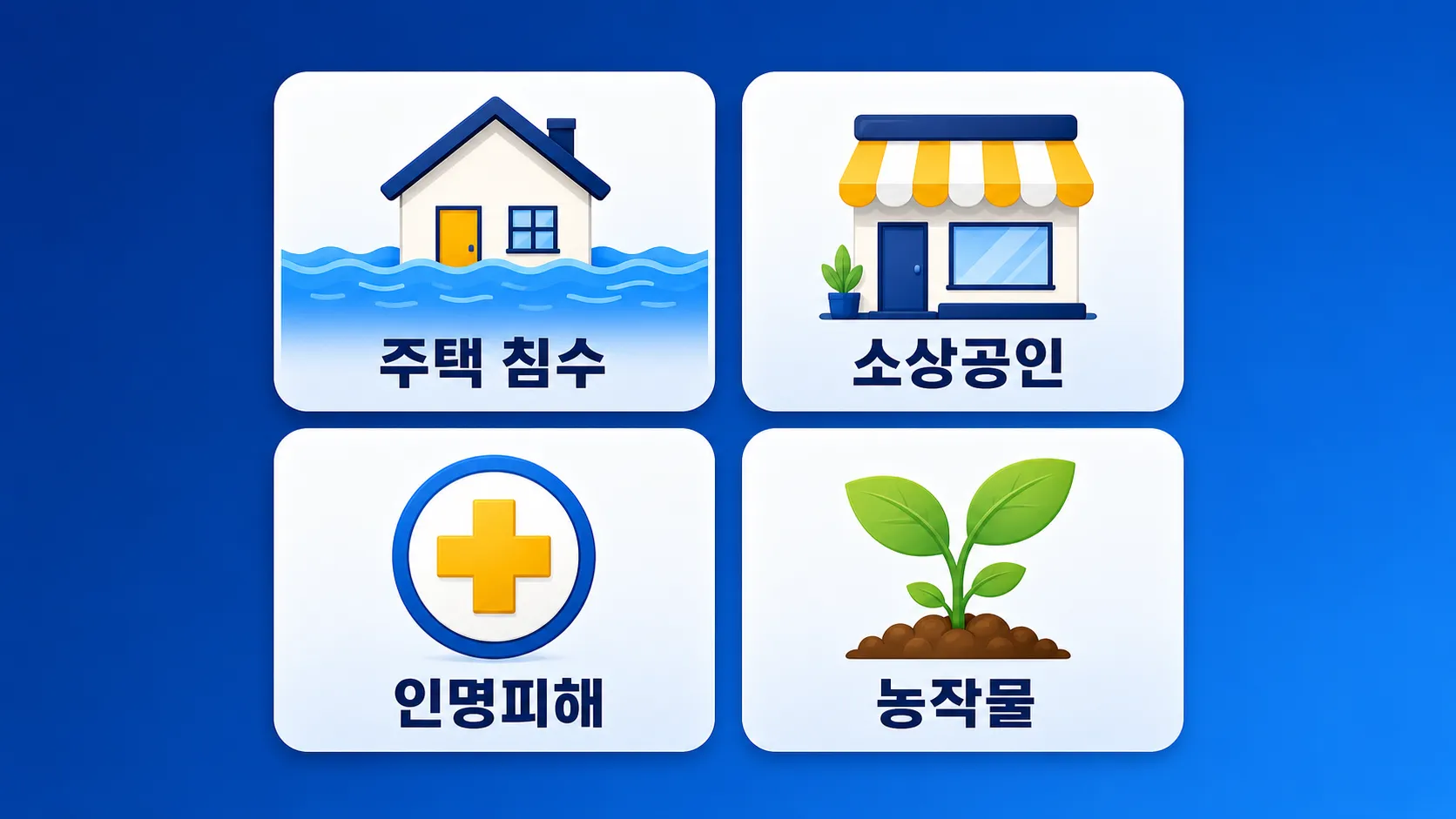
Damage to private facilities (personal property) from a natural disaster is compensated under the Ministry of the Interior and Safety’s Cost-Sharing Standards for Natural Disaster Relief and Recovery. If heavy rain, a typhoon, or flooding has damaged your home or livelihood, support is broken down into four broad categories.
- Housing damage: flooding, partial destruction, total destruction
- Personal injury/loss of life: death, missing persons, injury
- Agricultural/forestry damage: damage to crops and facilities
- Small business damage: flooded business premises, etc.
The key is reporting exactly what kind of damage you suffered. This isn’t compensation — it’s relief funding meant to help you stabilize and recover quickly — so the more thoroughly you document the extent of the damage, the more categories you can claim.
Relief Amounts by Category at a Glance 📋
Here’s a table of the relief amounts by category, based on our research. Housing flood relief applies to households that actually live in the home.
| Type of Damage | What’s Covered | Relief Amount |
|---|---|---|
| Home flooding | Flooding of a primary residence | 3 million won per household |
| Total/partial home destruction | Scaled by floor area | Varies by area |
| Loss of life (death/missing) | Per person | 20 million won |
| Injury | Disability grade 1~7 | 10 million won |
| Injury | Disability grade 8~14 | 5 million won |
| Small business | Unable to operate due to flooding or worse | 3 million won |
| Agriculture/forestry | 50%+ of holdings damaged | Livelihood support payment |
Home flooding damage is supported with a flat 3 million won per household (source: Ministry of the Interior and Safety). Total or partial destruction amounts vary by floor area, so be sure to accurately report the extent of the damage when you file.
How and When to Apply — Report Within 10 Days 🔍
The most important thing is the deadline. The application window for private-facility disaster relief funds is 10 days from the end of the disaster. Miss this window, and you may not be able to get support at all, so you need to act right after the damage happens.
How to Apply
There are two ways to apply. Pick whichever is more convenient.
- In person: Visit the eup/myeon/dong community service center where the damaged home is located
- Online: File through the National Disaster and Safety Portal (safekorea.go.kr)
Checklist: What to Prepare Before You Apply
Having your evidence of damage ready in advance speeds up the on-site inspection.
- Photos/video of the damage (shot so the flood height is visible)
- ID
- Bankbook copy (the account for receiving the funds)
- Renters: a lease agreement or other proof of residence
- An itemized list of damaged belongings
Before you start cleaning up or making repairs, document the damage in photos and video first. Once the water’s drained and the mess is cleared, it becomes much harder to prove the flooding happened, which can work against you at the actual on-site inspection.
Once your damage report is received, a local government official conducts an on-site inspection to confirm the extent of the damage, and the relief funds are paid out after that.
Storm and Flood Damage Insurance — Why It Covers More Than Disaster Relief Funds 💰
Disaster relief funds exist to help stabilize your life, so they’re unlikely to cover the full extent of your actual losses. That’s why it’s worth knowing about storm, flood, and earthquake damage insurance as well. It’s a policy-backed insurance product where the national and local governments cover a substantial share of the premium.
Government Premium Subsidy Rate
The government subsidizes 55~100% of the total premium (source: Ministry of the Interior and Safety), with the rate scaled based on income bracket.
| Policyholder Category | Government Premium Subsidy |
|---|---|
| General households | 55%+ |
| Near-poverty households | 78%+ |
| Basic livelihood recipients, etc. | 87%+ |
| Low-income households in disaster-vulnerable areas | 100% |
Coverage and How to Enroll
Coverage is broad — typhoons, floods, heavy rain, strong winds, high waves, tsunamis, heavy snow, and even earthquakes. Eligible property includes houses (including household goods), greenhouses, and small-business shops or factories. Since the government covers more than half the premium, your out-of-pocket cost is smaller than you’d expect.
You can enroll by phone, in person, online, or through a mobile app, and the policy is sold through several private insurers designated by the Ministry of the Interior and Safety. For product inquiries, call the dedicated storm and flood damage insurance line (044-205-5990~6).

If you’re enrolled in storm and flood damage insurance, you’re compensated through the insurance, which excludes you from filing for disaster relief funds for the same damage. It’s easiest to think of the two programs as one or the other, not both.
Declared a Special Disaster Zone? You Get Even More ✅
When damage is severe enough, the government declares the affected area a special disaster zone. This adds 12 more benefits on top of the 18 benefits given to a regular disaster area. Many of these kick in automatically, with no separate application needed from residents.
Notable Additional Benefits
- Health insurance premium reduction: scaled to the extent of damage
- Public utility discounts: reduced electricity, city gas, and district heating bills
- Telecom bill reduction: up to 12,500 won off one mobile line per household, a 100% waiver of one month’s landline/internet phone bill, and a 50% discount on one month of broadband internet
- Tax benefits: deferred national tax payments, local tax reductions
- Military service deferral: exemption from reserve forces mobilization training, and up to a 60-day postponement of enlistment or physical exam dates
A special disaster zone declaration isn’t automatic. It only happens once the damage exceeds a certain threshold, so be sure to check with your local government’s announcements and the National Disaster and Safety Portal to see whether your area has been declared.
Frequently Asked Questions (FAQ)
Can Jeonse or Monthly-Rent Tenants Also Receive Disaster Relief Funds?
Yes. As long as your actual residence is confirmed, tenants are also eligible for home-flooding disaster relief funds. Just prepare a lease agreement or other document proving residence. Support is based on the household that actually lives there, separate from the landlord.
Is Flood Damage to a Car Also Covered by Disaster Relief Funds?
Natural disaster relief for private facilities is centered on homes, crops, and small-business premises, so flood damage to a vehicle generally isn’t treated as a separate category. Cars are typically compensated instead through your own auto insurance’s own-damage (collision/comprehensive) coverage.
Can I Receive Both Storm and Flood Damage Insurance and Disaster Relief Funds?
Not for the same damage. If you’re enrolled in storm and flood damage insurance, you’re compensated through your insurance payout, which excludes you from filing for disaster relief funds. That said, the insurance payout is often larger than the relief fund amount, so it’s generally to your advantage to be enrolled.
What If I Miss the Application Deadline?
Private-facility disaster relief funds have a strict 10-day-from-disaster-end deadline. If you’re unavoidably late, start by explaining your situation to your eup/myeon/dong community service center and asking whether they can still accept your application. Since the window is so short, the safest approach is to report the damage immediately after it happens.
Monsoon and typhoon damage can strike anyone without warning. The key sequence is ① document the damage in photos and video right away → ② report it to your eup/myeon/dong office or the National Disaster and Safety Portal within 10 days → ③ prepare ahead of time with storm and flood damage insurance. If you’ve been affected, don’t hesitate — head to your nearest community service center and make sure you claim every bit of support you’re entitled to.
Sources
- Sejong City - Guide to Applying for Disaster Relief Funds for Private-Facility Damage From Natural Disasters
- Government24 - Storm, Flood, and Earthquake Damage Insurance Premium Support
- National Disaster and Safety Portal - Overview of Storm, Flood, and Earthquake Damage Insurance
- Ministry of the Interior and Safety - Press Release on Additional Special Disaster Zone Declarations for the July 8–10 Heavy Rain Damage
- Easy-to-Find Living Legal Information - Special Disaster Zone Declaration and Support