 EasyTicket
 When you’re leaving your home empty for several days on a long vacation, only three things really matter: ① Make the house not look “empty” ② Keep deliveries and mail from piling up at the door ③ Check gas, electricity, and moisture safety. For people living alone especially, there’s no one else to look after things, so the 30 minutes before you leave decide how stressed you’ll be after the trip. Here’s a step-by-step rundown for single-person households.
Why is summer vacation season especially risky?
Break-in burglaries show a clear tendency to rise in July and August. Some analyses point to a concentration of incidents late at night on the Friday and Saturday when peak vacation season kicks off (source: National Police Agency). The reason is simple — everyone’s away from home.
There’s also a summer-specific variable: the monsoon rains and humidity. If you seal the house shut for days, mold and odors build up — but if you crack a window open for ventilation instead, rain gets in. Handling both security and humidity at the same time is the key challenge of a long summer absence.
For reference, the police’s “empty home advance report system” (a patrol-request program) was abolished in 2020. It’s since been replaced by “flexible patrols” that circle through areas residents request, so rather than expecting “if I report it to the police, they’ll watch over it,” it’s more accurate to take charge of your own home security.
Security: don’t let the house look “empty”
Burglars read the signals of whether a home is empty or not. The key is to make it look “as if someone is there.”
- Keep the entrance clear: A pile-up of mail, flyers, or deliveries is a clear sign that “no one’s been here for days.”
- Hold off on posting to social media in real time: Some burglars monitor vacation posts on social media to identify empty homes. It’s safer to post photos after you’re back.
- Double-check doors and windows: Especially on the first floor or lower levels, and even small windows in the veranda or bathroom. It’s common for a window you thought was locked to actually be open.
- Use a lighting timer: An outlet timer (around 10,000 won) that briefly turns on the living room light in the evening creates the impression someone’s home.
- Move valuables out of the house: For cash and jewelry, it’s more reassuring to use the valuables storage service at your nearest police substation or rent a safe deposit box at a bank.
Simply not leaving delivery boxes sitting at the door for long already boosts your security a lot. Remember the formula: “stuff piled at the door = signal of an empty home.”
Sorting out deliveries and mail — piling up at the door sends a signal
For a household living alone, the most telling sign is deliveries stacked at the door and bills stuffed in the mailbox. Take care of this before you leave.
| Item | How to handle it |
|---|---|
| Subscription / dawn delivery | Set delivery pause / skip in the app (for the vacation period only) |
| Deliveries already on the way | Have them arrive before you leave, or switch to pickup at a convenience store or unmanned parcel locker |
| Regular mail | Use the post office’s hold-for-pickup service — it will be held at that post office for up to 10 days |
| Mailbox | Empty it once before leaving; if a neighbor or friend can help, ask them to clear it out partway through |
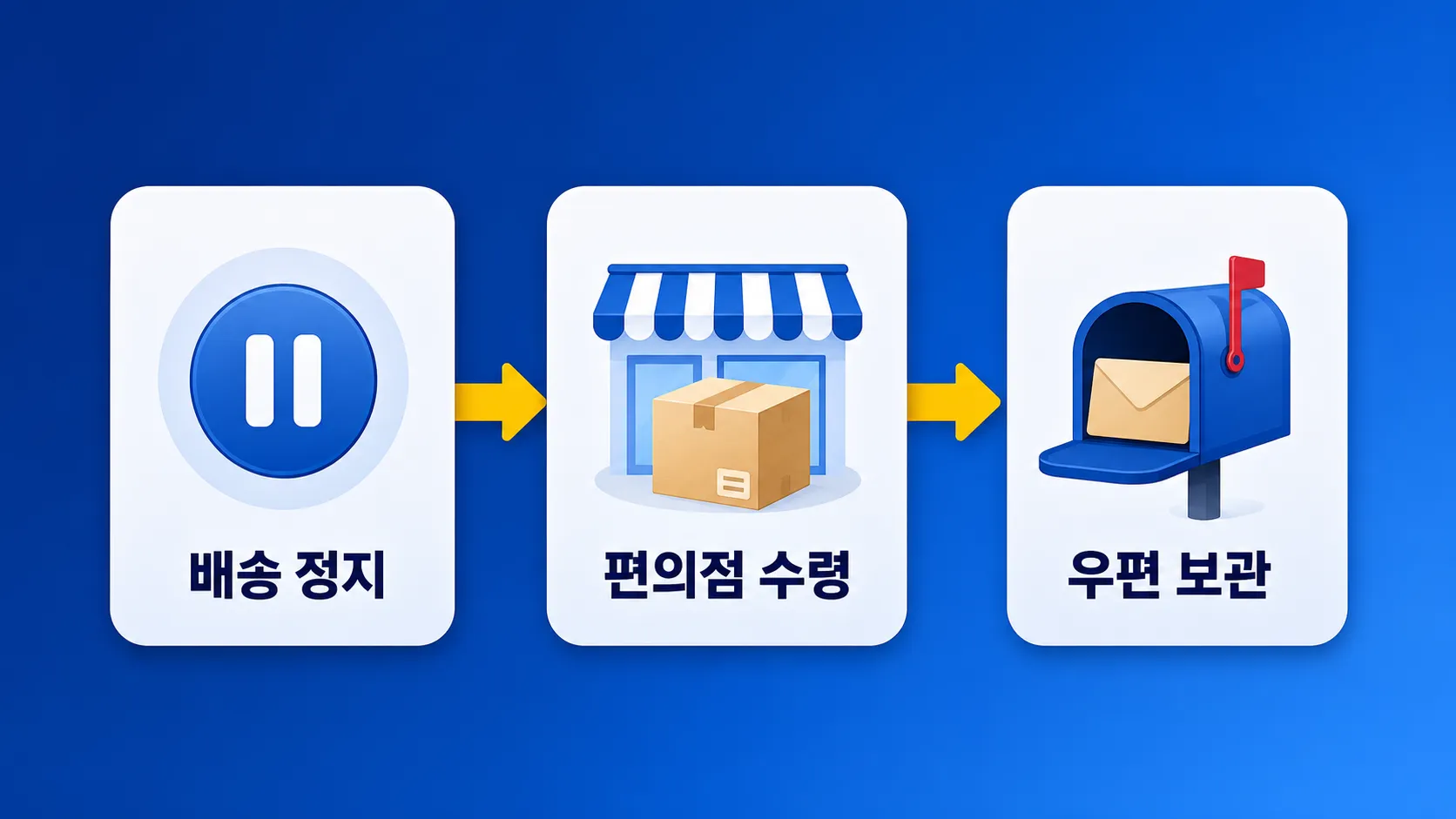
You can apply for mail hold-for-pickup at a post office counter or through the Internet Post Office, and the holding period is set based on the date the mail arrives at the post office. That said, if you’ll be away for a long time, the surest option is to stop deliveries altogether.
Gas and electrical safety checks (the fridge and boiler are exceptions)
This is where people often go wrong — some end up worse off after thinking, “surely it’s safer to unplug everything.”
- Shut off the gas: After use, close the burner cock and the intermediate valve, and if you’ll be away for an extended period, close the city gas main valve as well.
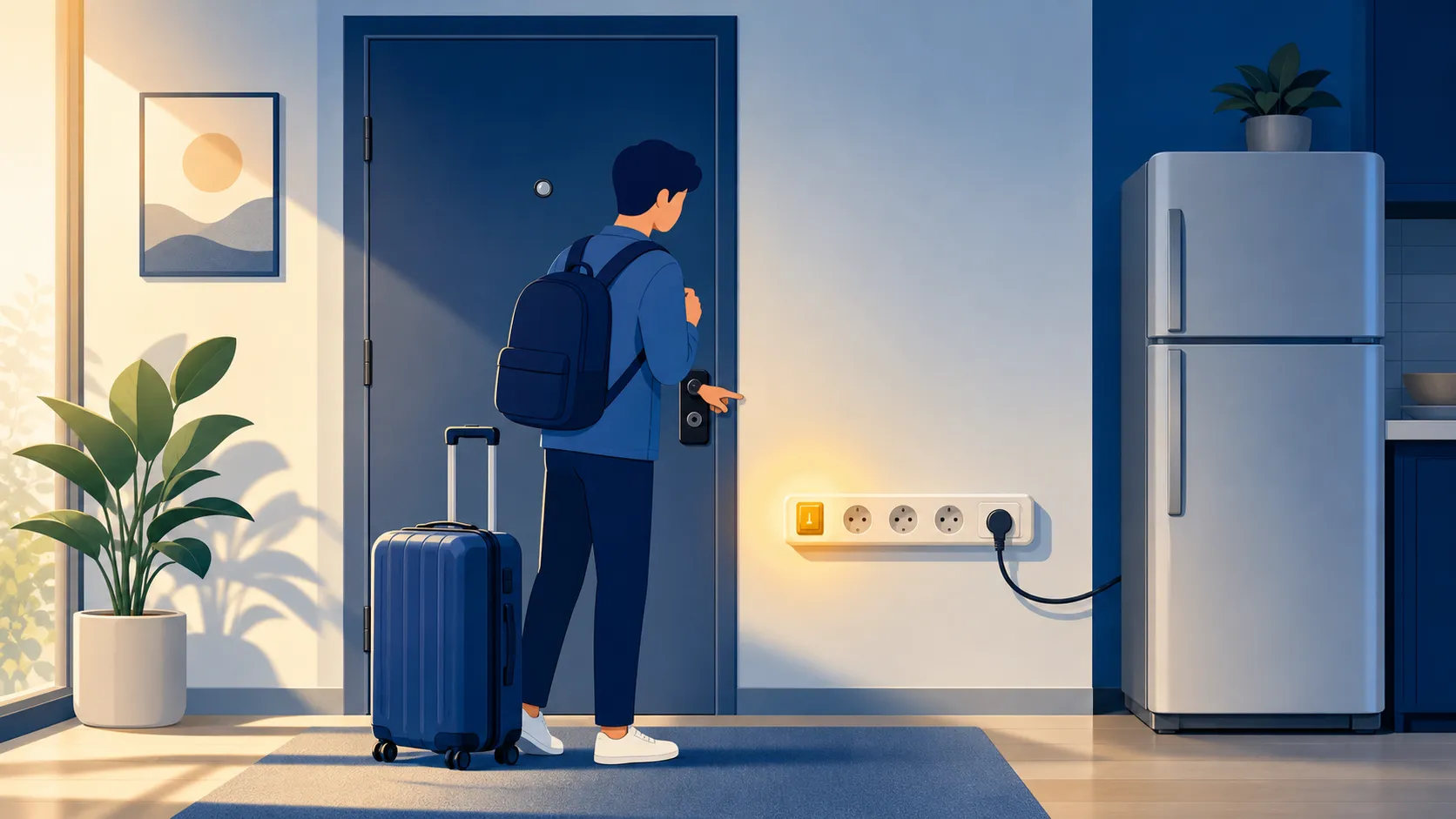
- Leave the fridge plugged in: Refrigerators and freezers need to stay powered to keep the food inside safe. Never unplug them.
- Leave the boiler’s outlet and valve alone too: Unplugging it or closing the valve stops the freeze-prevention function. Freezing isn’t much of a concern in summer, but the rule is still to leave a wet-type (hydronic) boiler powered on through the season.
- Cut standby power for everything else: Unplug appliances you’re not using. Standby power drives up your electricity bill and raises fire risk. Flipping off a power strip’s switch clears it all at once.
“I turned off even the fridge to save on electricity” is the worst-case scenario. In summer, that means spoiled food plus odors and bugs as a bonus. Be precise about what to unplug and what to leave on.
Summer-specific: blocking moisture, mold, and odors
The real hidden danger of a long summer absence is the musty smell and mold that hits you the moment you walk back in.
- Dry the bathroom completely: Wipe down the floor and sink, and if there’s a ventilation fan, it helps to leave it running.
- Close the windows before you leave: Leaving a window open for ventilation just lets monsoon rain in. Close the door and leave plenty of moisture absorber out instead.
- Empty the food waste and general trash: In summer, even a single day is enough to cause odors and bugs. Be sure to take it out before you go.
- Manage the drain trap: To keep sewer odors from backing up, pour water into the drain to fill the trap, or cover it.
- If you have a dehumidifier: It helps a lot with managing humidity in a sealed space.
Final checklist for single-person households before you leave
Running through this list right before you leave can prevent major mistakes.
- Confirm the front door, windows, and veranda door are all locked
- Pause subscription/dawn deliveries; switch parcels to pickup at a convenience store or unmanned locker
- Empty the mailbox (apply for post office holding if away long-term)
- Close the gas intermediate valve and main valve
- Leave the fridge and boiler plugged in
- Unplug unused appliances and switch off power strips
- Take out food waste and general trash
- Dry the bathroom + place moisture absorber, close the windows
- Store valuables at a bank or police substation (optional)
- Check watering for houseplants and feeding for fish tanks
- Save real-time vacation posts on social media for after you’re back
Frequently asked questions (FAQ)
Isn’t it better to leave a window cracked open for ventilation in summer?
No. During monsoon season, rain gets in through an open window, soaking the floor and wallpaper and making mold even worse. It’s safer to close the door and leave plenty of moisture absorber out instead. If you’re worried about humidity, run a dehumidifier instead of opening a window.
Shouldn’t I turn off the fridge too, to save on electricity?
The fridge is an exception. If you turn it off and food spoils over the summer, you’re looking at odors and bugs on top of the loss — far more costly. Keep the fridge and boiler plugged in, and instead cut standby power only from unused appliances like the TV, microwave, or chargers.
How many days will they hold my mail?
The post office’s hold-for-pickup period is set based on the date the mail arrives at the post office (generally around 10 days). If you’ll be away longer than that, either ask someone you know to clear the mailbox partway through so it doesn’t overflow, or — the surest option — stop deliveries altogether.
Is it okay to post vacation photos to social media right away?
It’s best to avoid real-time uploads. There are cases of burglars identifying empty homes by watching vacation posts on social media. Making it a habit to post photos only after you’re back home is the safer choice.
Getting ready before leaving your home really comes down to those “30 minutes before you leave.” Save a screenshot of the checklist above and run through it once right before heading out, and you’ll be able to relax fully on vacation without the nagging worry of “did I shut off the gas…?” Have a safe trip.