 EasyTicket
 On August 3, 2026, the Ministry of Finance and Economy held a meeting of the Tax System Development Deliberation Committee and finalized and announced the 2026 tax reform plan. For employees, the core takeaway is this: income tax rates (the tax bracket thresholds and rate table) stay the same, while deduction items and refund programs get broader. On the other hand, the comprehensive real estate tax gets heavier, and most of the changes take effect starting in 2027.
The August 3 tax reform at a glance
Breaking down the announcement item by item gives you the table below. Over the five years from 2027 to 2031, once the reform is fully phased in, the cumulative effect on tax revenue is a 3.443 trillion won increase.
| Item | Now | Reform plan | Direction |
|---|---|---|---|
| Income tax rate / brackets | Current system kept | No change | – |
| Dependent deduction income requirement | Annual income of 1 million won or less | Annual income of 3 million won or less | Eased |
| Youth rent tax credit | Up to 1.5 million won | Up to 2.04 million won | Expanded |
| Earned income tax credit (dual-income) | Up to 3.3 million won | Up to 3.6 million won | Expanded |
| Comprehensive real estate tax, one-home deduction (resident) | 1.2 billion won | 1.4 billion won | Eased |
| Comprehensive real estate tax, one-home deduction (non-resident) | 1.2 billion won | 900 million won | Tightened |
| Domestic production tax credit | None | New credit for 6 item categories | New |
Cumulatively over five years, the tax burden on working- and middle-class households falls by 1.2238 trillion won, while it rises by 122.6 billion won for high-income earners. Here, “working- and middle-class” is defined as total annual salary of 89 million won or less (200% or less of the average wage across all workers). The fact that 63% of the revenue increase comes from the comprehensive real estate tax alone says a lot about the character of this reform.
Income tax rates stay put — it’s the deductions that moved
When tax reform news breaks, the first thing most people check is “is my income tax rate going up?” This August 3 tax reform plan contains no changes to the income tax bracket thresholds or rates. Even so, income tax is projected to fall by 557.9 billion won over five years — not because of rate changes, but because the earned income tax credit and other tax credits were expanded.
So if you’re an employee reading this, there’s no need to memorize the rate table again — just keep track of which boxes change on your year-end settlement paperwork. As I went through the announcement item by item and rebuilt the table myself, it turned out the parts that actually feel different aren’t the income tax rate at all, but three specific areas: dependents, rent, and the earned income tax credit.
3 changes you’ll actually feel in your year-end settlement
Dependent deduction income requirement rises to 3 million won
Right now, if a spouse or parent has annual income over 1 million won (or total salary over 5 million won if it’s earned income only), you can’t claim the dependent deduction for them. The reform raises this threshold to annual income of 3 million won or less. For earned-income-only cases, it’s recognized up to total salary of 7.5 million won or less. This should cut down on cases where the entire deduction was lost just because a parent picked up a bit of part-time or short-term work. It applies starting in 2027.
Youth rent tax credit: 17% regardless of salary
The existing rent tax credit rate used to vary by total salary, but for young people it will now be a flat 17%, regardless of total salary level. The eligible rent cap also rises from 10 million won to 12 million won a year, pushing the maximum credit from 1.5 million won to 2.04 million won. Note that this expansion is only in effect for three years, from 2027 to 2029.
Earned income tax credit rises to up to 3.6 million won
Both the income threshold and the payout amount for the earned income tax credit go up.
| Household type | Income threshold (current → reformed) |
|---|---|
| Single-person household | 22 million won → 26 million won |
| Single-earner household | 32 million won → 37 million won |
| Dual-earner household | 44 million won → 52 million won |
The maximum payout for dual-earner households rises from 3.3 million won to 3.6 million won, and the number of benefiting households is projected to grow from 4.16 million to 4.89 million. On top of this, the withholding tax rate for service-based independent workers, such as delivery riders, drops from 3% to 2%.
Both the eased dependent deduction requirement and the expanded earned income tax credit take effect in 2027. They apply to income earned from that point forward, not to the year-end settlement you file in January 2027 covering 2026 income — so don’t assume it applies to this year’s year-end settlement right away.
If you own a home, look at the comprehensive real estate tax and capital gains tax first
The real center of gravity of this reform is actually real estate. Comprehensive real estate tax revenue alone is set to rise by 2.1815 trillion won over five years, accounting for most of the total revenue increase.
- Owner-occupied, single-household one-home: basic deduction rises from 1.2 billion won to 1.4 billion won (effectively tax-exempt up to a market value of roughly 2 billion won)
- Non-resident one-home: basic deduction falls from 1.2 billion won to 900 million won
- Capital gains tax long-term holding special deduction: the holding-period portion is recognized at only half its rate in 2028, then abolished in 2029; the residency-period portion stays at 8% per year, up to 80% max
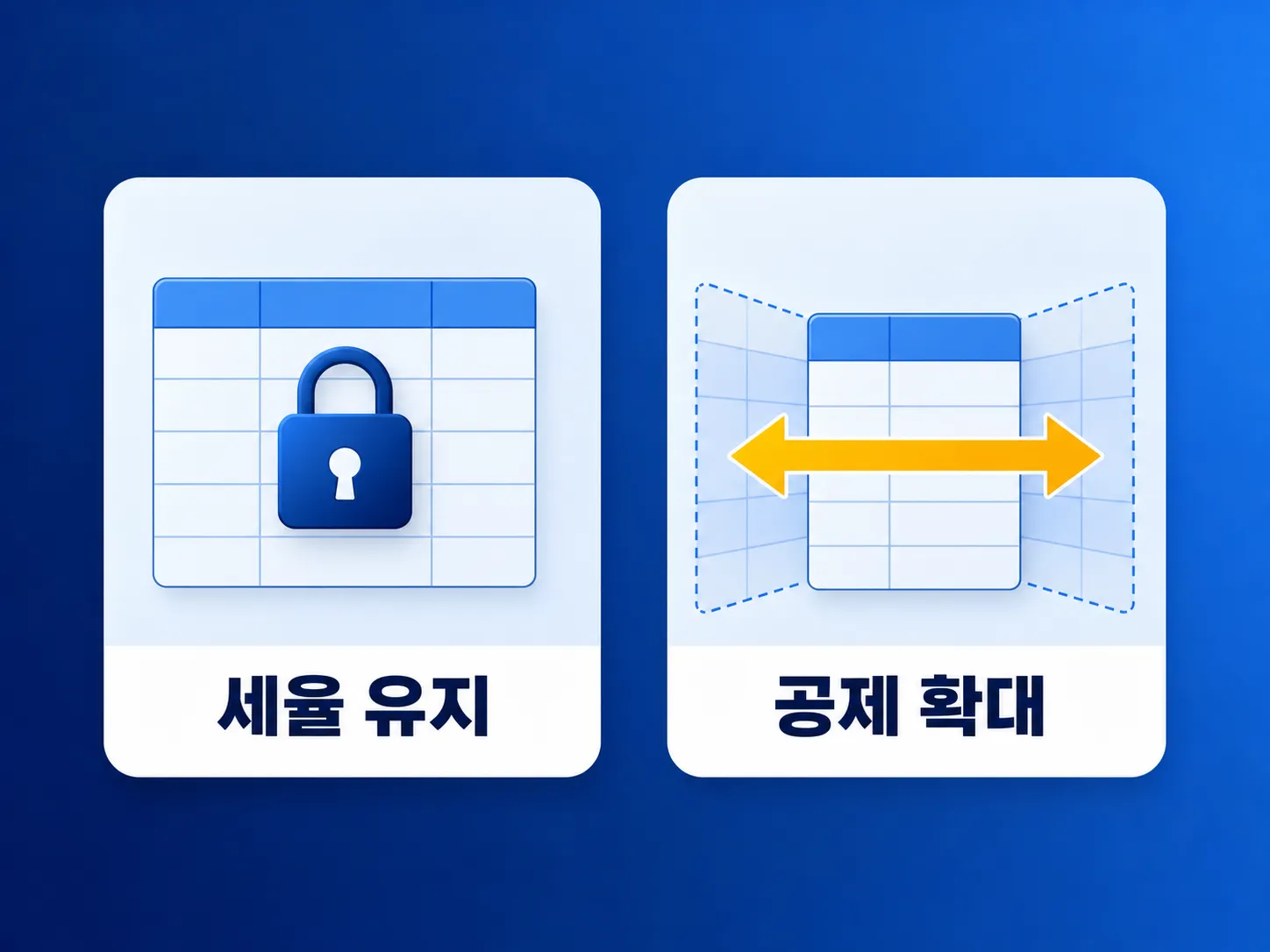
In other words, even among owners of a single home, the tax burden splits in opposite directions depending on whether they actually live there or not. Digging through the materials, this was the part that surprised me most — if you only read it as “the deduction amount is going up,” you’d miss that the deduction for a non-resident one-home owner is actually being cut by 300 million won.
Corporate tax and the domestic production tax credit
The corporate tax rate itself wasn’t touched in this August 3 tax reform plan. The rates below have already been in effect for fiscal years starting on or after January 1, 2026 (source: National Tax Service).
| Tax base | Rate |
|---|---|
| 200 million won or less | 10% |
| 200 million – 20 billion won | 20% |
| 20 billion – 300 billion won | 22% |
| Over 300 billion won | 25% |
What’s new instead is the domestic production tax credit. If a company directly manufactures and sells products in one of 6 designated item categories — solar power, wind power, secondary batteries, semiconductors, core materials, and AI/robotics components — domestically, it receives a credit based on production volume for 10 years. Core processes must be carried out domestically, and the domestic-spending share of eligible production costs must meet a minimum ratio; regions outside the greater Seoul area get a higher credit amount than the capital region. The standard credit amount for each item category will be set in the enforcement decree.
Meanwhile, tax exemptions and reductions are being tightened. Of 241 tax expenditure items, 115 are being reorganized: 20 will be discontinued, 17 converted into direct fiscal support, and 64 redesigned.

Timeline and what to do now
What’s been announced is a reform plan, not a finalized law. Keep in mind that the details could change during National Assembly deliberation as you look at the schedule below.
| Date | What happens |
|---|---|
| 2026-08-03 | Tax System Development Deliberation Committee finalizes and announces the reform plan |
| 2026-08-04 to 08-20 | Legislative notice period |
| 2026-09-03 | Scheduled submission to the regular session of the National Assembly |
| 2027 | Expanded dependent deduction and earned income tax credit take effect |
| 2027 to 2029 | Expanded youth rent tax credit (3-year time limit) |
| 2029 | Capital gains tax long-term holding-period special deduction abolished |
Checklist — the essentials for employees
- Check whether any of your dependents fall in the 1 million–3 million won annual income range
- For dependents with earned income only, check whether their total salary is 7.5 million won or less
- If you’re a young renter, keep your lease agreement and rent payment records on file
- If your household’s combined dual-income total is 52 million won or less, check your eligibility for the earned income tax credit
- If you own one home, check the difference in the comprehensive real estate tax deduction depending on whether you actually live there
- Double-check the final details after the bill is submitted to the National Assembly in September
The figures at this reform-plan stage may still be adjusted during National Assembly discussion. Right before you actually file or apply, it’s safer to double-check the final confirmed details on the National Tax Service’s Hometax site and with the relevant ministry.
Frequently asked questions
Does this reform raise my income tax rate?
No. The August 3 tax reform plan contains no changes to the income tax brackets or rates. For working- and middle-class taxpayers with total salary of 89 million won or less, the expanded deductions and tax credit are actually projected to reduce their burden by 1.2238 trillion won over five years.
Does it apply starting with the January 2027 year-end settlement?
The eased dependent deduction requirement and the expanded earned income tax credit apply starting in 2027, so at the point when you settle your 2026 income, the current standards still apply as-is. The exact effective date will be finalized in the final supplementary provisions after National Assembly passage, so you’ll need to check again at that point.
Does the 17% youth rent tax credit stay in place permanently?
No. This expansion is designed to run for three years only, from 2027 to 2029. If you’re a young renter, it’s to your advantage to claim as much of the credit as possible within these three years — and any rent above the 12-million-won annual cap doesn’t qualify for the credit.
If I own one home but live elsewhere and lease it out under jeonse, does my comprehensive real estate tax go up?
Yes — that’s the single biggest change in this reform. For an owner-occupied one-home, the basic deduction rises from 1.2 billion to 1.4 billion won, but for a non-resident one-home, it falls from 1.2 billion to 900 million won. Even for the same single home, whether you actually live there or not splits your tax burden in opposite directions.
Is it certain that the reform plan will be implemented exactly as announced?
No, it isn’t final yet. It’s set to go through a legislative notice period from August 4–20 and a Cabinet meeting before being submitted to the regular session of the National Assembly on September 3, and the amounts and timing could still be adjusted during National Assembly deliberation. Especially for contentious items like the comprehensive real estate tax, the original proposal often doesn’t pass exactly as written.