 EasyTicket
 If this was a year when you spent a lot on medical care, there’s a good chance the National Health Insurance Service (NHIS) has a refund waiting for you. Here’s the short version: notices for Co-payment Ceiling System refunds usually go out in late August of the following year, and you can look it up and apply in under a minute on the NHIS website (nhis.or.kr) or via The건강보험, NHIS’s official app.
What Is a Health Insurance Refund?
Health insurance refunds fall into two main categories. Their names look similar, so they’re easy to mix up, but the reasons you’d receive each one are completely different.
Co-payment Ceiling System Refund
If the total copayments you paid over one year (January–December) exceed the ceiling set for your income level, NHIS refunds the excess. This mainly applies to people who had expensive surgery, long hospital stays, or treatment for a serious illness. It’s also the main topic of this article.
Overbilled Copayment Refund
This is money returned when a hospital overcharges for treatment and the patient ends up paying more than they should have. It’s confirmed through a review by the Health Insurance Review & Assessment Service (HIRA) or an on-site inspection by the Ministry of Health and Welfare, and then refunded (source: National Health Insurance Service). In many cases it’s flagged automatically, so you don’t need to apply separately.
You can check both types in one place — the ‘Refund Inquiry/Application’ menu on the NHIS website. No need to look anywhere else.
Who Can Get a Co-payment Ceiling System Refund?
Anyone enrolled in national health insurance can potentially qualify. But you only get a refund if your total copayments for the year exceed the ceiling for your income bracket. Here are the 2025 ceilings by income bracket:
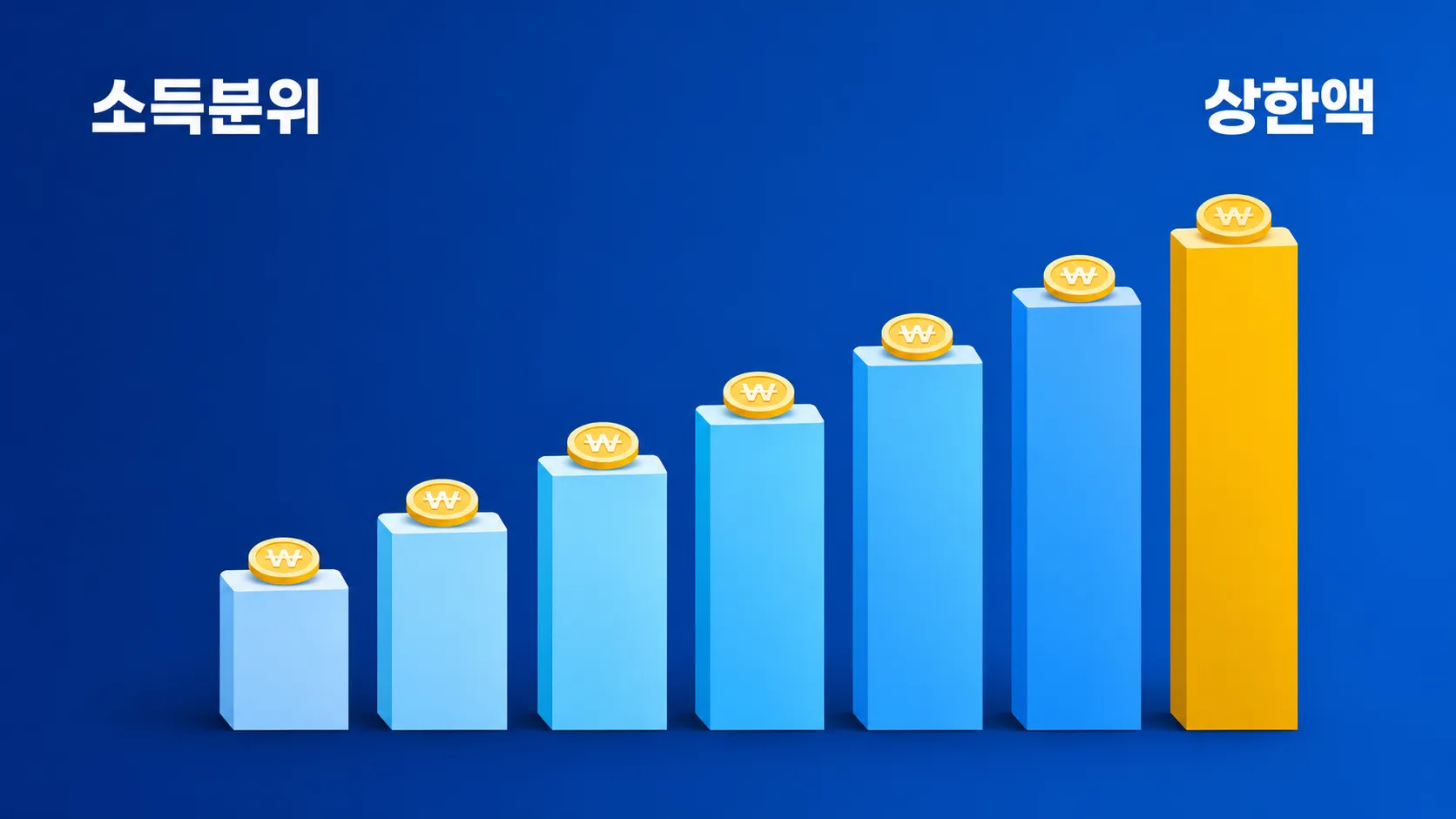
| Income Bracket | Ceiling (hospitalized ≤120 days at a long-term care hospital) |
|---|---|
| Bracket 1 (bottom 10%) | KRW 900,000 |
| Brackets 2–3 | KRW 1,120,000 |
| Brackets 4–5 | KRW 1,730,000 |
| Brackets 6–7 | KRW 3,260,000 |
| Bracket 8 | KRW 4,460,000 |
| Bracket 9 | KRW 5,360,000 |
| Bracket 10 (top 10%) | KRW 8,430,000 |
For example, say a salaried employee in income bracket 5 paid KRW 2,500,000 in copayments over 2025. Since that’s above the KRW 1,730,000 ceiling, the excess KRW 770,000 would be eligible for a refund (source: Ministry of Health and Welfare). NHIS totals everything automatically, so you don’t need to save your medical receipts or gather any documentation yourself.
If you were hospitalized for more than 120 days at a long-term care hospital, a higher ceiling applies. If you have a family member in long-term care, it’s worth double-checking the ceiling table.
How to Check Your Health Insurance Refund
Checking takes just 5 minutes. As long as you can verify your identity, you can do it on either PC or mobile.
🔍 Checking on the Website (PC)
- Go to the NHIS website (nhis.or.kr)
- At the top, click Civil Petitions → Individual Petitions → Refund Inquiry/Application
- Log in using a public certificate, financial certificate, or simple authentication (Kakao, Naver, etc.)
- Check the ‘Amount Exceeding the Co-payment Ceiling’ section
📱 Checking via The건강보험 App
Search for ‘The건강보험’ on the App Store or Google Play → install it → log in, then go to Civil Petitions → Refund Inquiry/Application. Even before your notice arrives by mail, if you have an advance-benefit entry on file, it’ll already show up here.
📞 Checking by Phone
If PC or mobile isn’t an option for you, you can call the NHIS customer center at 1577-1000 (weekdays 09:00–18:00), verify your identity, and ask them to look it up for you. Visiting a nearby NHIS branch office also works.
The NHIS website and app tend to get crowded every year from late August through early September, when the mailed notices go out. Weekday mornings are your best bet for getting in quickly.
How to Apply for a Refund, and When It’s Paid
Once the lookup confirms you’re eligible for a refund, you can go ahead and submit your application right then and there.
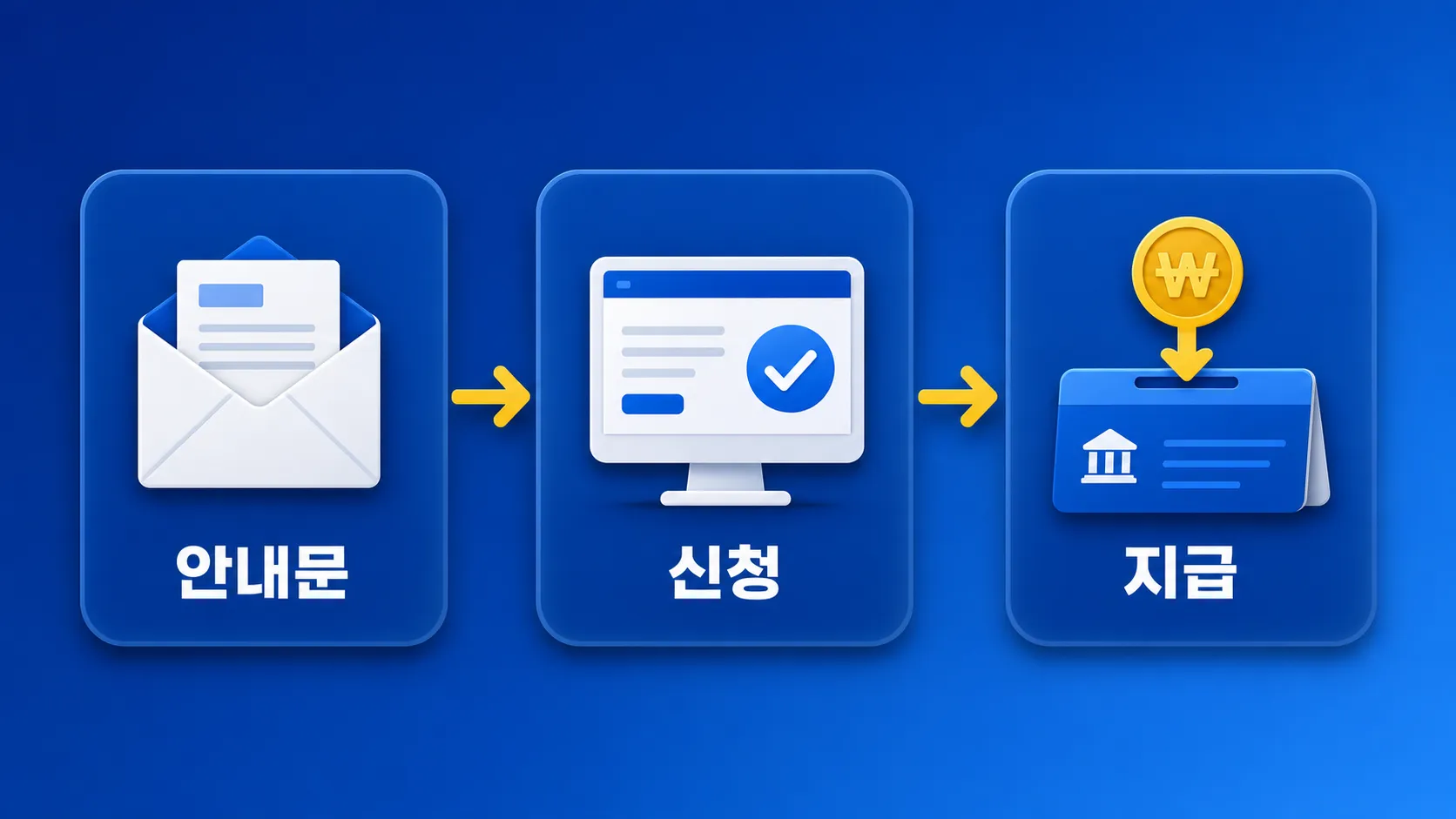
Application Checklist
- Log in to the NHIS website/app and look up your refund
- Have a bank account in your own name ready (a family member’s account won’t work)
- Fill out the refund application (auto-filled if done online)
- Submit → confirm the deposit within 7–14 business days
- Apply within 3 years of receiving the notice (it expires after that)
Two Methods: Advance Benefit vs. After-the-Fact Refund
| Category | Advance Benefit | After-the-Fact Refund |
|---|---|---|
| When it applies | Immediately, during treatment | The following August |
| Condition | Ceiling exceeded at the same hospital | Copayments combined across multiple hospitals |
| Process | Hospital bills NHIS directly | Patient applies, then receives a bank deposit |
| Notification | None sent | Notice mailed by post |
Every year in late August, NHIS finalizes the co-payment ceiling for the previous year’s treatment (e.g., 2024) and then mails notices to everyone eligible for an after-the-fact refund (source: National Health Insurance Service). So for treatment received in 2025, the notice would arrive around late August 2026.
If you receive a notice but don’t apply, the refund expires after 3 years. Keep the mailed notice somewhere safe and hold onto it until you’ve confirmed the deposit in your account.
What’s Excluded From the Refund, and Other Things to Watch For
The Co-payment Ceiling System only counts treatment costs covered by national health insurance. No matter how much you spend on the following, none of it counts toward the ceiling calculation.
Items Excluded From the Ceiling
- Non-covered treatment costs (some MRIs, manual/physical therapy, cosmetic procedures, etc.)
- Selectively covered service copayments (some high-cost medications and treatment materials)
- Dental implant copayments
- Extra charges for higher-level wards (2–3-person rooms)
- Chuna manual therapy copayments
- Copayments for minor-condition outpatient care at tertiary general hospitals
- Full out-of-pocket expense items
Medical expenses already reimbursed by your private indemnity insurance (Korea’s supplemental private health insurance) still count toward a Co-payment Ceiling System refund. But once you receive that refund, your indemnity insurer deducts the same amount from its own settlement, so if you’re claiming both, pay close attention to the order and the amounts.
What Changed in 2025 and 2026
Starting in 2025, if you have unpaid health insurance premiums, that overdue amount is deducted from your refund first (offset), and only the remainder is paid out (source: Ministry of Health and Welfare). If your refund deposit is smaller than you expected, check for outstanding premiums first.
Frequently Asked Questions (FAQ)
By when do I need to apply for the refund?
You need to apply within 3 years of the date you received the notice from NHIS. Once 3 years pass, the statute of limitations kicks in and you can no longer receive it. Even if you lose the notice, you can still apply as long as you can look it up on the website or app.
Can I apply on behalf of a family member?
For a family member to apply on someone else’s behalf, you’ll need a power of attorney plus ID for both the applicant and the person applying for them. Online applications require identity verification in the account holder’s own name, so if a parent has trouble getting around, it’s easier to apply by visiting an NHIS branch office or calling 1577-1000.
Can I receive a refund owed to a deceased family member?
Yes. The heir can claim it by visiting an NHIS branch office with a certificate of family relations, a death certificate, their own ID, and a copy of their bankbook. The same 3-year time limit applies.
Is the refund paid out automatically every year?
For the after-the-fact refund, a mailed notice goes out only to people who qualify. Even after the notice arrives, you still need to register your account and apply before you get paid — it isn’t automatic. Advance benefits, on the other hand, are handled directly by the hospital with no extra steps needed on your part.
Does this affect the medical expense tax deduction?
Any amount refunded under the Co-payment Ceiling System is excluded from the medical expense tax deduction in your year-end tax settlement. When you file your year-end settlement the following January, be sure to subtract the refunded amount from your medical expense deduction to avoid a penalty.
If this was a year with high medical expenses, it’s worth checking ahead of time via The건강보험 app, even before the late-August notice arrives. If you already have an advance-benefit amount processed or a refund on file, you can complete the application right there. The 1577-1000 call center connects faster than you’d expect, too, so if there’s anything you’re unsure about, asking directly is the most reliable way to find out.
Sources
- Co-payment Ceiling System (Enforcement Decree of the National Health Insurance Act, Article 19) - National Health Insurance Service
- Copayment Refund (National Health Insurance Act, Article 47, Paragraphs 3–4) - National Health Insurance Service
- How to Apply for a Health Insurance Co-payment Ceiling Refund - Government24
- 2025 Health Insurance Co-payment Ceilings by Income Bracket - Ministry of Health and Welfare
- Health Insurance Copayment Refund - Government24