 EasyTicket
 The real variable in a Takamatsu udon pilgrimage isn’t the “list of great shops” — it’s closing time. Great Sanuki udon shops open early in the morning and pull their shutters down around midday once the dough runs out. So if you want to fit a Naoshima ferry into the same day, you need to plan your route backward, in the order “morning closing schedule → ferry departure time,” to avoid getting shut out. This article zeroes in on exactly that combination.
Why You Should Check the “Morning Closing Schedule” First
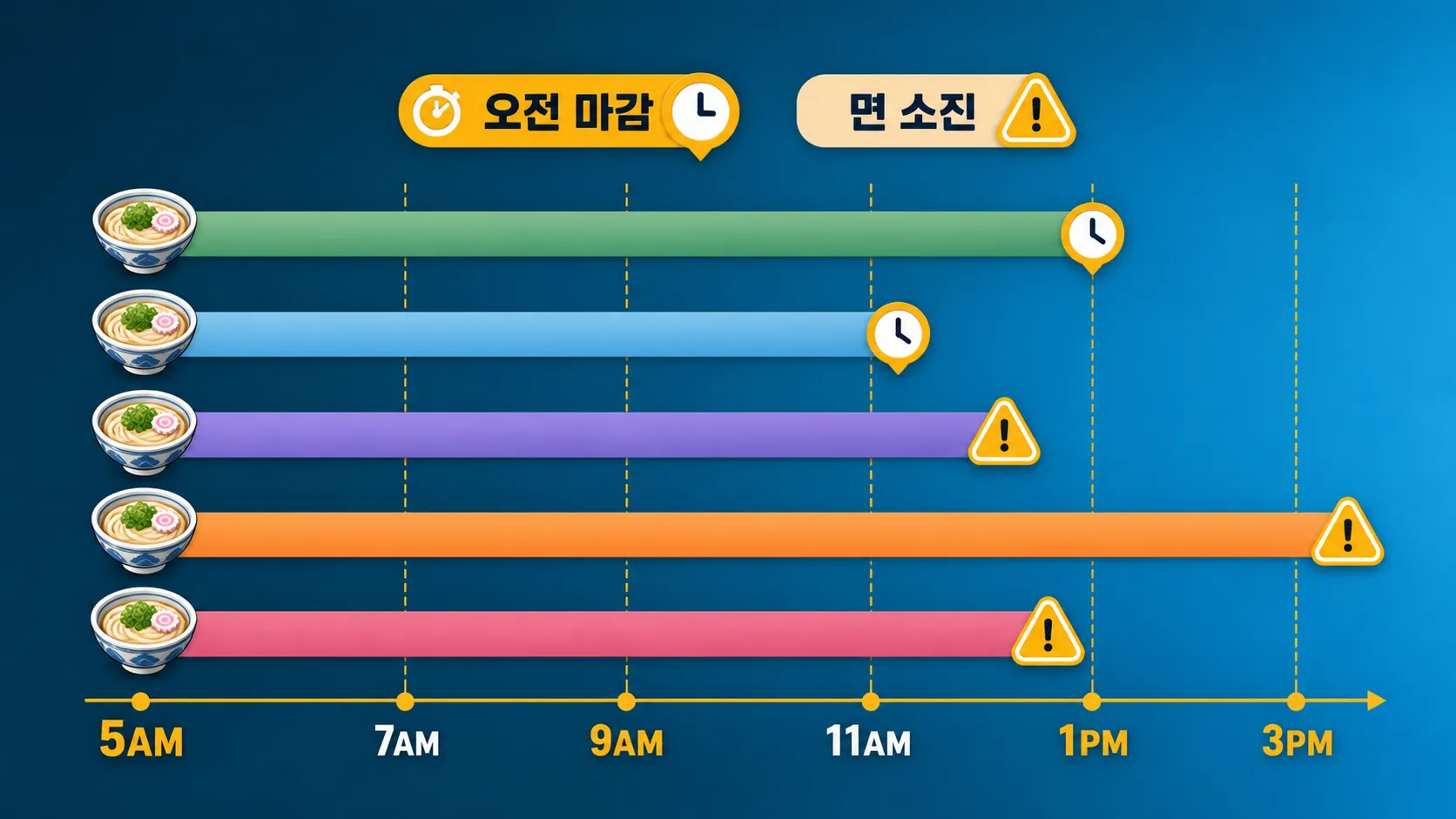
Most famous udon shops in Kagawa close early once they run out of noodles, so their closing time isn’t fixed. Even if the posted hours say “until 14:00,” they’ll actually close earlier if the dough runs out. This is especially true of old-school self-service shops, many of which open around 5~7 a.m. and finish before lunch.
On top of that, ferries to Naoshima run only a handful of times a day. From Takamatsu Port to Miyanoura (Naoshima), departures are spaced out at roughly 08:12 · 10:14 · 12:40 · 15:35 · 18:05, so where you slot in a bowl of udon can determine whether you catch today’s ferry at all. That’s why the order is “udon deadline → ferry departure → Ritsurin Garden.”
If you want to catch the first sailing (high-speed boat at 07:20 / ferry at 08:12), plan your udon stop for the evening before, or pick an early-morning shop near Takamatsu Station. The earlier your pilgrimage starts, the shorter the lines.
Takamatsu’s Famous Udon Shops — Morning Closing Schedule
Below is a table of Takamatsu’s representative udon shops in and around the city, sorted by earliest opening time. Most “close early once the noodles run out,” so they may shut before their posted closing time.
| Shop | Hours | Closing Notes | Closed |
|---|---|---|---|
| Ajisho (味庄) | 05:00–14:00 | Closes when noodles run out | Weekends, holidays |
| Udon Bakaichidai | 06:00–18:00 | Open year-round, late hours | Year-end |
| Sakaeda (栄田) | 07:00–15:00 | Closes when noodles run out | Irregular weekends |
| Ueharaya Honten | 09:30–14:30 | Early afternoon closing | Sundays |
| Mandegan | 10:00–14:00 | Closes when noodles run out | Weekends, holidays |
| Chikusei | 10:45–14:30 | Closes when noodles run out | Sun, Mon |
| Fugetsu | 11:15–14:00 | Closes when noodles run out | Sun, holidays |
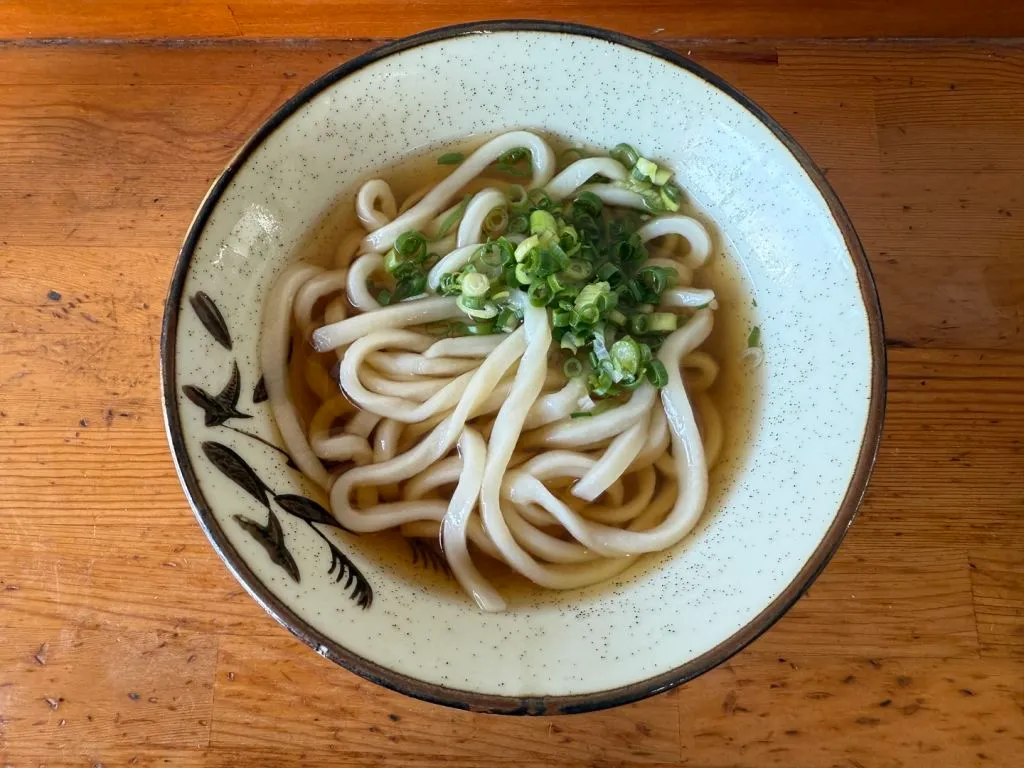
Ajisho’s most popular item is curry udon.
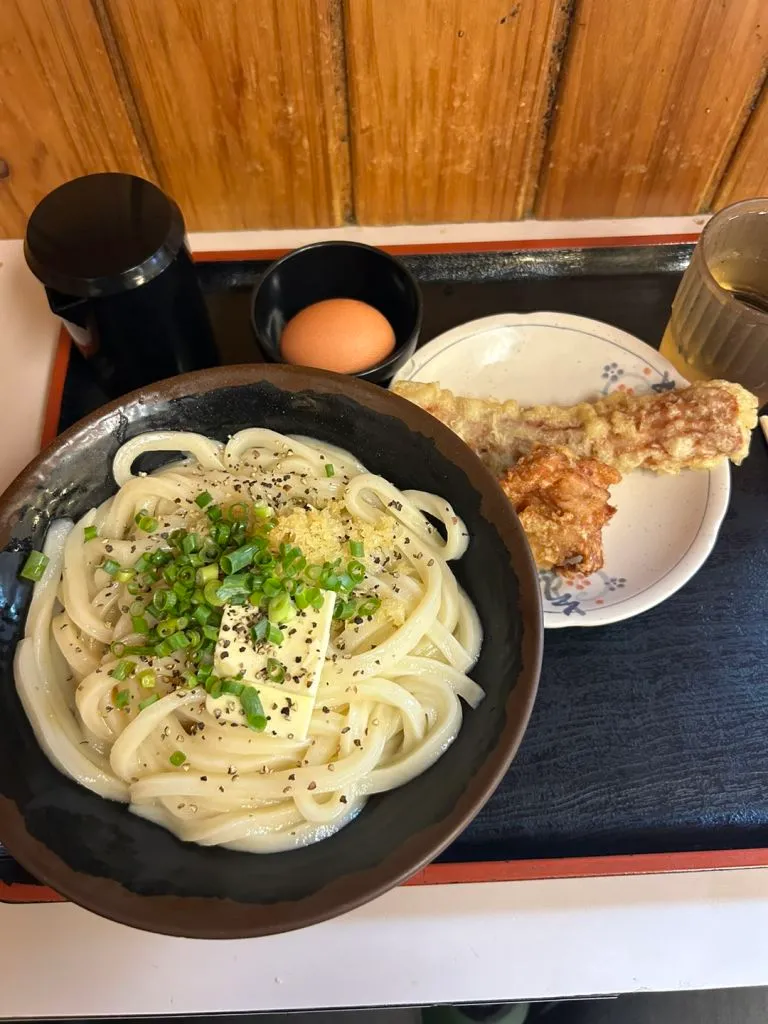
 Udon Bakaichidai, famous for its kama-butter udon, charges 490 yen for a small (小) size. At old-school self-service shops, a bowl of plain kake udon usually starts in the high-300-yen range, so even piling on tempura toppings won’t break the bank.
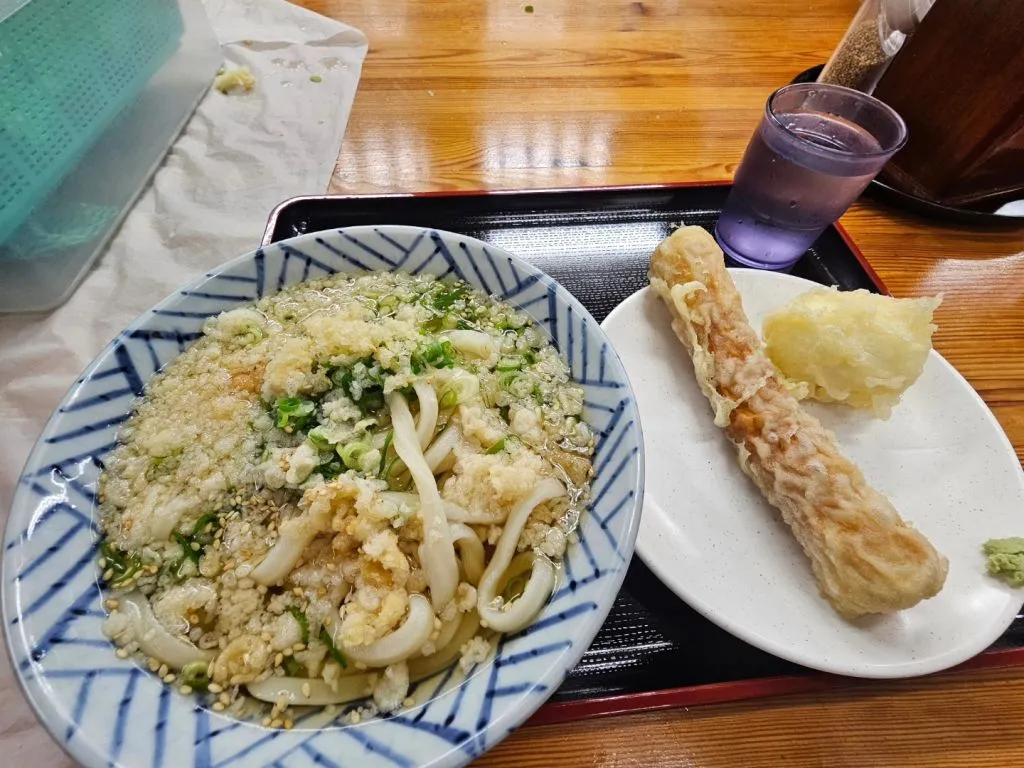
At Sakaeda, known for its hand-pulled (teuchi) udon, the most popular items are kitsune udon topped with fried tofu and kakiage udon loaded with vegetables.
How to Fit Udon Into the Ferry Schedule
The key is to work backward from the Takamatsu Port ferry and high-speed boat departure times and fit your udon stop around them. There are two types of boats from Takamatsu Port to Miyanoura on Naoshima.
| Type | Duration | One-Way Fare (Adult) | Sample Takamatsu Departures |
|---|---|---|---|
| Ferry | About 50 min | 520 yen | 08:12 · 10:14 · 12:40 · 15:35 · 18:05 |
| High-speed boat | About 30 min | 1,220 yen | 07:20 · 09:20, etc. |
Here’s a clean way to structure your route:
- Before 07:00 — First udon at an early-opening shop like Ajisho or Bakaichidai (good access from Takamatsu Station)
- Board the 08:12 ferry → arrive in Miyanoura about 50 minutes later
- Morning~Afternoon — visit Naoshima’s art museums and the Art House Project
- Return on an evening ferry, then, if you like, finish with one more bowl at Bakaichidai, which stays open late
Ferries and high-speed boats can change schedules or be cancelled without notice due to weather. If you’re making a round trip, check the last boat time back to Takamatsu at the Miyanoura terminal as soon as you arrive. A round-trip ferry ticket costs 990 yen, much cheaper than the high-speed boat.
Naoshima Art Island — What to See on a Day Trip
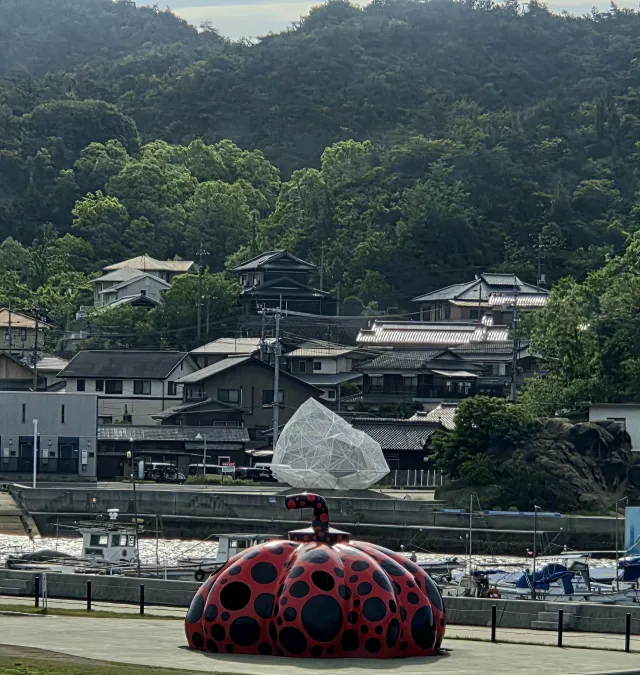
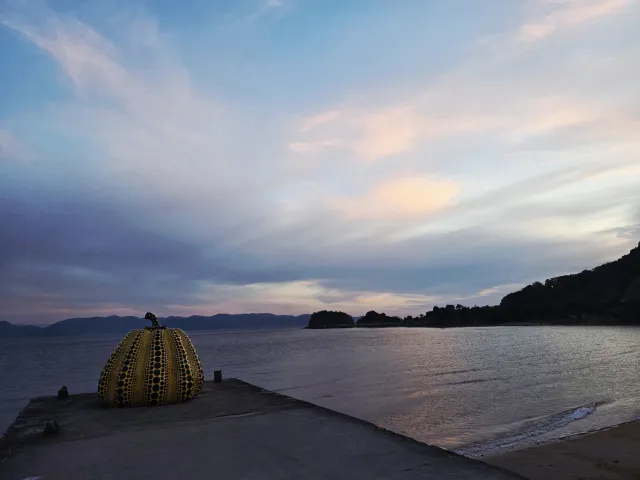
Naoshima is an “art island” floating in the Seto Inland Sea. The whole island is laid out like a museum, so on a day trip it’s more realistic to narrow your route down to just 3~4 spots. The Red Pumpkin (a work by Yayoi Kusama), visible the moment you step off the boat at Miyanoura Port, is the island’s signature photo spot, while the Yellow Pumpkin sits on the opposite side of the island near Tsutsuji-so.
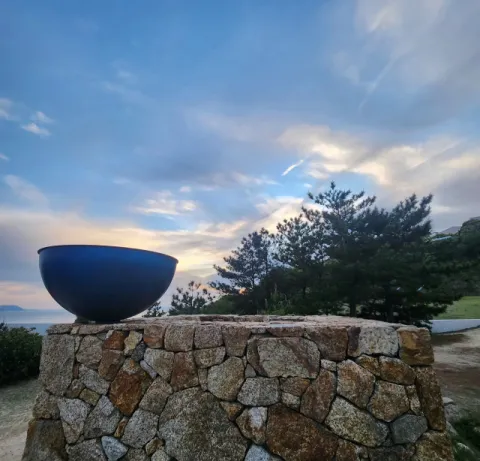
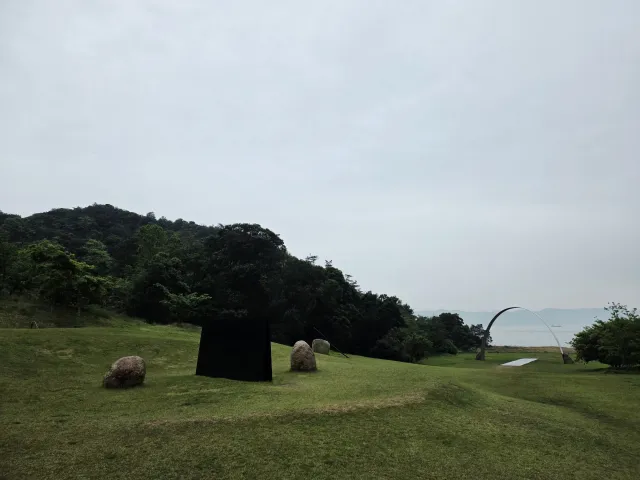
To get around the island, it’s convenient to use the community bus (island shuttle) connecting the port and museum areas, or a rental bicycle or e-bike. The three main hubs are Miyanoura (the port), Honmura (Art House Project), and the Benesse area. Popular facilities like the Chichu Art Museum and the Lee Ufan Museum often cap visitor numbers and require advance, time-slot reservations, so line up your ferry arrival time with your booking in advance. Most are closed on Mondays too, so the day of the week matters.
Ritsurin Garden — A 30-Minute Stop Between Udon and the Ferry
If you have time to spare, or you’re pushing your ferry back to the afternoon, Ritsurin Garden in downtown Takamatsu is a great fit between udon and the ferry. It’s a strolling-style garden awarded three stars in the Michelin Green Guide.
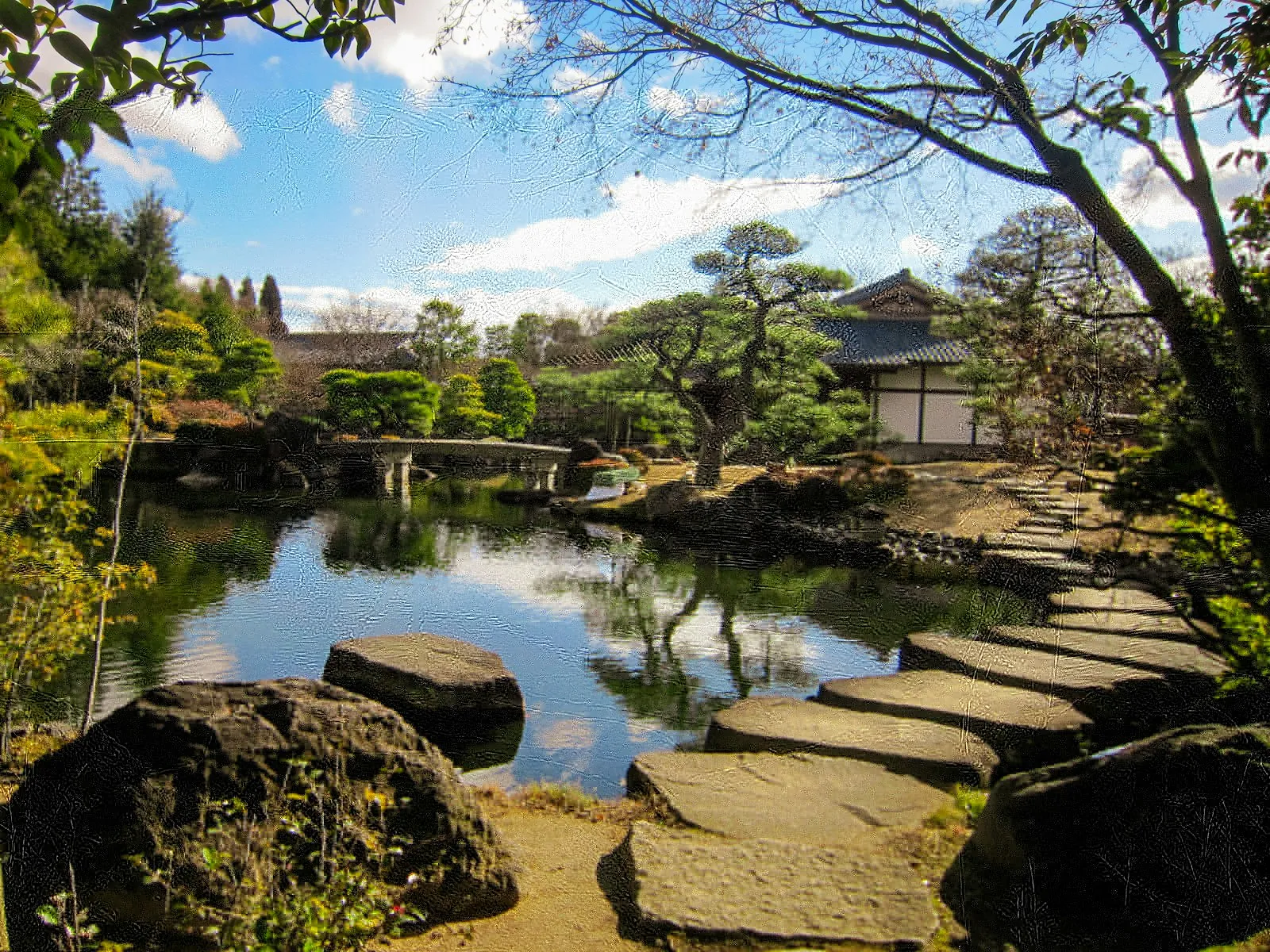
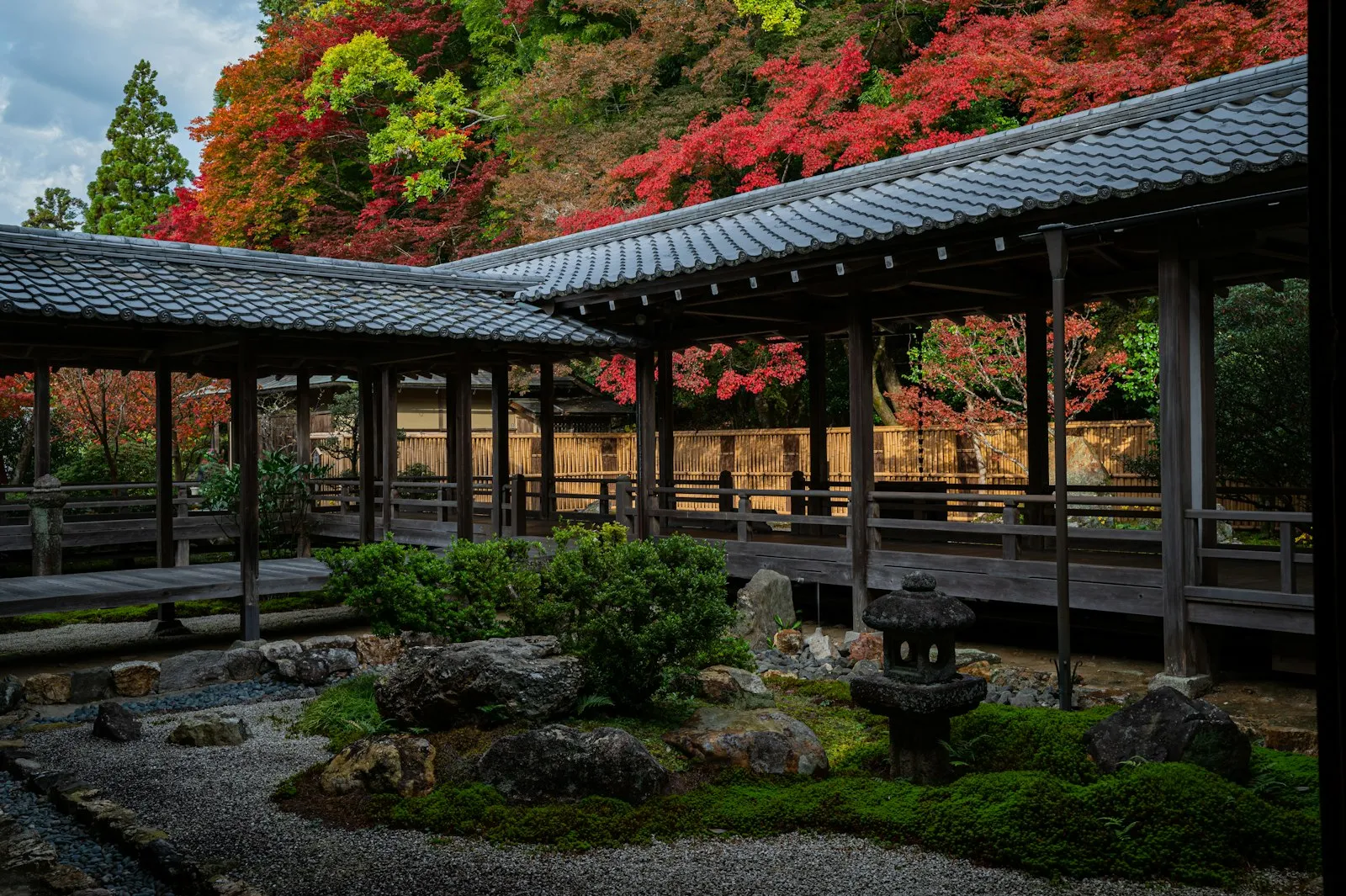
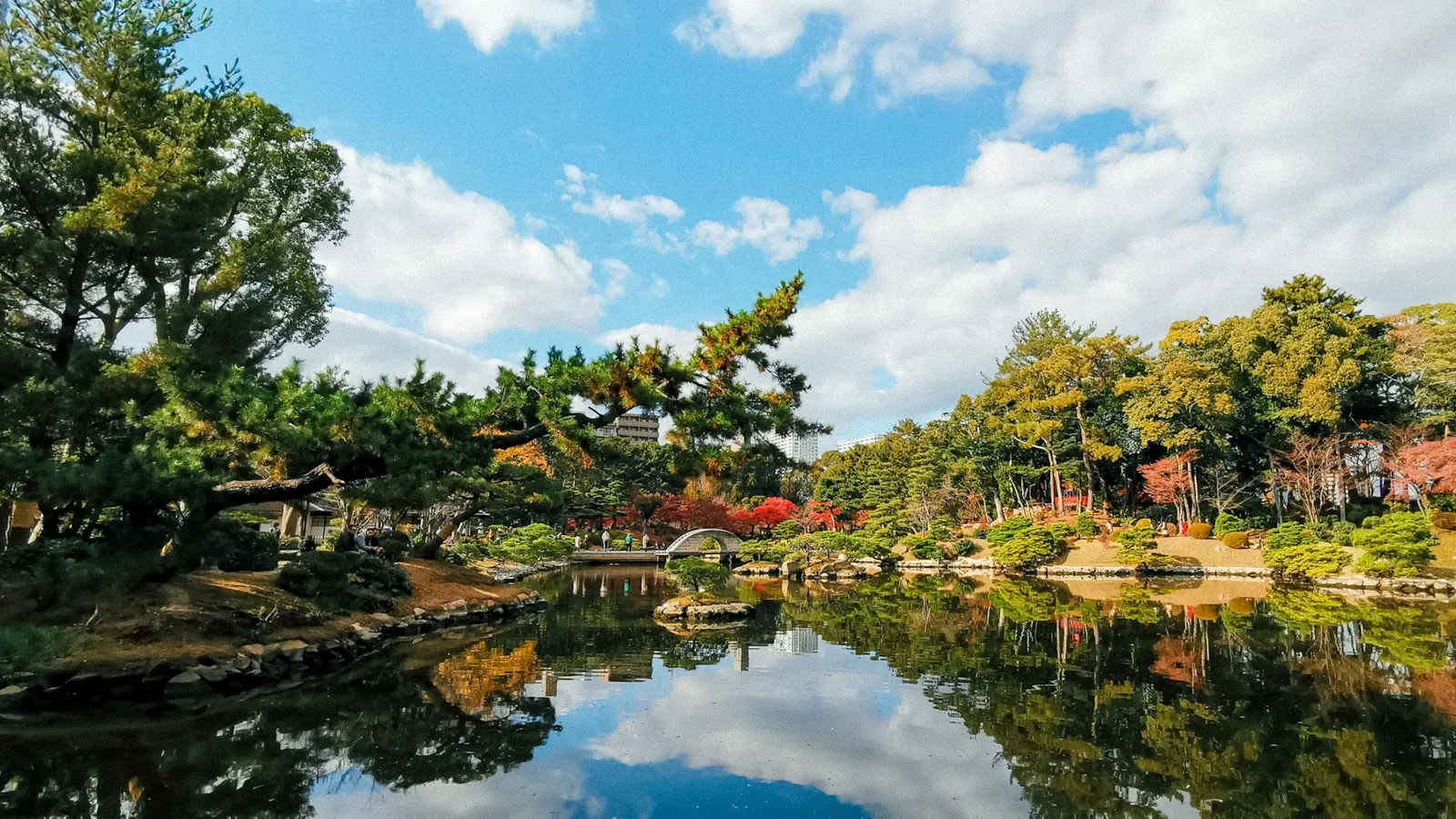
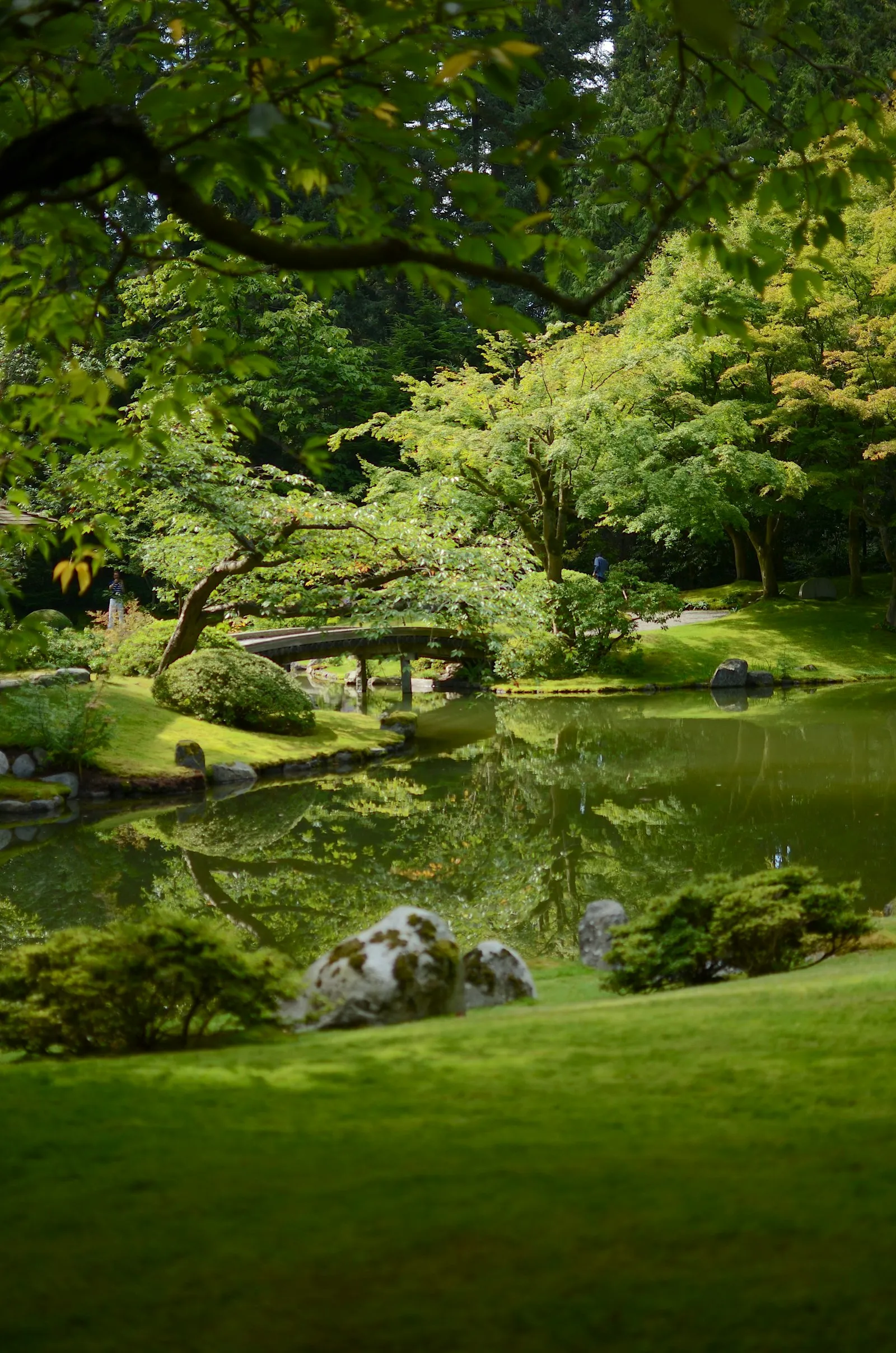
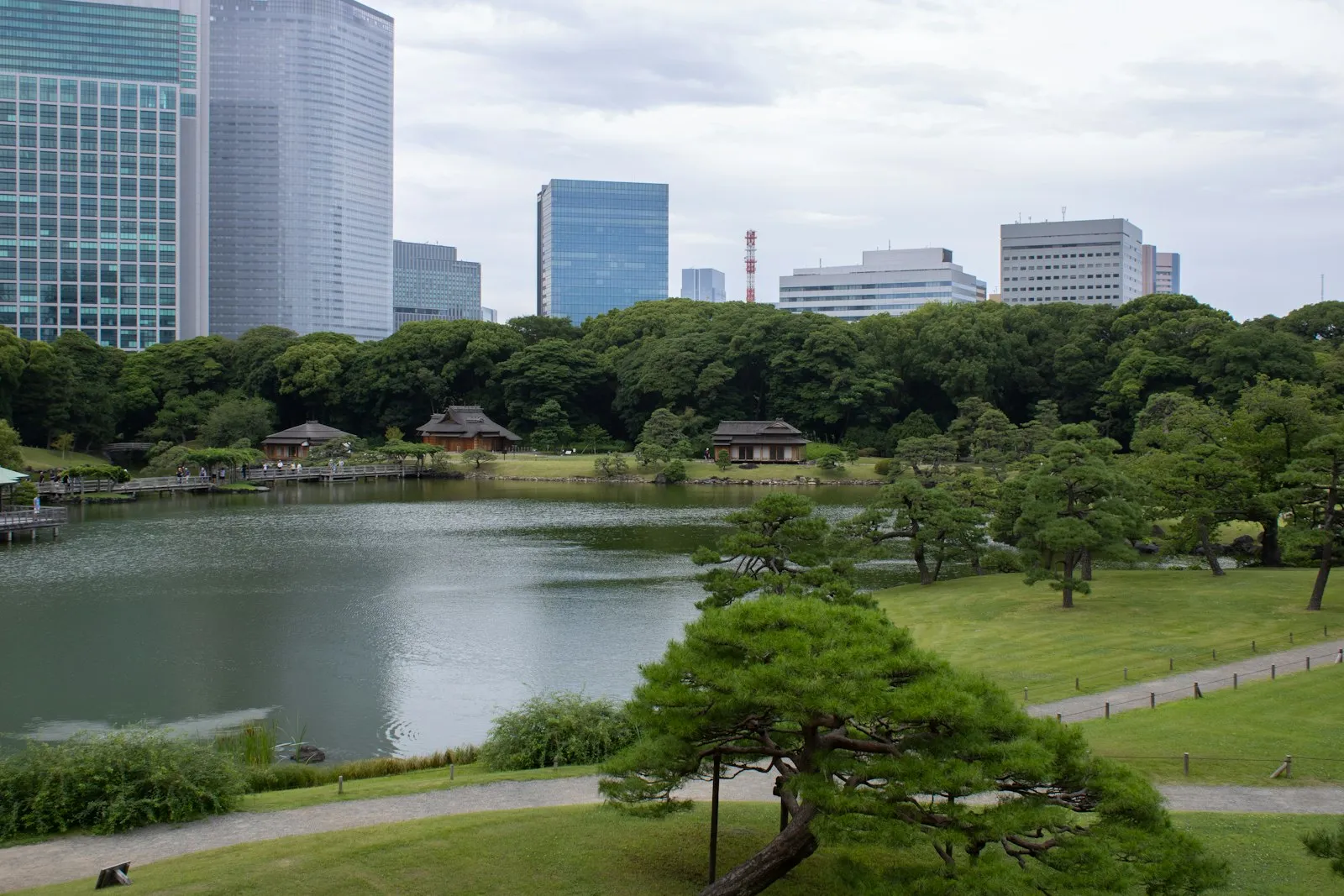
- Admission: 500 yen for adults, 170 yen for children
- Opening Hours (by season): Dec~Jan 07:00–17:00 / Feb 07:00–17:30 / Mar 06:30–18:00 / Apr~May, Sep 05:30–18:30
- Access: About 10 min on foot from Kotoden Ritsurin-Koen Station, about 3 min on foot from JR Ritsurin-Koen-Kitaguchi Station
Since it opens early, you can also combine dawn udon → a walk through Ritsurin Garden → a morning ferry. The garden is large, so rather than trying to cover the whole thing, a 30~40 minute walk focused on the South Garden (South Pond) area is enough to hit the highlights.
Day-Trip Checklist & Things to Watch For
- Check the day of the week — watch for overlapping closures (Mondays/Sundays) between udon shops and Naoshima museums
- Schedule your first udon stop at an early-opening shop near Takamatsu Station or Ritsurin Garden
- Save screenshots of the ferry/high-speed boat departure times and the last boat from Naoshima
- Make advance reservations for capacity-limited facilities like the Chichu Art Museum
- Many udon shops are cash-only — bring small bills and coins
- A round-trip ferry ticket (990 yen) is cheaper than two one-way fares — get the round-trip if that’s your plan
“Closes when noodles run out” can mean shutting down 1~2 hours before the posted closing time on peak-season weekends. If there’s a must-visit shop on your list, aim to arrive right after opening or sometime in the morning, and leave yourself a buffer by planning for a later ferry.
FAQ
Do udon shops really close in the morning? What time should I go?
Even if the posted hours say “until 14:00,” they’ll close early once the noodles run out. Early risers like Ajisho (opens 05:00) and Sakaeda (opens 07:00) sometimes finish before lunch, so if you’re chasing famous shops, it’s safest to visit right after opening or sometime in the morning.
Can I do the udon pilgrimage on foot, without a car?
If you stick to shops in the city center (near Takamatsu Station and Ritsurin Garden), walking and the Kotoden line will get you everywhere you need. Old-school shops tucked away in the hills outside town, though, are poorly served by public transit, so if you’re also fitting in the ferry on a day trip, it’s more realistic to stick to city-center shops.
I’m doing Naoshima as a day trip — do I really need museum reservations?
Some facilities, like the Chichu Art Museum and the Lee Ufan Museum, cap visitor numbers and require timed reservations. Book ahead to match your ferry arrival time, or you risk showing up for nothing. Most are also closed on Mondays, so double-check the day of the week too.
What if I miss the last boat from Naoshima back to Takamatsu?
That’s the single biggest risk on a day trip. Check the last return boat time at the Miyanoura terminal the moment you arrive, and wrap up your sightseeing at least an hour before it departs. Buying a round-trip ticket makes boarding the return boat easier.
Should I plan around udon or the ferry first?
Udon comes first. Ferries run on a fixed schedule with only a few sailings a day, but udon shop closing times swing a lot. Structuring your day as “dawn udon → morning ferry” gives you the lowest odds of missing either one.
References
Image credits5
- 📷 KWON JUNHO / Unsplash
- 📷 Samuel Berner / Unsplash
- 📷 Ponglada Niyompong / Unsplash
- 📷 Rohit Tandon / Unsplash
- 📷 Joan / Unsplash