 EasyTicket
 For anyone who wants to hit the best of Seocheon in a single day trip, here are the 6 must-visit spots laid out in the ideal order to see them all. From the National Institute of Ecology and Janghang Skywalk to Maryang Port, this corner of Korea’s Chungcheong region has more than enough to fill a single day.
Seocheon Day Trip at a Glance
Seocheon sits at the far edge of Chungcheongnam-do’s west coast — about 2 hours 30 minutes by car from Seoul and the greater capital area, or 1 hour 30 minutes from Daejeon, Sejong, or Cheongju. Since the route between spots is short, you can comfortably fit in 4–5 places in a single day.
Recommended Course (Morning ▶ Evening)
| Time | Place | Duration |
|---|---|---|
| 09:30 | National Institute of Ecology (indoor & outdoor exhibits) | 2 hr 30 min |
| 12:30 | Lunch at Seocheon Specialty Market or a local restaurant | 1 hr |
| 14:00 | Hansan Mosi Museum (hands-on experience & exhibits) | 1 hr |
| 15:30 | Janghang Skywalk + Janghang Pine Forest | 2 hr |
| 18:00 | Sunset at Maryang Port & Dongbaekjeong | 1 hr |
If you’d also like to catch the sunrise, run the course in reverse: sunrise at Maryang Port → a walk through Janghang Pine Forest → National Institute of Ecology → Hansan Mosi Museum. That order keeps the route flowing naturally.
Key Zones on the Route
- North zone: Janghang Skywalk, Janghang Pine Forest (Janghang-eup)
- Central zone: National Institute of Ecology, Seocheon Specialty Market (Maseo-myeon, Seocheon-eup)
- South zone: Hansan Mosi Museum (Hansan-myeon)
- Westernmost point: Maryang Port, Dongbaekjeong (Seo-myeon — sunrise & sunset)
National Institute of Ecology — Korea’s Top Spot for Year-Round Nature Experiences
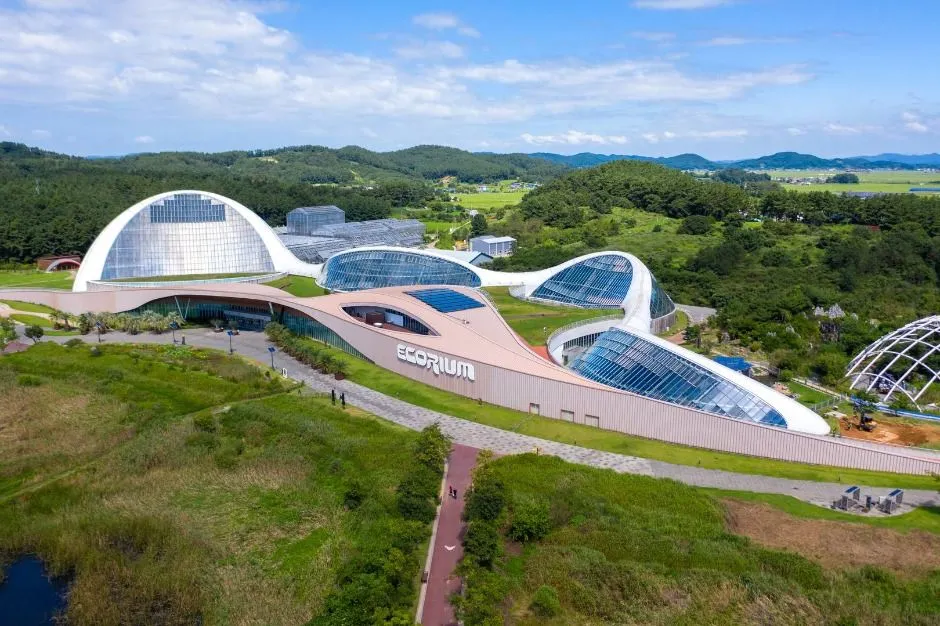
This is the best-known stop on any Seocheon itinerary. Spread across roughly 330,000 pyeong (about 1.09 km²), it brings together five climate zone halls — tropical, desert, Mediterranean, temperate, and polar — in one place, so there’s plenty to see indoors even on a rainy day.
Visitor Information
| Item | Details |
|---|---|
| Admission | Adults 5,000 KRW / Teens 3,000 KRW / Children 2,000 KRW |
| Hours | 09:30–17:00 (winter season; last ticket sold 1 hour before closing) |
| Closed | Every Monday (the following weekday if Monday is a holiday) |
| Address | 1210 Geumgang-ro, Maseo-myeon, Seocheon-gun, Chungcheongnam-do |
Booking online gets you a 10% discount on admission, so it’s worth reserving through the official website before you set out (source: National Institute of Ecology).
Recommended Viewing Route
- Ecorium (the five climate halls) → indoors, about 1 hr 30 min
- Hadaram, Godaeryuk (Ancient Continent Garden), and the Wetland Ecological Garden → outdoor walk, about 1 hr
- Visitor Center & gift shop → wrap up, 30 min
Stroller- and wheelchair-friendly paths make this an easy pick for family trips with kids or parents in tow.
Janghang Skywalk & Janghang Pine Forest — A 236m Walk Above the Pines
This is the ‘Gibeolpo Naval Battle Observatory,’ a roughly 236-meter walkway suspended above a 70-year-old black pine forest. With the pine woods and tidal flats spreading out beneath your feet at once, it’s known as one of the best photo spots on a Seocheon day trip.
Visitor Information
| Item | Details |
|---|---|
| Admission | Adults 4,000 KRW (2,000 KRW of this is refunded as Seocheon Love Gift Certificates, a local-use voucher) |
| Free admission | Ages 65+, people with disabilities, national merit recipients |
| Hours | 09:30–17:00 (winter) / 09:30–18:00 (summer), last entry 30 min before closing |
| Parking | Free (Lots 1–4) |
You can use the refunded voucher right away for lunch at Seocheon’s markets or restaurants — very handy if you’re working a tight day-trip schedule (source: Seocheon County).
Janghang Pine Forest Recreation Area, Right Next Door
Right beside the skywalk is the Janghang Pine Forest Recreation Area. Its black pine walking trail runs over 1km and connects to a white sand beach, and since admission and parking are both free, most visitors pair it with the skywalk.
Sea winds can be strong on the skywalk, so bring a hat and windbreaker. Pair the pine forest walk with sunset on the beach and you’ve got a perfect 1.5–2 hour outing.
Maryang Port & Dongbaekjeong — Sunrise and Sunset in the Same Spot
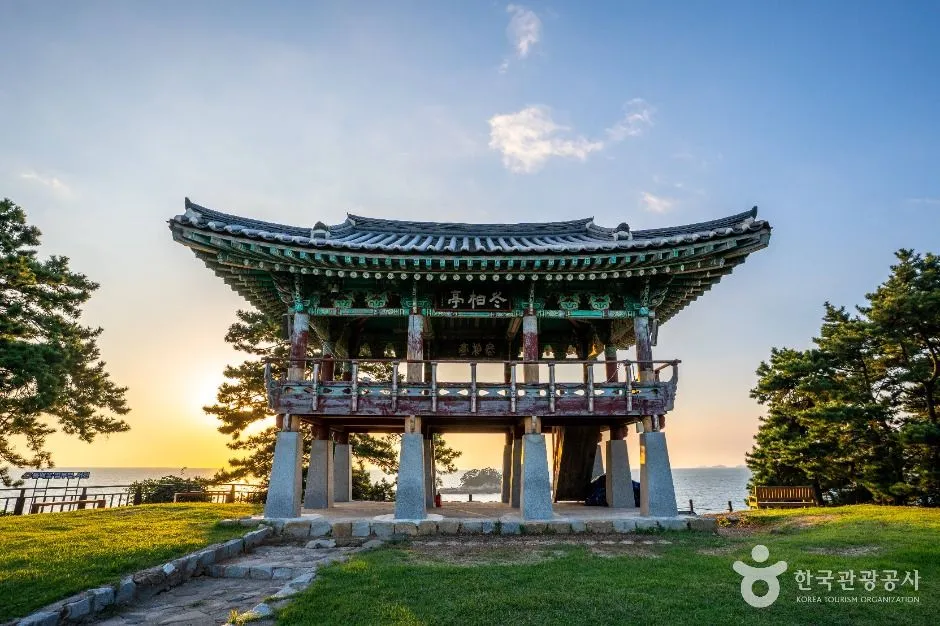
Maryang Port, at Seocheon’s western tip, is a rare West Sea spot where you can watch both sunrise and sunset from the same location. That’s thanks to a small peninsula that juts out into the sea.
Dongbaekjeong Highlights
- Maryang-ri Camellia Forest, a grove of about 80 camellia trees roughly 500 years old
- The pavilion atop the forest hill is ‘Dongbaekjeong’ — a well-known sunset viewpoint
- Every year, its year-end sunset and sunrise events draw visitors from all over the country
Visiting Tips
- Best to arrive about 30 minutes before sunset
- Parking is split between the Dongbaekjeong entrance and Maryangjin Port
- Visiting during camellia bloom season in winter (January–March) makes the scenery even more striking
Hansan Mosi Museum — Where 1,500 Years of Tradition Live On
This is where you can see ‘Hansan Mosi Jjagi’ (Hansan ramie weaving), a UNESCO Intangible Cultural Heritage craft, up close. The exhibition hall, traditional workshop, promotional hall, and craft village all sit on one site, so 30–60 minutes is enough to see it all.
Visitor Information
| Item | Details |
|---|---|
| Hours | 10:00–18:00 (Mar–Oct) / 10:00–17:00 (Nov–Feb), open year-round |
| Admission | Free to view (hands-on programs cost extra) |
| Address | 1089 Chungjeol-ro, Hansan-myeon, Seocheon-gun, Chungcheongnam-do |
| Inquiries | 041-951-4100 |
Program fees and availability can change by season, so it’s best to check the official website before visiting.
Worth Pairing With
- Tasting and buying Hansan Sogokju (a traditional rice wine), near Hansan Mosi Village
- Trying mosi (ramie) dishes like mosi kalguksu (ramie noodle soup) and mosi tteok (ramie rice cake)
- During the Hansan Mosi Culture Festival every June, there are even more hands-on activities and performances
Seocheon Restaurant Picks (Bakdae, Wild-Caught Sashimi, Mosi Tteok)
Food is what really rounds out a Seocheon day trip. Here are picks centered on local specialties.
🐟 Bakdae — Seocheon’s Signature Fish
Bakdae (a local flatfish) is a mild, lightly flavored white fish without much of the fishy smell some seafood has. Because it dies the moment it’s caught in the net, it’s rarely eaten raw — instead it’s dried and enjoyed grilled, steamed, or braised. It’s rich in protein and minerals, making it a dish parents tend to love too.
🍣 Wild-Caught Sashimi
There are plenty of wild-caught sashimi specialty restaurants near the harbors of Janghang, Seo-myeon, and Seocheon-eup. What’s on the menu depends on the day’s catch, so reservations are recommended on weekends and holidays. You can choose from set meals or course-style options.
🍡 Mosi Tteok & Mosi Kalguksu
The mosi tteok (ramie rice cake) at Seocheon Specialty Market has a chewy texture filled with cowpea (dongbu bean) paste, making it a popular snack. For lunch, a light bowl of mosi kalguksu (ramie noodle soup) is also worth trying — it’s mostly vegetable-based, so it’s easy on the stomach.
A bakdae set meal runs around 15,000 KRW per person, while wild-caught sashimi courses vary widely, from 40,000 to 60,000 KRW per person. Search around to find something that fits your budget.
Seocheon Day Trip Checklist
Here’s a list of things that are easy to forget before you head out.
- Book the National Institute of Ecology online (10% discount)
- Bring ID to receive your Janghang Skywalk voucher refund
- A little cash (for the traditional market and some restaurants)
- Check sunset time (varies by 30–60 min depending on the season)
- Sneakers + windbreaker (for beach and pine forest walks)
- Camera and portable battery (the skywalk’s photo-worthy stretch is long)
- A cooler bag for shopping bakdae, sogokju, and other local specialties
Handling lunch and specialty shopping together at Seocheon Specialty Market keeps your route the shortest.
Frequently Asked Questions (FAQ)
Q1. Can I do a Seocheon day trip without a car?
Janghang Station (served by the Seohae Line KTX and Saemaeul-ho trains) means public transit access is possible, but getting between spots is much easier by car. If you’re going car-free, build your route around Janghang Skywalk and Janghang Pine Forest near Janghang Station, and use a city bus or taxi to reach the National Institute of Ecology.
Q2. What’s a good course for traveling with kids?
We’d recommend pairing the National Institute of Ecology with Janghang Pine Forest. Both the indoor and outdoor paths are stroller-friendly, and the pine forest has plenty of shade, keeping it cool even in midsummer.
Q3. Is it worth going on a rainy day?
Yes, definitely. Both the Ecorium at the National Institute of Ecology and the exhibition hall at Hansan Mosi Museum are entirely indoors, so rain isn’t a problem. Janghang Skywalk may restrict operation during strong winds or thunderstorms for safety reasons, so check before you head out.
Q4. If I extend it to 2 days, 1 night, what should I add?
Among Seocheon’s Nine Scenic Spots, adding Sinseong-ri Reed Field, Geumgang Estuary Bank, and Huirisan Natural Recreation Forest rounds things out nicely with a nature- and ecology-focused theme.
Q5. Is there anything to see in fall and winter?
In fall, there’s Sinseong-ri Reed Field; in winter, Dongbaekjeong’s camellia blossoms and migratory bird watching at the Geumgang estuary are the highlights. The best part of visiting Seocheon is that each season has its own charm.
Image credits3
- 장항 스카이워크 촬영:한국관광공사 김지호 / 한국관광공사 포토코리아 (공공누리 제1유형)
- 국립생태원 에코리움 전경 (2) - 한국관광공사 (출처표시+변경금지)
- 대표 이미지 - 한국관광공사 (출처표시)