 EasyTicket
 Guinsa Temple in Danyang is open every day, year-round, with no separate admission fee. As the headquarters temple of the Cheontae Order, it’s genuinely massive in scale, so checking the visiting hours, directions, and parking info ahead of time makes getting around much easier.
What Is Guinsa Temple?
Guinsa is the head temple of the Cheontae Order of Korean Buddhism, overseeing more than 140 affiliated temples across the country. According to temple records, it was founded in 1945 when Grand Patriarch Sangwol Wongak wove a small three-room hut out of kudzu vines and devoted himself to ascetic practice there.
It sits beneath Yeonhwabong Peak, on the slopes of Gukmangbong in the Sobaeksan mountain range, so the surrounding scenery is stunning. Its distinctive modern concrete architecture dates to 1966, and the whole complex spans a massive 15,014 ㎡ of floor area.
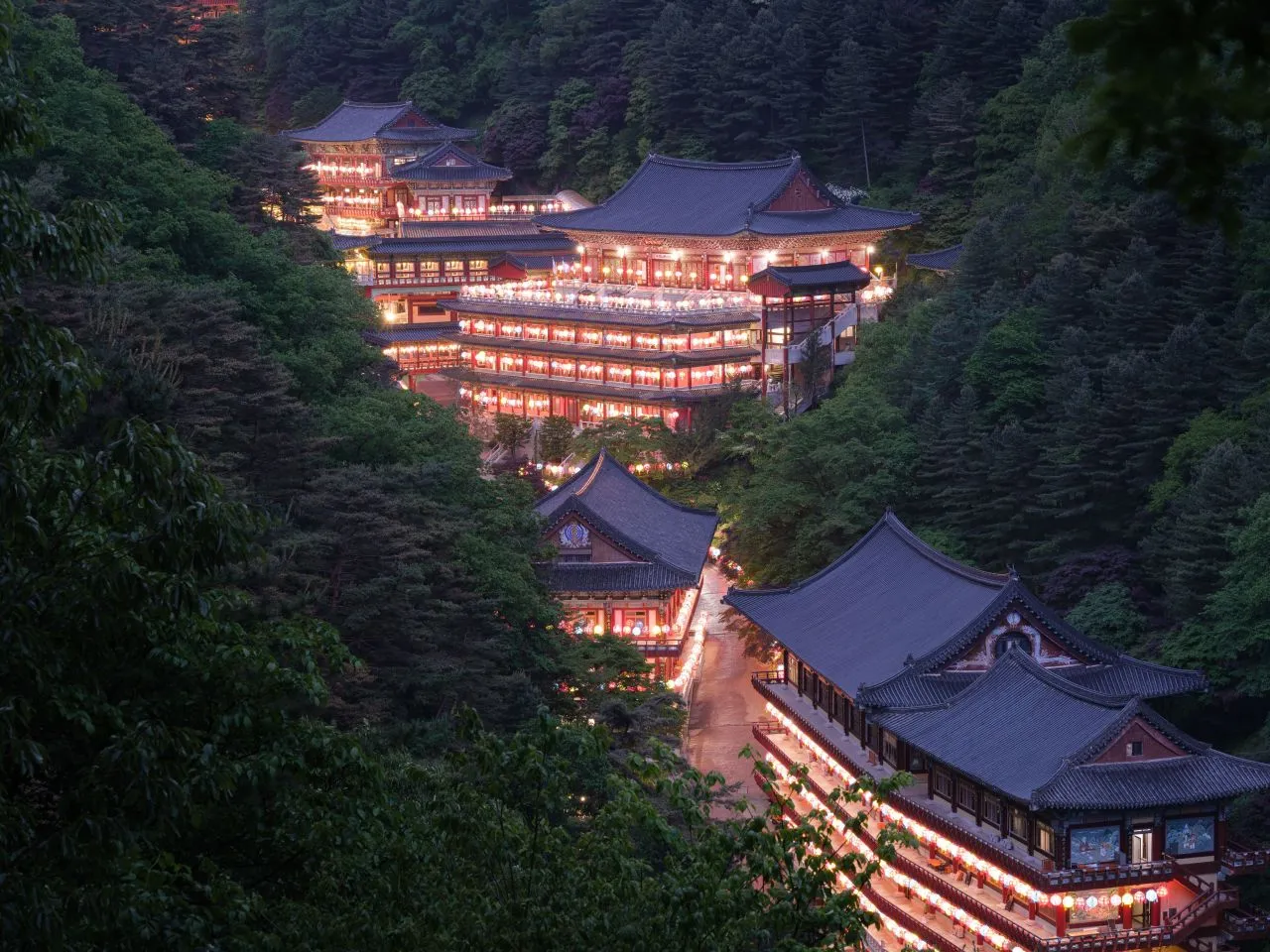
Two Highlights You Shouldn’t Miss
- The Five-Story Daebeopdang (Main Dharma Hall): Completed on April 29, 1980, it’s the largest dharma hall in Korea. With a capacity of around 5,000 people, this enormous building blends traditional style with modern construction methods.
- The Dharma Talk Monument of Grand Patriarch Sangwol Wongak: A stone monument inscribed with a condensed record of the Grand Patriarch’s lifetime teachings, and one of Guinsa’s most iconic landmarks.
Guinsa Visiting Hours and Admission at a Glance
According to available information, Guinsa is open at all times, every day of the year, with no separate admission fee for general visits. That said, access to certain halls may be restricted depending on temple etiquette or the schedule of Dharma services, so it’s worth double-checking the official website before you go.
| Category | Details |
|---|---|
| Visiting hours | Open at all times |
| Closed days | None — open year-round |
| Admission | Not specified (general visits are free) |
| Parking | Available |
| Inquiries | Guinsa Temple 043-423-7100 / Information Center 043-420-7397 |
| Address | 73 Guinsa-gil, Yeongchun-myeon, Danyang-gun, Chungcheongbuk-do |
Because the temple sits deep in the mountains, the sun sets early here. If you want time to slowly explore the five-story Daebeopdang, the Dharma Talk Monument, and the roughly 50 buildings on the grounds, a morning-to-early-afternoon visit gives you the most breathing room.
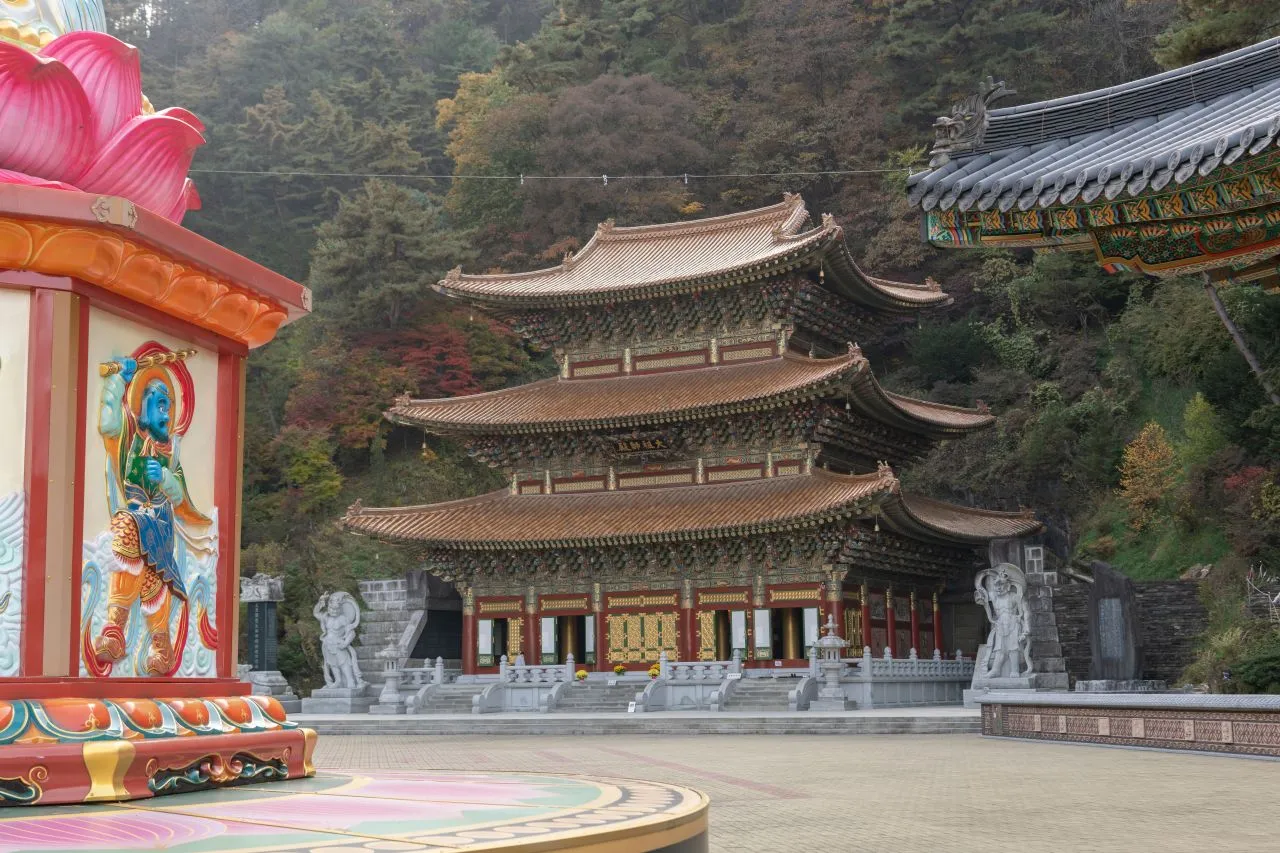
Getting to Guinsa and Parking
The address is 73 Guinsa-gil, Yeongchun-myeon, Danyang-gun, Chungcheongbuk-do. It’s tucked in the mountains of Yeongchun-myeon, about a 30-minute drive from downtown Danyang, so getting there by car is easier than relying on public transportation.
Driving Directions
- From Jungang Expressway’s Danyang IC → toward Danyang-eup → toward Yeongchun → Guinsa-gil
- Search “Guinsa” or “Guinsa-gil 73” in your navigation app for an accurate route
- Part of the route runs through mountain roads, so during winter icing or heavy snow, it’s safer to check road conditions before you set out
Parking Information
Parking is available at Guinsa. That said, on weekends or when a large Dharma service or templestay program overlaps with your visit, the upper parking areas can fill up quickly, which may mean a longer shuttle ride or walk. Arriving on a weekday morning or early in the day is the least crowded option.
The temple grounds involve a fair number of uphill paths and stairs. Comfortable sneakers and a light bag are recommended.
Guinsa Templestay: What to Know
Guinsa runs a range of templestay programs, from day-trip formats to overnight stays. Alongside hands-on activities like making prayer bead bracelets or lotus lanterns, the heart of the experience is quiet meditation time for ‘looking inward.‘
Checklist Before You Apply
- Check the program type (day trip / 1 night 2 days / longer)
- Check the application schedule and remaining spots (official templestay website)
- Review what to bring (comfortable clothes, toiletries, etc.)
- Familiarize yourself with temple etiquette and mealtimes in advance
- Since the temple is in the mountains, pack warm layers and rain gear
For detailed programs, schedules, and fees, we recommend checking directly on Guinsa’s official templestay website, as details may change by season.
Building a Route with Nearby Attractions
Since Guinsa is located in Yeongchun-myeon in northern Danyang, pairing it with Danyang’s other well-known sights makes for a solid 1-night, 2-day trip. Below are some popular spots commonly combined with a Guinsa visit. (Check each site’s official information for hours and admission fees.)
| Spot | Quick Note |
|---|---|
| Dodamsambong | Danyang’s signature scenery — three peaks rising from the Namhan River |
| Danyanggang Jando Trail | A cliffside walking trail along the river |
| Mancheonha Skywalk | A scenic overlook in Danyang-eup |
| Gosu Cave | A natural monument limestone cave |
| Sainam Rock | One of the Eight Scenic Views of Danyang |
If you head down from Guinsa through Yeongchun-myeon toward Danyang-eup, combining Dodamsambong and the Jando Trail along the way, your route stays clean and efficient.
Pre-Visit Checklist
Here’s a final list of things worth double-checking before you head out.
- Visiting hours and closed days (open at all times, year-round; double-check the Dharma service schedule separately)
- Parking availability and busy times
- Directions (Danyang IC → Yeongchun-myeon → Guinsa-gil 73)
- Comfortable shoes (lots of uphill paths and stairs)
- Temple etiquette (keep quiet, dress modestly)
- Re-check the schedule on the official website if applying for a templestay
- Operating hours for nearby attractions (Dodamsambong, the Jando Trail, etc.)
Based on available information, visiting hours are open at all times, year-round, with no separate admission fee listed. That said, this can change depending on Dharma services, events, or weather, so it’s safer to call 043-423-7100 (Guinsa) or 043-420-7397 (Information Center) before your visit to confirm.
Frequently Asked Questions (FAQ)
Q. What are Guinsa’s visiting hours?
A. Based on available information, it’s open at all times, every day of the year. That said, since it’s a mountain temple, it’s hard to look around after sunset, so a daytime visit is recommended.
Q. Is there a separate admission fee?
A. There’s no separate admission fee listed in available information. General visits are known to be free, while templestay programs have their own participation fees.
Q. Is there parking?
A. Yes, parking is available. It can get crowded on weekends or during Dharma services and events, so a weekday morning visit is recommended.
Q. How do I apply for a templestay?
A. You can check programs, schedules, and remaining spots — and apply — on Guinsa’s official templestay website.
Q. Can I get there by public transportation?
A. Since it’s tucked in the mountains of Yeongchun-myeon, traveling by car is by far the most convenient. If using public transportation, take a bus bound for Yeongchun from Danyang Intercity Bus Terminal — but departures aren’t frequent, so check the schedule in advance.
That wraps up a clean summary of Guinsa’s visiting hours, admission, and directions for your Danyang trip. Knowing beforehand what it means for this mountain temple to be the headquarters of the Cheontae Order — and just how massive it is — will make the time you spend in front of the five-story Daebeopdang and the Dharma Talk Monument feel even more meaningful.
Image credits4
- 단양 구인사 (3) - 한국관광공사 (출처표시)
- 단양 구인사 촬영:이효직 / 한국관광공사 포토코리아 (공공누리 제1유형)
- 단양 구인사 촬영:심현우 / 한국관광공사 포토코리아 (공공누리 제1유형)
- 구인사의 야경 촬영:김남국 / 한국관광공사 포토코리아 (공공누리 제1유형)