 EasyTicket
 When the peak-summer heat wave hits, the first thing you need to look after is heat-related illness prevention. If you suddenly feel dizzy and break out in a cold sweat, it could be sunstroke; if you’re losing consciousness and your skin is hot but you’ve stopped sweating, that’s heatstroke, and you need to call 119 (Korea’s emergency number) right away. EasyTicket has put together everything in one place — from telling heatstroke and sunstroke apart to heat wave safety guidelines, emergency response, and precautions for vulnerable groups.
Why Heat-Related Illness Is a Bigger Risk This Summer
Heat-related illness is an umbrella term for acute conditions that occur when prolonged exposure to a hot environment overwhelms the body’s ability to regulate its temperature. Heatstroke and sunstroke are the most common types, and the category also includes heat exhaustion, heat cramps, and heat syncope.
The Korea Disease Control and Prevention Agency (KDCA) runs its Heat-related Illness Emergency Room Surveillance System every year from May 15 to September 30. In 2025, a total of 4,460 heat-related illness cases were reported, with 29 deaths — up 20.4% from the previous year’s 3,704 cases (Source: KDCA). Cases were most concentrated in late July, which accounted for about 29% of all patients.
It’s important to start following prevention guidelines just before July, when the real heat sets in. Even on days without a heat wave advisory, extreme heat can still take people down.
Heatstroke vs. Sunstroke: How to Tell Them Apart by Symptoms
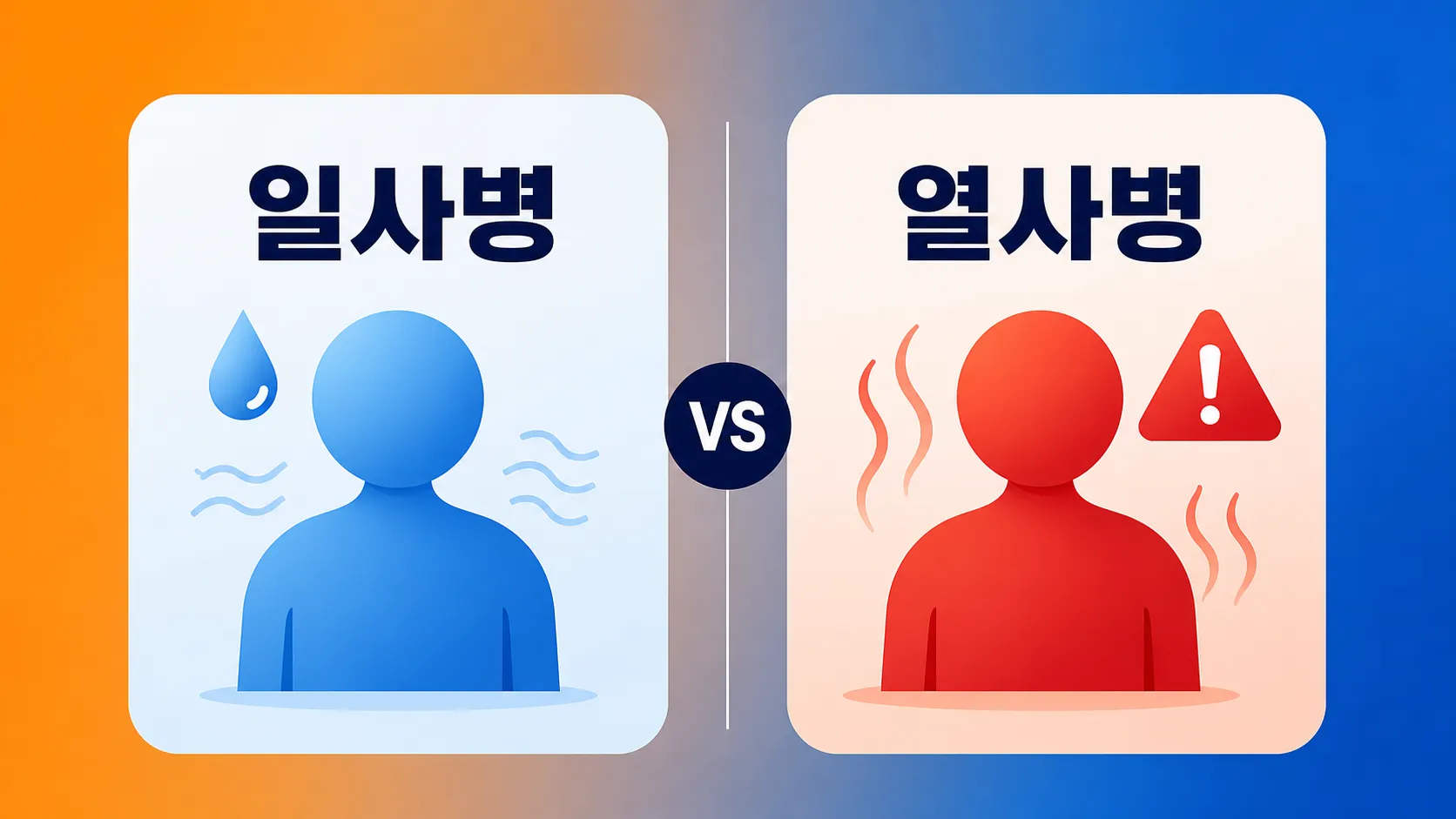
Heatstroke and sunstroke are the two conditions people mix up most. The names sound similar, but the risk level is completely different. Sunstroke recovers with rest and fluids, but heatstroke is a life-threatening emergency.
The key difference comes down to sweat and consciousness. With sunstroke, you break out in a cold sweat but stay relatively alert; with heatstroke, sweating stops, the skin turns hot, and consciousness becomes clouded.
| Category | Sunstroke (Heat Exhaustion) | Heatstroke |
|---|---|---|
| Cause | Prolonged heat/sun exposure, dehydration | The body’s temperature-regulation function itself breaks down |
| Body temp. | Around 37~40℃ | Above 40℃ |
| Skin | Clammy and pale, cold sweat | Hot and dry, no sweating |
| Consciousness | Generally normal | Possible confusion, seizures, coma |
| Risk level | Relatively low (recovers with rest and fluids) | Fatal — call 119 immediately |
Key Symptoms of Sunstroke (Heat Exhaustion)
- Dizziness, headache, nausea or vomiting
- Cold sweat, pale and clammy skin
- Weakness, muscle cramps
- Consciousness generally stays clear
Key Symptoms of Heatstroke
- High fever above 40℃
- No sweating, with hot, dry skin
- Decreased consciousness, seizures, hallucinations, coma
- Fast, weak pulse and delirium
Emergency First Aid If Someone Collapses
Once you know which condition you’re dealing with, your response should differ accordingly. If you suspect heatstroke, don’t wait even a minute — call 119 first.
Never force water on someone who is unconscious or only semi-conscious. It can go down the airway and cause choking. If the person is unconscious, call 119 immediately.
For Sunstroke or Heat Exhaustion
- Move the person to a cool, shaded spot
- Loosen tight clothing and cool the body down
- If they’re alert, have them slowly sip cool water or a sports drink
- If symptoms last more than an hour or they start vomiting, go to a hospital
If You Suspect Heatstroke
- Call 119 immediately
- Move the person to shade or an air-conditioned space
- Remove excess clothing and cool the body with a wet towel, cold water, or ice (focus on the neck, armpits, and groin)
- Fan them or use an electric fan to help lower body temperature
- Do not give water if they’re unconscious
Public Safety Guidelines for Heat Waves
The Ministry of the Interior and Safety (MOIS) and the Korea Meteorological Administration (KMA) provide official guidelines for what to do during a heat wave. The core message: cut back on outdoor activity during the day, drink water often, and check in on vulnerable people around you.
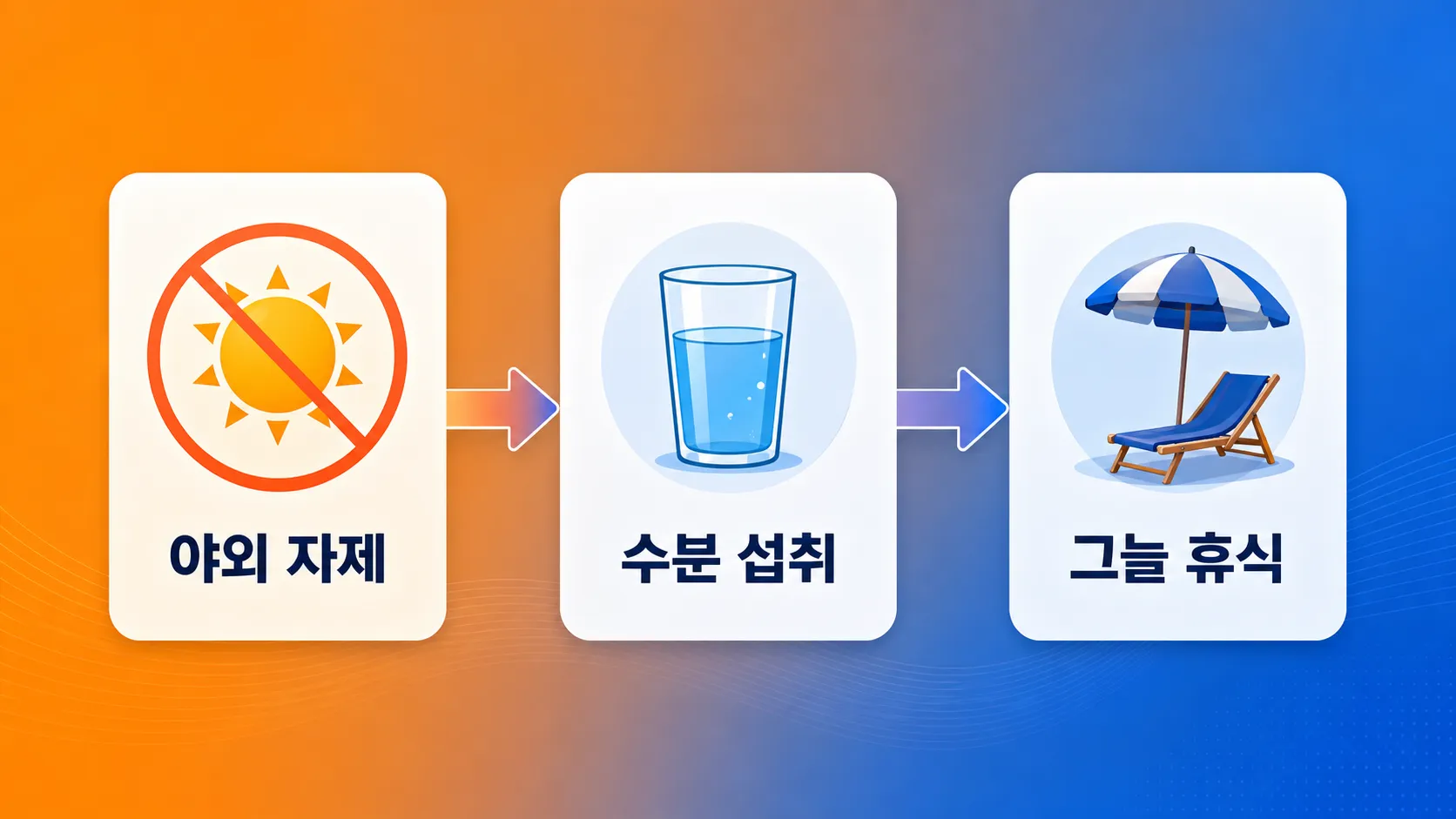
- Avoid outdoor activity and work during the hottest hours (12 p.m.~5 p.m.)
- When heading out, wear a wide-brimmed hat and light, bright-colored clothing, and carry a water bottle
- Drink water often, but avoid caffeinated drinks and alcohol (their diuretic effect makes dehydration worse)
- Block direct sunlight with curtains or awnings, and check your air conditioner and fan ahead of time
- Never leave children or older adults alone in a car, even briefly
- Check in regularly on elderly neighbors living alone and others nearby
Precautions for Outdoor Workers and Commuters
People who work outdoors or have a long commute need to be especially careful. Employers are legally required to take heat-related illness prevention measures once the perceived temperature hits 31℃ or higher (Source: Ministry of Employment and Labor). The basic rule is water, shade, and rest for outdoor worksites, and water, air flow, and rest for indoor worksites.
- Take a regular break in the shade every hour and drink water
- Put off strenuous work or exercise during the hottest hours
- When commuting, bring a parasol, hat, and water bottle, and avoid overexerting yourself on the subway or bus
How to Look Out for Vulnerable Groups
Even in the same heat, some people face greater risk. Older adults, children, pregnant women, and people with chronic conditions (high blood pressure, diabetes, heart disease) should follow prevention guidelines even on days without a heat wave advisory.
| Group | Key Precautions |
|---|---|
| Older adults / seniors living alone | Often don’t notice thirst as easily — offer water on a regular schedule and check in on them often |
| Children | Never leave them alone in a car; avoid outdoor play at midday |
| Pregnant women | Avoid prolonged heat exposure and get plenty of rest |
| People with chronic conditions | Watch for dehydration while on medication; avoid unnecessary outings |
Older adults are at higher risk because they often don’t sense heat or thirst well. Even if they say “I’m not thirsty,” it’s best to offer them a cup of water on a set schedule anyway.
FAQ
How do I tell sunstroke and heatstroke apart?
The simplest way to tell is by sweat and consciousness. Cold sweat with a clear mind means sunstroke; no sweating, hot skin, and clouded consciousness means heatstroke. If it’s heatstroke, call 119 right away.
Is it okay to give water to someone with a suspected heat-related illness?
If they’re clearly conscious, you can have them slowly sip cool water or a sports drink. But if they’re unconscious or only semi-conscious, never give them water — it risks going down the airway and causing choking, so call 119 right away instead.
What drinks should I avoid during a heat wave?
It’s best to avoid caffeinated drinks and alcohol, such as coffee and energy drinks. Their diuretic effect actually flushes out more fluid and makes dehydration worse. Drinking water or a sports drink often is the safer choice.
Where can I check heat-related illness statistics?
The Korea Disease Control and Prevention Agency (KDCA) runs its Heat-related Illness Emergency Room Surveillance System from May 15 to September 30, and you can check daily updated patient and fatality counts on its official website.
A heat wave is a risk you can largely prevent by planning ahead. Just remembering the symptoms of heatstroke and sunstroke, cutting back on midday outdoor activity, and drinking water often can go a long way toward reducing heat-related illness. This summer, look out for yourself, your family, and the older neighbors around you too.
Sources
- 2025 Heat-related Illness Emergency Room Surveillance System Results - Korea Policy Briefing
- Heat Wave Safety Guidelines - Safekorea (Ministry of the Interior and Safety)
- Public Guidelines for Heat Waves - Korea Meteorological Administration Weather Portal
- Heat-related Illness Prevention Measures for Summer Heat Waves - Ministry of Employment and Labor