 EasyTicket
 These days, you can’t even watch a YouTube ad without getting bombarded by thumbnails like “Automate your blog with AI and make millions a month!” I fell for it too, ran two automated blogs myself, watched the combined revenue climb to 510,000 KRW a month — and then watched the graph turn around and head back down. Here’s an honest look at what running an automated blog actually felt like.
This isn’t a sponsored post or a pitch for some course. It’s a retrospective sharing the actual data and trial-and-error from running these blogs myself.
🎯 Why I Started an Automated Blog
My reason for getting into automated blogging in the first place was simple. The picture of “posts go up and ad revenue rolls in while I sleep” was just too tempting. I was also dabbling in content marketing at the time, so I figured I’d use an AI blog as a kind of testing ground.
What I Expected
- AI handles everything from keyword selection to writing the full post
- An auto-publish script uploads it at a set time every day
- Search traffic builds up, and ad revenue follows
On paper, it was the perfect pipeline. And honestly, the initial setup really did work exactly like that.
What I Actually Set Up
- An AI writing tool + prompt templates (just swap out the topic and keywords)
- An auto-publish script
- A keyword tool to pre-queue 30–50 topics every week
- AdSense and Coupang Partners hooked up
Just with that much, 5 to 10 posts a day went up automatically. The problem was that “going up” and “getting read” turned out to be completely different things.
📈 It Actually Worked at First — Up to 510,000 KRW a Month
I’m not exaggerating — the first month was genuinely exciting. Combined across both blogs, I hit 510,000 KRW in a single month, and visitor numbers kept trending up week after week. Thinking “wow, this actually works,” I doubled my publishing volume.
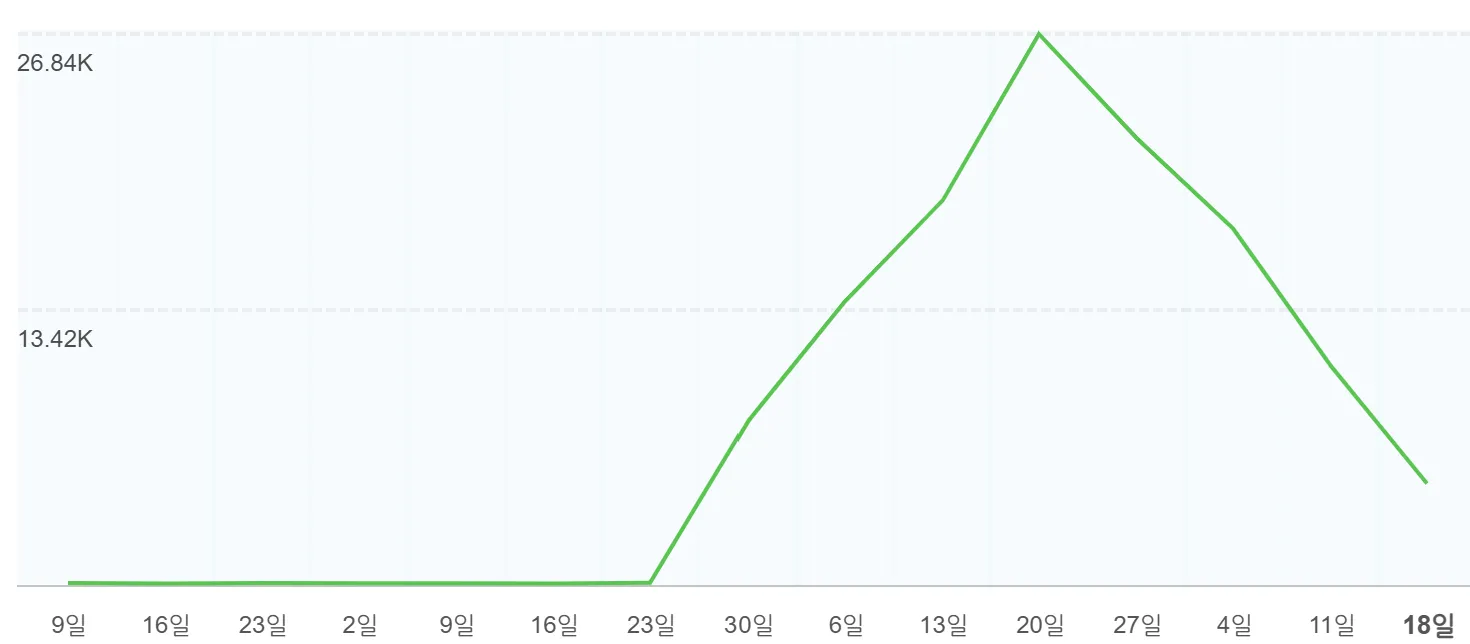
Growth Phase Data Summary
| Period | Combined Monthly Revenue (Both Blogs) | Avg. Daily Visitors | Posts Published |
|---|---|---|---|
| Month 1 | ~510,000 KRW | ~2,500 | 8–12/day |
| Month 2 | ~210,000 KRW | ~1,000 | 12–20/day |
The Mistakes I Was Making at the Time
- “At this pace, I could be making 2 million KRW a month in three months.”
- “The more I crank out, the more I’ll earn.”
- “Volume will solve everything for an AI blog eventually.”
Looking back, it was a textbook case of mistaking early luck for skill. I never actually stopped to analyze why any individual post had done well.
📉 At Some Point, the Graph Turned
About a week after hitting that peak, things started feeling off. New posts were barely getting any views, and even posts that had been performing well started slipping down in rankings.
The First Signs of the Decline
- Average views on new posts dropped from 100 to under 20
- A growing share of posts were indexed but barely showing up in search
When I Looked Into Why
When I finally sat down and read through the posts one by one, honestly, even I found most of them boring. They were purely informational and never connected with anyone. The titles all had the right keywords, but the bodies all had the same tone, the same structure, the same conclusions. That wasn’t a limitation of AI blogging — it was the result of me chasing volume and ignoring quality.
Platforms Aren’t Stupid
One more thing I overlooked: platforms aren’t stupid. Both Google and Naver run their own quality-evaluation logic to sort out the good posts. Each platform decides which posts are genuinely worth showing readers.
Search engines pick up on the signal that “this site’s posts all look too similar” pretty quickly. Once an automated blog’s overall evaluation drops, even its previously well-performing posts get dragged down with it.
🔍 Automated Blogging: Pros and Cons, Honestly
I don’t want to write off automated blogging entirely — there’s clearly potential there. It’s just a different picture from what the ads show you.
Pros
- You can rack up a large volume of content quickly
- Easy to experiment with keywords (test what topics land)
- You’re not tied down to the writing itself
- A good way to get familiar with a content marketing pipeline early on
Cons
- Lack of differentiation: There are already too many AI blogs that look alike
- Diluted quality: Ten mediocre posts drag down your site’s evaluation more than one great post lifts it
- Revenue volatility: A single algorithm shake-up can cut revenue by more than half
- Burnout: Despite the word “automation,” monitoring and fixing things ends up taking a surprising amount of time
At-a-Glance Comparison
| Item | Fully Automated Blog | Semi-Automated (Human-in-the-Loop) Blog |
|---|---|---|
| Initial publishing speed | Very fast | Moderate |
| Initial monetization speed | Fast | Slow |
| Long-term stability | Low | High |
| Content differentiation | Low | Medium-high |
| Operator fatigue | Surprisingly high | Medium |
💡 If I Did It Again, Here’s How I’d Run It
After watching the decline from that 510,000 KRW peak, the conclusion I landed on was surprisingly simple: “automation with a human in the loop” instead of “full automation.” Use an AI blog as a tool, but never forget that at the core of content marketing, it’s still a person reading on the other end.
What to Define Before You Even Think About Volume
- Exactly whose question, and what question, this blog is meant to answer
- What one extra thing you can offer that competing posts don’t
- Whether you can set aside time to personally polish the last 30%, even if AI writes the draft
Practical Checklist
- Don’t push your daily publishing volume too hard (consistency over quantity)
- Start with an AI draft, but personally rewrite the opening paragraph, conclusion, and examples
- Include one line of firsthand-verified information in every post (a number, a personal review, a screenshot)
- Once a month, merge or beef up your lowest-performing posts
- Keep a consistent tone and point of view within each topic category
- Make decisions based on data, not gut feeling about publishing volume
On an automated blog, “automation” should apply to eliminating repetitive work, not publishing speed. If you automate the voice of your writing too, your whole site ends up watered down.
📋 Automated Blogging FAQ
Q1. So Should I Start an Automated Blog or Not?
There’s potential, but I wouldn’t recommend a model that just cranks out volume without any content planning behind it. If you use an AI blog as a writing assistant while layering your own perspective on top, it can be well worth doing.
Q2. Did You Ever Get Back to 510,000 KRW a Month?
After cutting my publishing volume in half and focusing on rewriting existing posts, the swings got much smaller, even if I never quite hit that peak again. A steadier-looking graph mattered more than the raw number.
Q3. Does an AI Blog Get Penalized in Search?
Using AI isn’t the problem in itself. But content that falls short of the “is this actually helpful to a person” bar gets marked down regardless of whether it was automated. It comes down to the same standard either way.
Q4. What’s the First Thing Beginners Should Stop Chasing?
Publishing targets like “10 posts a day starting today.” A routine of 3 to 5 posts a week, done thoroughly, then refined based on the data after publishing, holds up far longer.
✅ Wrapping Up
Automated blogging is clearly an appealing tool. But in an age of FOMO like this one, if anxiety pushes you into cranking out content without limit, the graph will turn on you eventually. Having watched that graph turn myself, there’s one thing I want to tell anyone starting an AI blog: decide “why someone should read this” before you decide “how much.” That’s the most realistic way to keep an automated blog going for the long haul.