 EasyTicket
 Right before heading out into the summer sun, apply sunscreen about the size of a 500-won coin (roughly 1g) to your face 15 minutes before going outside, and reapply every 2–3 hours — that’s what it actually takes to get the SPF/PA protection printed on the label. If you buy a high-SPF product but apply too little, even SPF 50 can end up performing at SPF 15 or lower in practice. EasyTicket has put together everything you need on choosing and applying summer sunscreen, including how to pick one for your skin type.
First, Know the Difference Between SPF and PA
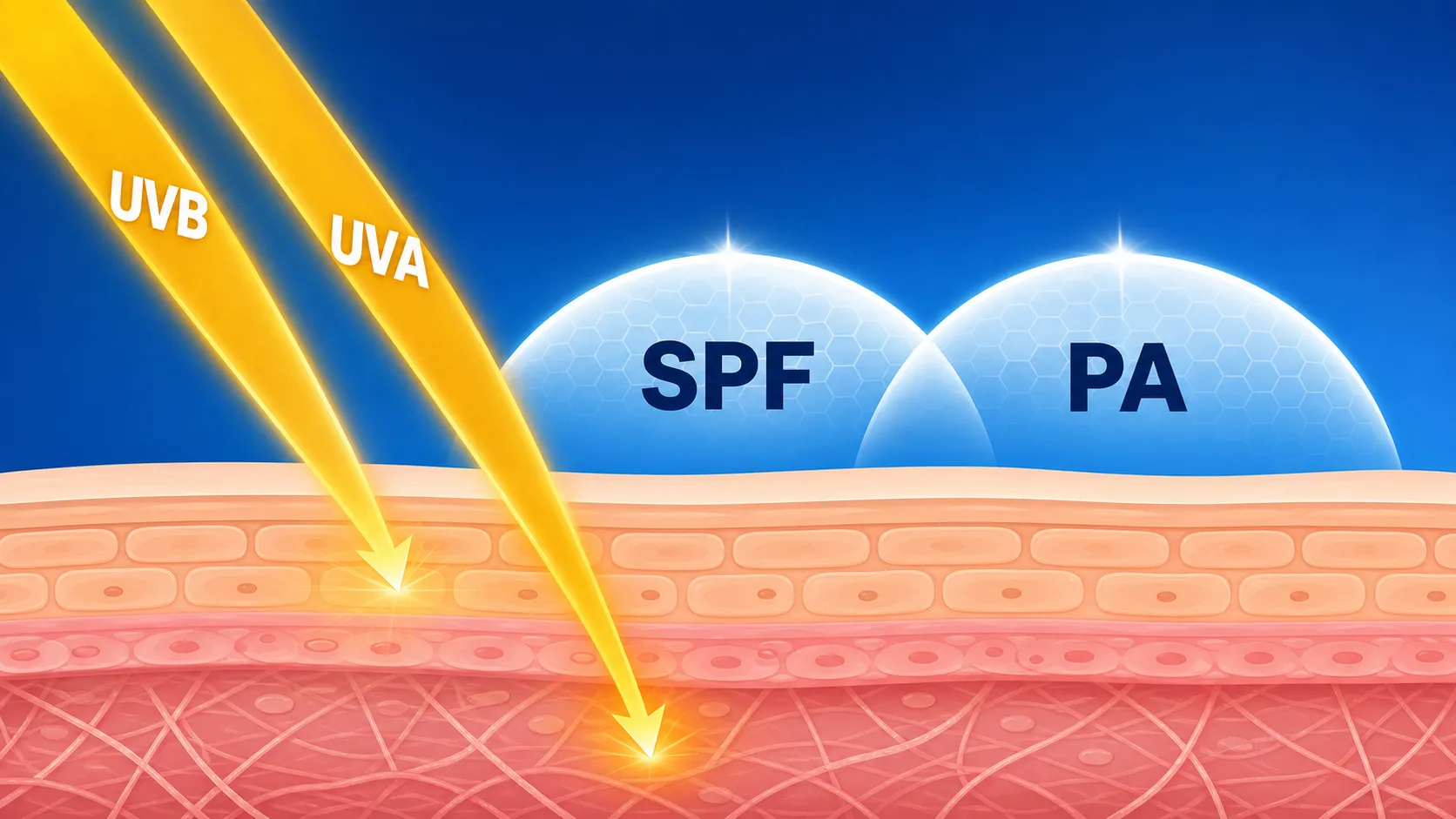
They’re both about “UV rays,” but SPF and PA actually block different types of light. Before you look at a sunscreen’s rating label, it helps to understand this distinction first so you don’t get confused.
SPF: The UVB Protection Rating
SPF (Sun Protection Factor) is a number showing how well a product blocks UVB rays, which hit the skin’s surface and cause redness and sunburn. The higher the number, the stronger the protection. Products are labeled with the exact number up to 50, and anything above that is simply labeled SPF 50+, since the actual difference in protection above SPF 50 is minimal (source: Ministry of Food and Drug Safety).
PA: The UVA Protection Grade
PA (Protection grade of UVA) rates how well a product blocks UVA rays, which penetrate deeper into the skin and cause dark spots, blemishes, and aging. More pluses mean stronger protection, up to four levels.
| Grade | Protection (vs. Bare Skin) |
|---|---|
| PA+ | ~2x |
| PA++ | ~4x |
| PA+++ | ~8x |
| PA++++ | ~16x |
SPF 50 and PA++++ Aren’t Always the Right Answer
A higher rating might look better, but stronger protection often comes with more skin irritation too. The key is choosing based on what you’ll actually be doing.
Recommended SPF/PA by Situation
- Mostly indoors, brief outings: SPF 15–30 / PA++ is plenty
- Everyday errands, commuting: SPF 30–50 / PA+++
- Summer outdoor activities, vacation, water play: SPF 50+ / PA++++, and a water-resistant product is recommended
What “Water-Resistant” and “Very Water-Resistant” Mean
If you’ll be swimming or sweating a lot, make sure to check this label. Water-resistant means the product retains at least 50% of its original SPF rating after about an hour in water, while very water-resistant means it keeps that same 50%-plus after about two hours (source: Ministry of Food and Drug Safety).
Amount and Reapplication Matter More Than the SPF Number
Apply only half of the amount recommended by the MFDS, and your actual protection drops to roughly a quarter of the labeled rating. Buy an SPF 50 product but apply too little, and you could end up with less protection than SPF 15.
Recommended Amount for the Face: A 500-Won Coin’s Worth, About 1g
For an adult face, the standard amount per application is about the size of a 500-won coin (roughly 1g). If that’s hard to spread evenly, split it into two or three dabs. With mineral (physical) sunscreens especially, rubbing can create tiny scratches and reduce how well it adheres, so patting it on is the correct technique.
Apply 15 Minutes Before Going Out, Reapply Every 2–3 Hours
- Apply 15 minutes before heading out so it can settle onto your skin
- Under normal conditions: reapply every 2–3 hours
- Swimming or sweating heavily outdoors: reapply every 1–2 hours
- When reapplying over makeup, a stick, cushion, or mist type is easiest to use
Mineral vs. Chemical vs. Hybrid Sunscreens: How to Choose
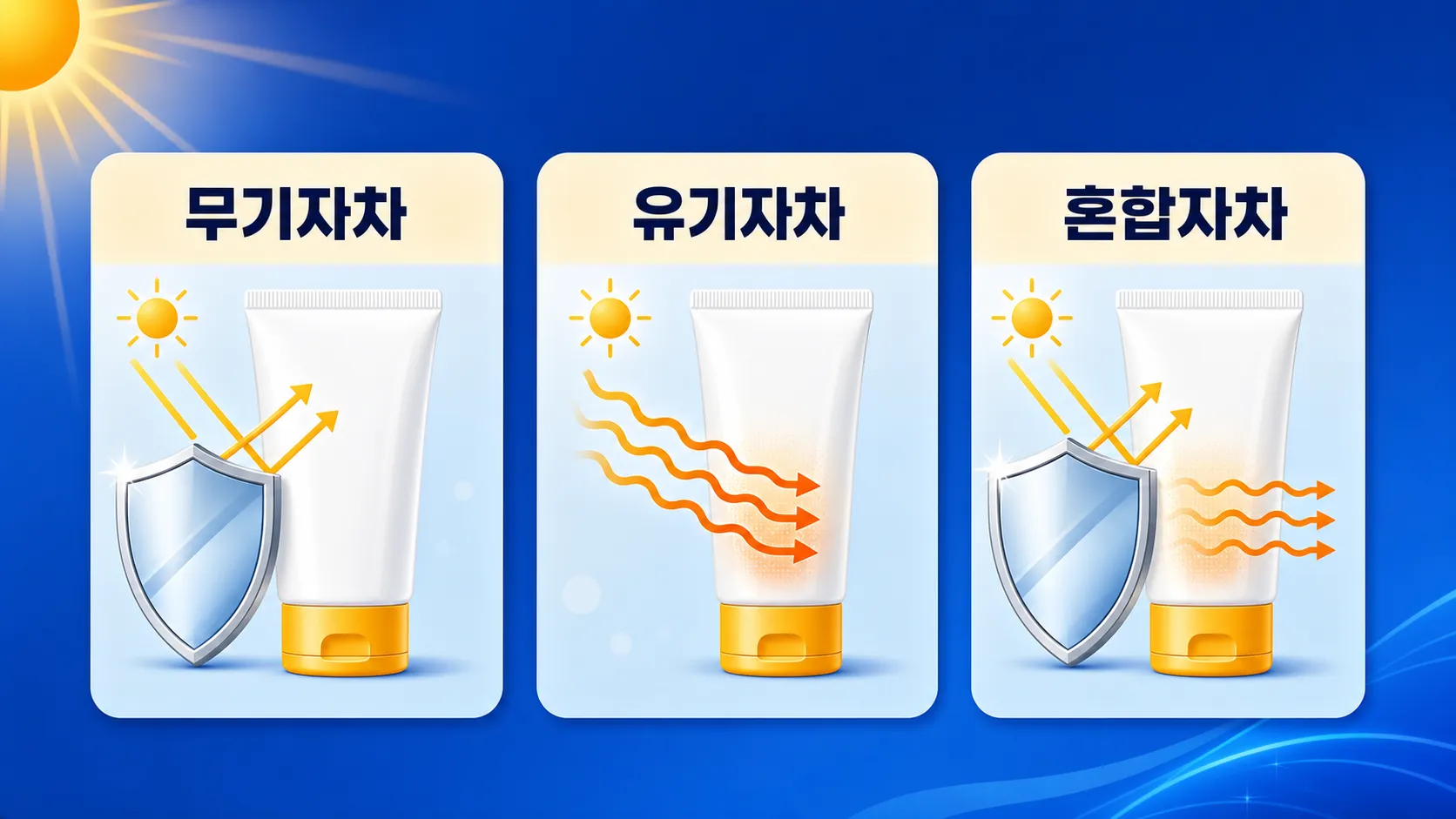
Because they block UV rays through different mechanisms, they differ in how easily they spread, how irritating they can be, and how much white cast they leave. Choosing one that matches your skin type is what makes it comfortable to wear every day.
Mineral Sunscreen (Physical Filter)
- How it works: Reflects UV rays off the surface of the skin
- Common ingredients: Titanium dioxide, zinc oxide
- Pros: Low irritation, consistent protection
- Cons: Can leave a white cast and feel a bit heavy
- Best for: Sensitive or dry skin, children and pregnant women, acne-prone skin
Chemical Sunscreen
- How it works: Absorbs UV rays and releases them as heat
- Pros: Spreads easily with virtually no white cast, works well as a makeup base
- Cons: Some ingredients can cause stinging eyes, irritation, or allergic reactions
- Best for: Oily or combination skin, makeup wearers, anyone who wants a lightweight feel
Hybrid Sunscreen
These combine both types of ingredients in one product. They strike a good balance between spreadability and protection, which is why most sunscreens on the market are actually hybrids. If you’re not sure about your skin type, starting with a hybrid sunscreen is a safe bet.
Pre-Outing Sun Protection Checklist for Summer
Just running through this once right before you head out makes a big difference.
- Did you apply it 15 minutes before heading out?
- Did you use about the size of a 500-won coin (roughly 1g) on your face?
- Did you cover your neck, ears, hands, and the tops of your feet too?
- Did you pack a product for reapplying every 2–3 hours? (A stick or cushion is easiest)
- If you’re swimming or exercising outdoors, is it a water-resistant or very water-resistant product?
- Did you also pack a UV-protective lip balm?
- Between 10 a.m. and 3 p.m., when UV is strongest, did you add a hat or sunglasses for extra protection?
Frequently Asked Questions (FAQ)
Is There a Big Difference Between SPF 30 and SPF 50 in Everyday Use?
In theory, SPF 30 blocks about 96.7% of UVB rays, and SPF 50 blocks about 98%. That’s only about a 1% difference — but since most people apply less than the recommended amount in practice, it’s safer to choose SPF 50+ for some margin and make sure you apply enough of it.
Should I Wear It on Cloudy or Rainy Days Too?
Yes. Even on cloudy days, 70–80% of UV rays still pass through the clouds. UVA in particular gets through regardless of weather, so it’s best to apply sunscreen daily.
Do I Need It Even If I’m Staying Indoors?
UVA passes through glass, so it reaches you inside offices and cars too. If you sit near a window or spend a lot of time driving, it’s worth applying a light layer of SPF 30 or higher even indoors.
Does Applying Makeup Over Sunscreen Reduce Its Effectiveness?
As long as you spread the sunscreen well and give it time to absorb (about 5 minutes) before applying makeup, its effectiveness holds up. Since removing makeup to reapply isn’t practical, use a sun stick or sun cushion to pat on more protection instead.
Wearing sunscreen every day is the single most effective way to prevent aging, dark spots, and skin cancer. Rather than shopping by the rating number alone, keep amount, reapplication, and skin type all in mind together. Just remembering the 1g-before-you-go, reapply-every-2-hours rule this summer can make your season noticeably safer.
References
- How to Use Sunscreen Correctly - Korea.kr Policy Briefing
- Sunscreen Only Works If You Apply It Correctly — Here’s How - Policy Briefing
- Sunscreen Usage Guide Leaflet - Ministry of Food and Drug Safety