 EasyTicket
 Here’s the bottom line: August’s international fuel surcharge dropped to Level 14, five levels down from July’s Level 19. And since the surcharge is based on the ticketing date (payment date), not the departure date, if you complete payment within August, you’ll get the lower rate even for a September or October trip. The catch: the September rate looks set to climb back up.
How Much Did the Fuel Surcharge Drop by Route in August?
Based on Korean Air’s rates, August’s fuel surcharge runs KRW 35,200 to KRW 259,200 one-way. Lining it up against July’s numbers, the gap widens the longer the route gets.
| Route (one-way) | July | August | Decrease |
|---|---|---|---|
| Shortest Northeast Asia routes (Fukuoka, Qingdao, etc.) | KRW 46,400 | KRW 35,200 | KRW 11,200 |
| Major Northeast Asia routes (Tokyo, Beijing, etc.) | KRW 62,400 | KRW 49,600 | KRW 12,800 |
| Bangkok, Singapore, Guam | KRW 139,200 | KRW 99,200 | KRW 40,000 |
| London, Paris, LA | KRW 318,400 | KRW 225,600 | KRW 92,800 |
| New York, Toronto, and other East Coast North America routes | KRW 344,000 | KRW 259,200 | KRW 84,800 |
On a round trip to New York, that alone comes to roughly KRW 169,600 less in fuel surcharge. Asiana Airlines sits at the same Level 14, with rates of KRW 36,600 to KRW 202,900 one-way (source: Korean Air and Asiana Airlines notices).
An KRW 80,000 gap on a Southeast Asia round trip, or KRW 180,000 on a Europe round trip, is roughly the price of a night or two of accommodation. For a family of two, that simply doubles.
Why ‘When You Pay’ Is Everything
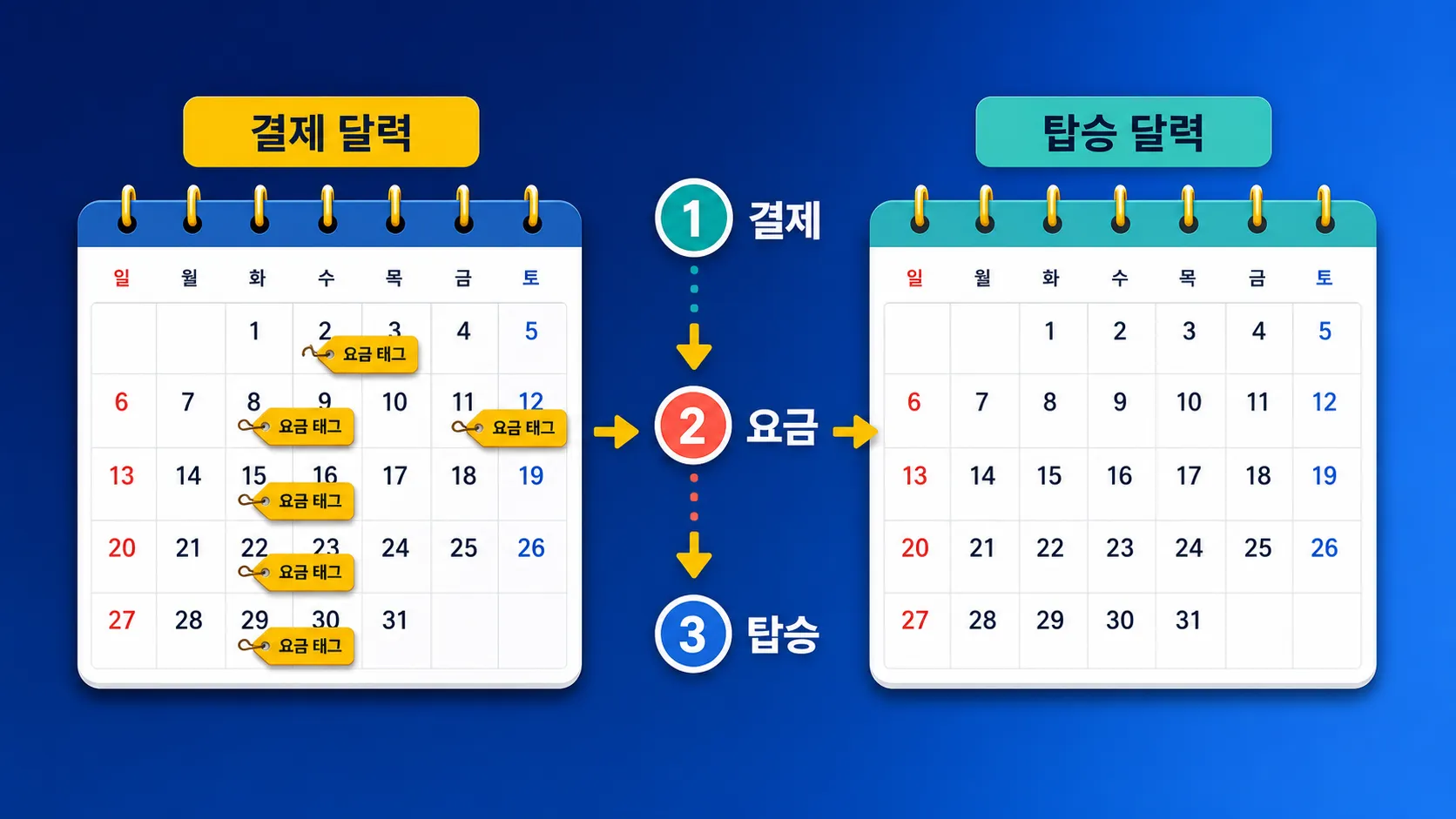
This is the part people miss most about fuel surcharges. The rate that applies is set by your ticketing date, not your departure date.
Flying in August but Booked in July? You Pay July’s Rate
The reverse holds too. Even a ticket for an October departure gets August’s Level 14 if it’s issued in August. In other words, the level is locked in by the month you hit the pay button — your departure date has nothing to do with it.
If It Drops Later, You Don’t Get the Difference Back
Once a ticket is issued, you won’t get a retroactive refund even if the fuel surcharge drops afterward. So the strategy of “just buy it now and claim a refund if it goes down later” simply doesn’t work here — the moment you book is the moment your price gets locked in.
September Could See a Rebound
The fuel surcharge is set by dividing the Mean of Platts Singapore (MOPS) jet fuel spot price into 33 levels, and for international flights it’s based on the average price from the 16th of the month before last through the 15th of last month. August’s Level 14 comes from the June 16–July 15 average of 283.48 cents per gallon (USD 119.06 per barrel). So September’s level will hinge on the July 16–August 15 average.
In late July, though, jet fuel prices climbed to around USD 140–150 per barrel amid Middle East tensions, and market analysts estimated that if this held, it would translate to Level 20 or higher — several levels above August’s Level 14.
September’s fuel surcharge is typically confirmed by airline notice from mid-August onward. It hasn’t been finalized yet, so it’s too early to flatly say it’s “guaranteed to go up” — but with more evidence pointing up than down, it’s worth factoring that in when you decide when to book.
Late-Summer and Chuseok Flights: 3 Rules for Timing Your Ticket Purchase
Chuseok (Korean Thanksgiving) falls on Friday, September 25 in 2026, making for a four-day holiday from Thursday, September 24 through Sunday, September 27, with no substitute holiday attached. If you’re torn between “book it now” and “wait and see” on a holiday flight, breaking it down into these three factors should help you decide.
Rule 1: If Your Dates Are Set, Book Within August
If your travel dates and headcount for the holiday are locked in, booking within August works in your favor. The fuel surcharge is at the lower Level 14, and once you factor in the chance of a September rebound, there’s little upside to waiting. This is especially noticeable on Europe and North America routes, where the one-way gap runs KRW 80,000–90,000.
Rule 2: For Short-Haul Routes, Fare Swings Matter More
On the shortest Northeast Asia routes, the July-to-August gap is just KRW 11,200 one-way — about KRW 20,000 round trip, an amount a single fare promotion can wipe out on its own. For short-haul trips to Japan or China, it makes more sense to prioritize seat availability and fare class over the fuel surcharge.
Rule 3: If Your Plans Might Change, Check the Change Policy First
If you end up rebooking due to an itinerary change, the rate at that later date may apply instead. Handling varies by airline and fare condition, so if your schedule isn’t fully settled, it’s safer to check the change fee and reissuing process before you pay.
- Are your departure and return dates finalized?
- Have you checked the route’s distance category (short-haul vs. mid/long-haul)?
- Will payment on the booking site be completed before August 31?
- Have you read the change and cancellation fee terms?
Checking Fuel Surcharges and Refunds: The Confusing Parts
For Accurate Rates, Check the Airline’s Own Notice
Each airline posts next month’s rates by route on its website’s notice board every month. Summaries on travel agency or comparison sites can lag behind, so when you need a firm number, going straight to the airline’s own notice is the surest bet.
The Fuel Surcharge on an Unused Segment Isn’t Gone
Even on a non-refundable discount fare, the fuel surcharge and airport taxes for any segment you didn’t actually fly are still eligible for a separate refund. This isn’t always processed automatically, so you may need to request it from the airline or wherever you booked.
Frequently Asked Questions
If I Book in August, Does the August Rate Apply to Both Legs of a Round Trip?
Yes. For a round-trip ticket issued in one transaction, the level at the time of ticketing applies to every segment. The figures in the table are one-way, so just double them for round trip.
If September’s Rate Turns Out Cheaper, Can I Get the Difference Refunded?
No. Even if the fuel surcharge drops after you’ve booked, there’s no retroactive refund — and likewise, no extra charge if it rises. Think of it as a system where the rate is locked in the moment your ticket is issued.
Do Low-Cost Carriers (LCCs) Charge the Same Amount?
The level system is the same, but the actual amount varies by airline. Just looking at August, Korean Air tops out at KRW 259,200 while Asiana Airlines tops out at KRW 202,900. It’s worth checking your specific airline’s notice separately before booking.
Do Mileage Award Tickets Also Carry a Fuel Surcharge?
Yes. Even when you book with miles, the fuel surcharge and taxes are still paid in cash — so award tickets are affected by the level at the time of ticketing just the same.
Does the Fuel Surcharge Make Up a Big Share of the Ticket Price?
It depends entirely on the route’s distance. Short-haul Northeast Asia routes sit around KRW 35,200 one-way, while East Coast North America routes hit KRW 259,200 — over KRW 500,000 round trip. That’s exactly why timing your booking matters more the longer the route.
If your holiday travel dates are already locked in, start by marking your payment deadline on the August calendar. Just checking your route category will let you calculate right away how much is riding on it for a round trip.