 EasyTicket
 There’s more government support available for young people ages 20–34 than you might expect. From rent subsidies to jeonse and home-purchase loans, asset-building programs, and job-seeking or tuition support, the range is wide — and since the amounts and application periods shift slightly every year, it’s easy to miss out. Here’s a complete, 2026 rundown of the 7 youth government support programs you need to know.
How Do I Choose the Right Youth Government Support Program?
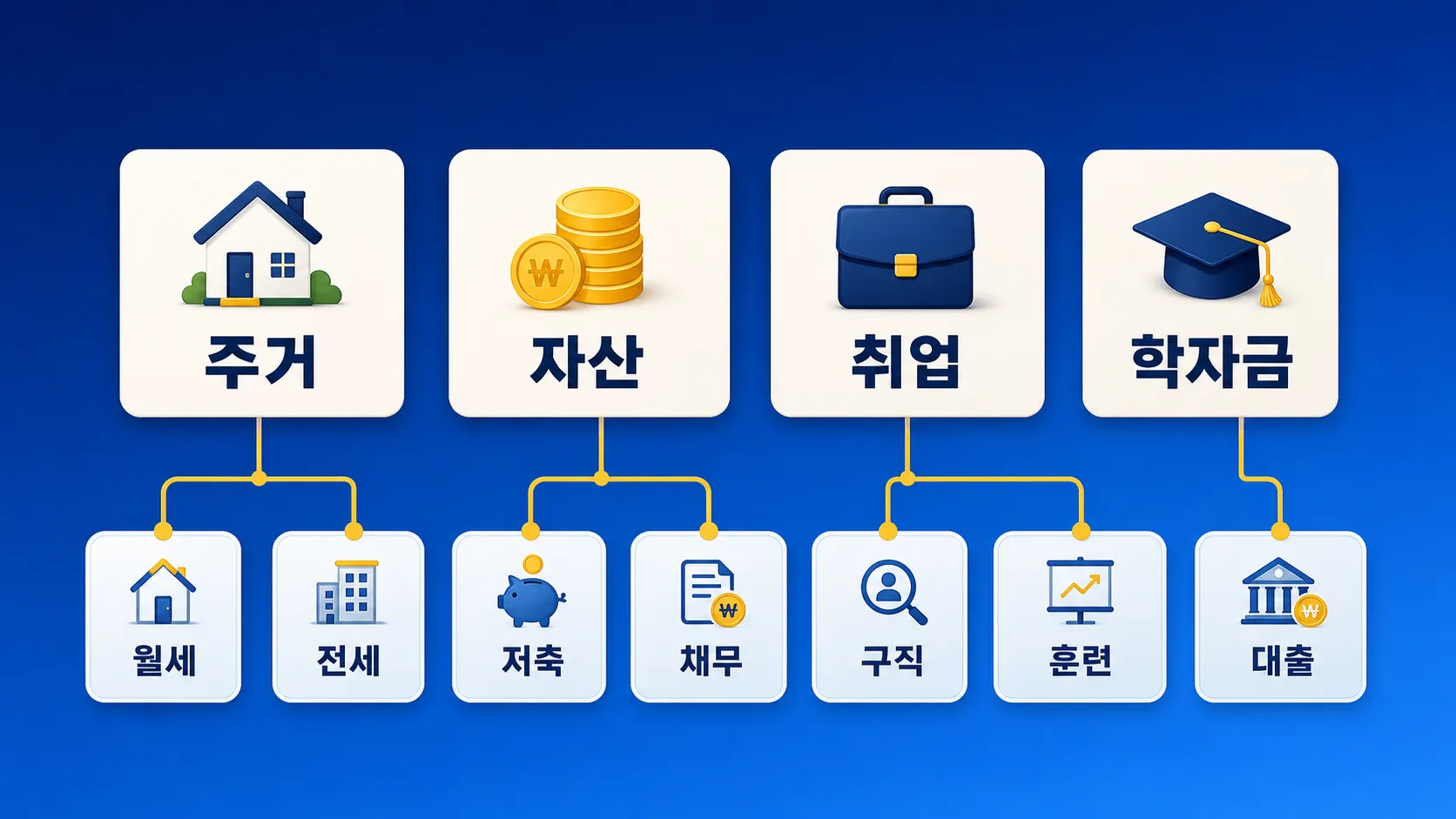
Start by matching your situation to one of four categories. Breaking it down into housing (rent, jeonse, or home purchase), asset building, employment, and tuition makes it easy to spot the programs that fit you.
- If housing is urgent: Move through the stages in order — Youth Monthly Rent Support → Beotimmok Jeonse Loan → Didimdol Loan
- If you want to build savings: Get government matching funds through the Youth Tomorrow Savings Account
- If you’re job hunting: Combine the National Employment Support System with Wide-Area Job Search Expenses
- If you’re enrolled or on a leave of absence: Ease your tuition and living-cost burden with a General Repayment Student Loan
Each program has different income, age, and asset criteria, and some only accept applications during a limited window — so checking your own eligibility and the schedule is the first hurdle.
The 7 Youth Government Support Programs at a Glance
Here’s one table covering all 7 programs — key support details, eligible age, and the responsible agency.
| Program | Key Support | Eligible Age | Responsible Agency |
|---|---|---|---|
| Youth Monthly Rent Support | Up to KRW 200,000/month (24 months) | Age 19–34 | Ministry of Land, Infrastructure and Transport |
| Youth Tomorrow Savings Account | 1:3 government matching on personal savings | Age 15–39 | Ministry of Health and Welfare |
| National Employment Support System | Job-Seeking Promotion Allowance, KRW 600,000–1,000,000/month | Age 15–69 (preference for youth) | Ministry of Employment and Labor |
| Wide-Area Job Search Expenses | Actual transportation and lodging costs | Job seekers traveling 25 km or more | Ministry of Employment and Labor |
| Beotimmok Jeonse Loan | Up to KRW 120–300 million (annual 2.1–2.9%) | Age 19+, no home owned | Ministry of Land, Infrastructure and Transport |
| Didimdol Loan (Home Purchase) | Up to KRW 250–400 million (annual 2.45–3.55%) | Age 30+, no home owned | Ministry of Land, Infrastructure and Transport |
| General Repayment Student Loan | Tuition and living expenses (annual 1.7%) | Age 55 or under | Ministry of Education |
The amounts and interest rates in the table are as of 2026. Before applying, double-check the latest terms on each program’s official site.
3 Programs to Ease Your Housing Cost Burden
Youth Monthly Rent Support — Up to KRW 200,000/Month, 24 Months
This is for young people (age 19–34 under the Framework Act on Youth) who live apart from their parents and don’t own a home. You must live in housing with a security deposit of KRW 50 million or less and monthly rent of KRW 600,000 or less, and meet both income conditions: your own income at or below 60% of Standard Median Income, and your original household’s income at or below 100% (source: Ministry of Land, Infrastructure and Transport).
- Support amount: Up to KRW 200,000/month, for up to 24 months (KRW 4.8 million total)
- Where to apply: Online via Bokjiro (bokjiro.go.kr), or at the community service center for your registered address
- 2026 application: Ran in the first half of the year (late March–late May). Starting in 2026, the program has shifted from a time-limited project to an ongoing one, so another round is expected.
You’re not eligible if you rent from a lineal ascendant (parent, grandparent, etc.) or another relative within the second degree of kinship. You’ll also need to submit your move-in (resident registration) report and proof of rent paid by bank transfer for the most recent 3 months.
Beotimmok Jeonse Loan — Low-Interest Jeonse Deposit Loan
You can apply if you’re a non-homeowning head of household age 19 or older (age 25 or older for single-person households) with combined annual household income of KRW 50 million or less. The income cap is relaxed to KRW 75 million for newlywed households and KRW 60 million for households with 2 or more children.
- Loan limit: KRW 120 million in the Seoul metro area / KRW 80 million elsewhere for general households; up to KRW 300 million in the Seoul metro area for newlywed or 2-child households
- Interest rate: Annual 2.1–2.9% (1.2–2.1% for newlyweds), with a 0.3–0.7%p discount depending on number of children (as low as 1.0%)
- Eligible housing: 85㎡ or less in exclusive-use area (100㎡ in eup/myeon rural districts)
- Where to apply: Gije-eDeundeun (the Housing and Urban Fund’s online loan platform) or an entrusted bank (Woori, KB Kookmin, IBK Industrial Bank, NH Nonghyup, Shinhan)
Didimdol Loan — Low-Interest Home Purchase Loan
This is for non-homeowning heads of household with combined annual household income of KRW 60 million or less (KRW 70 million for first-time buyers, KRW 85 million for newlyweds). The head of household must be an adult under the Civil Act, and single-person households under age 30 are excluded.
- Loan limit: KRW 250 million per household (KRW 400 million for newlywed or 2-child households, KRW 300 million for first-time buyers)
- Interest rate: Annual 2.45–3.55% (varies by income and term), as low as 1.5% with preferential treatment for households with many children or a housing subscription savings account
- Eligible housing: Appraised value of KRW 500 million or less, 85㎡ or less in exclusive-use area (up to KRW 600 million for first-time buyers or 2-child households)
The Didimdol Loan can only be used for a home purchase. You must move in within 1 month of loan disbursement and actually reside there within 1 year. Violating this can be grounds for the loan to be recalled.
Asset-Building and Tuition Support Programs
Youth Tomorrow Savings Account — Government Matches 3x
This is for young people who are age 15–39 at the time of application, earn KRW 100,000 or more per month in wage or business income, and belong to a household with income at or below 50% of Standard Median Income.
- Matching: Save KRW 100,000–500,000/month yourself → the government matches KRW 300,000/month (3-year term)
- 2026 application: Ran May 4–20, 2026. The next recruitment round will be announced separately (source: Ministry of Health and Welfare).
- Where to apply: In person at your eup/myeon/dong community service center, or online via Bokjiro
- Inquiries: Asset-Building Support Call Center 1522-3690, Health and Welfare Counseling Center 129
General Repayment Student Loan — 1.7% Fixed Rate
This is for undergraduate and graduate students at domestic higher education institutions, as well as Academic Credit Bank System learners. The basic requirements are age 55 or under, a grade of C (70/100) or higher in the previous semester, and completion of 12 or more credits (new students are exempt from the GPA/credit requirement).
- Tuition loan: Full tuition per semester (limit of KRW 40–120 million depending on school type)
- Living expense loan: KRW 2 million per semester, KRW 4 million per year
- Interest rate: Fixed at annual 1.7% for the first semester of 2026
- Where to apply: Online via the Korea Student Aid Foundation (KOSAF, kosaf.go.kr); first-semester applications ran Jan 5–May 20, 2026
2 Programs That Help With Job Hunting
National Employment Support System — Job-Seeking Promotion Allowance of KRW 600,000–1,000,000/Month
Job seekers age 15–69 who meet the income, asset, and work-experience requirements can qualify for Type I (means-tested) and receive a Job-Seeking Promotion Allowance of KRW 600,000–1,000,000/month for 6 months. More relaxed conditions apply to youth (age 15–34).
- Youth Type I (means-tested): Median income 60% or below, assets of KRW 500 million or less, plus 100 days or 800 hours of work experience in the last 2 years
- Youth selection track: Even if you don’t meet the above, you can still be selected if median income is 120% or below and assets are KRW 500 million or less
- Type II: Centered on employment support services, such as a participation allowance for building an employment activity plan
- Where to apply: Work24 (work24.go.kr) or your local employment center — applications accepted year-round
- Inquiries: Ministry of Employment and Labor Customer Service Center 1350
Wide-Area Job Search Expenses — Actual Transportation and Lodging Costs
If a job placement agency refers you to job-seeking activities 25 km or more from your residence, and the head of the agency recognizes the need for payment, you can be reimbursed for actual costs. This is especially useful for young people traveling from the provinces to the Seoul metro area for interviews.
- What’s covered: Actual transportation and lodging costs for the day of the job-seeking activity
- Claim deadline: Within 14 days of the wide-area job search activity ending
- Documents needed: Wide-area job search expense claim form, proof of transportation and lodging costs
- Where to apply: In person at your local employment center
Checklist to Confirm Before Applying
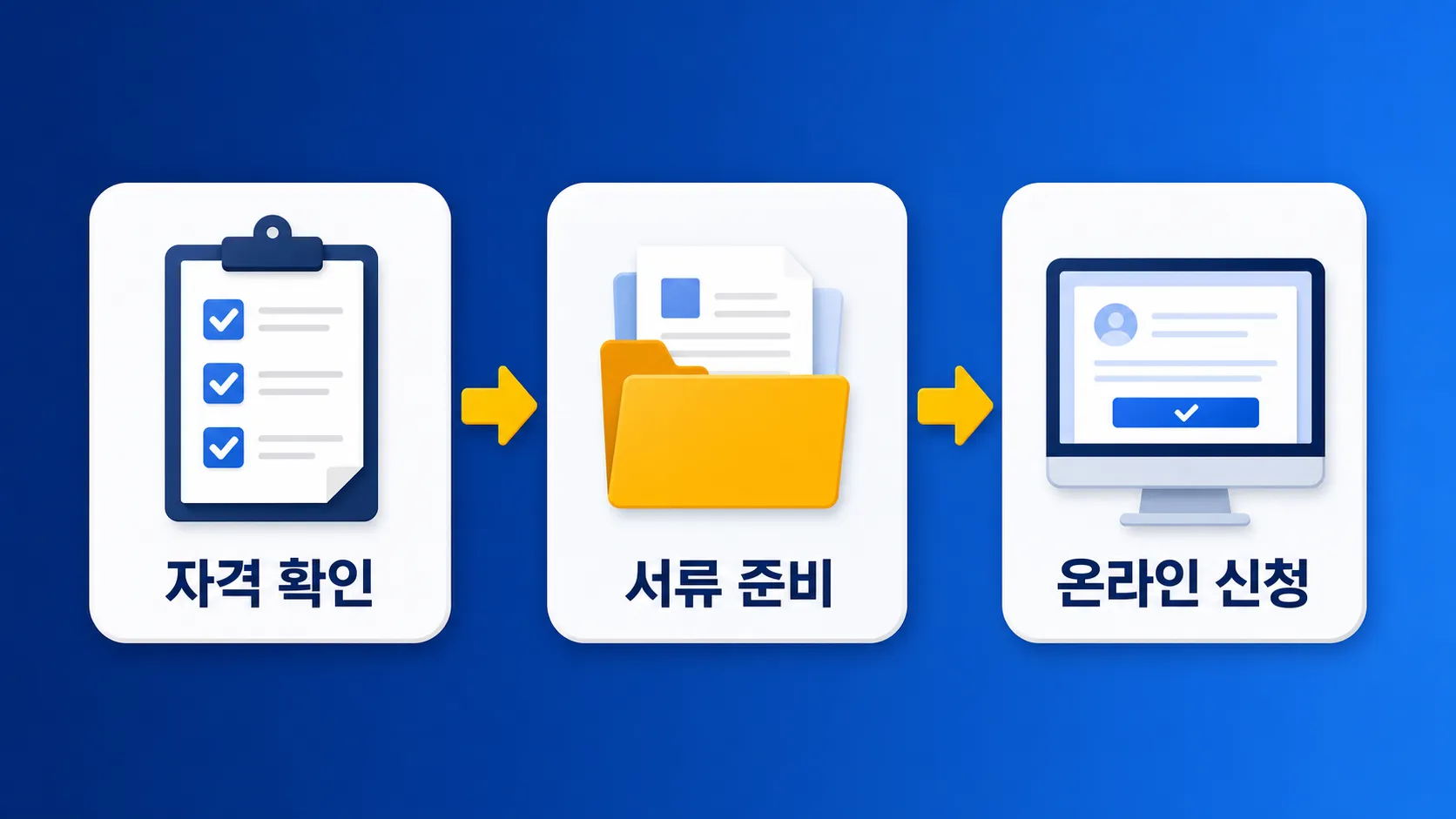
- Confirm your age, head-of-household status, and income bracket (the first gate for every program)
- When income is calculated at the household level, also check the income of your original household (including parents)
- For programs with a no-home-ownership requirement, pre-sale rights and move-in rights also count as owning a home
- For programs with a limited application window, set a reminder in advance for the next round’s schedule
- Prepare your lease agreement, employment proof, and income documents issued within the last 3 months
Applying to multiple similar asset-building programs at once (e.g., the Youth Tomorrow Savings Account and the Youth Leap Account) can get one of them restricted. Before enrolling, check whether dual enrollment is allowed by calling the Asset-Building Support Call Center (1522-3690).
There’s also a separate rundown of government support for marriage and childbirth — if that applies to you, check out The Complete Guide to 7 Government Support Programs for Newlywed Couples’ Pregnancy and Childbirth as well.
Frequently Asked Questions (FAQ)
I missed the application period for Youth Monthly Rent Support. When’s the next round?
The main 2026 application ran in the first half of the year. Youth Monthly Rent Support was run as a time-limited project from 2022–2027, but starting in 2026 it’s shifted to an ongoing program, so the next application round will be announced separately. Check Bokjiro or your city/county/district website regularly for notices.
Can I receive the Youth Tomorrow Savings Account and a student loan at the same time?
Yes, that’s possible. The Youth Tomorrow Savings Account is an asset-building program and the student loan is an education loan, so they’re separate systems. That said, the Youth Tomorrow Savings Account requires you to earn KRW 100,000 or more per month yourself, so if you’re a student, you’ll need wage or business income to qualify.
Can every young person receive the Job-Seeking Promotion Allowance from the National Employment Support System?
No. The Job-Seeking Promotion Allowance (KRW 600,000–1,000,000/month for 6 months) is only available if you qualify for Type I; Type II provides employment support services only. Even among young people, which type you fall into depends on whether you meet the income, asset, and work-experience requirements, so start by getting an eligibility check on Work24.
Can I get a jeonse loan (Beotimmok) and a home purchase loan (Didimdol) at the same time?
You can’t hold both loans at the same time. If you buy a home after living in a jeonse rental, the typical flow is to pay off the Beotimmok loan and then switch to a Didimdol loan. Didimdol’s income cap is also a bit more generous (KRW 70 million for first-time buyers), so it’s worth timing your switch to when you actually buy.
Taking advantage of these 7 youth government support programs by category can add up to a difference of several million won or more per year. Pick the 1–2 programs that fit your situation and be sure to apply, whether in this round or the next.
References
- Welfare Service Details – Youth Monthly Rent Support Program (Bokjiro)
- 2026 Youth Monthly Rent Support Application Guide (Official Bokjiro Blog)
- Welfare Service Details – Youth Tomorrow Savings Account (Bokjiro)
- Press Release on New Recruitment for the ‘Youth Tomorrow Savings Account’ (Ministry of Health and Welfare)
- Housing and Urban Fund – Beotimmok Jeonse Loan and Didimdol Loan Guide
- Korea Student Aid Foundation – General Repayment Student Loan