
The moment I stepped into Room 48 of Cheongyeondang, the name “Little Pine Needle” appeared over my young novice monk’s head. There was no sign-up, no login, and no app to install, just a stone path in front of a tile-roofed Buddhist hall. Sansa is a 3D online temple website made by Park Jin-won, who was job hunting at the time. He built it through “vibe coding,” where you describe the features you want to an AI in plain language, and he released it on Threads and Instagram in late October 2026. You walk through the hall as a young novice monk (dongja-seung) character, and you can press your palms together in greeting, bow, and turn prayer beads.
Within days, online cathedrals, saunas, and temples of all kinds began to appear. I walked through the original myself and set it side by side with three of the sites that followed.
Palms Together Instead of Words, 100,000 Visitors a Day
The word spread in a simple way. Park posted the link on Threads and Instagram, and on Threads on October 29 he wrote that about 12,000 people showed up in a single day and the server went down. Later that same night he reported that 100,000 people had visited in one day (Nongmin Sinmun). A report on the 31st said 600,000 people had visited over three days (Segye Ilbo). That figure is the developer’s own count, and it has not been independently verified.
The size of the rooms gives a better sense of the crowds. At first each room held 20 people, and he later raised the cap to 100, then 1,200, and finally 10,000. On October 30, 4,679 people were online at once across 100 Cheongyeondang servers (Money Today), and at 6 p.m. the same day the number was 5,119 (Sidae Ilbo). A small temple where twenty people once sat quietly had become a complex of 100 temples within days.
Why did it take off? The key is a design that removes speech. The developer describes Sansa as “an online temple where you sit together without talking,” and he took out the user-to-user conversation feature that it originally had. Avatars get random names, and there is no chat box (The Korea Herald). You never have to deal with a stranger, yet you still feel that someone is next to you. The response came from across the sea as well. The developer said 50,000 people visited from Taiwan in a single night, and Taiwanese media published guides on how to use it even though the screens are entirely in Korean.
How Does Sansa Work?
When you open the address, you are automatically assigned to a server and land right in the courtyard in front of the hall. On a computer, you click the ground to walk, drag to look around, and use the wheel to zoom. When I held the W key for about 1.5 seconds, the character walked toward the hall.
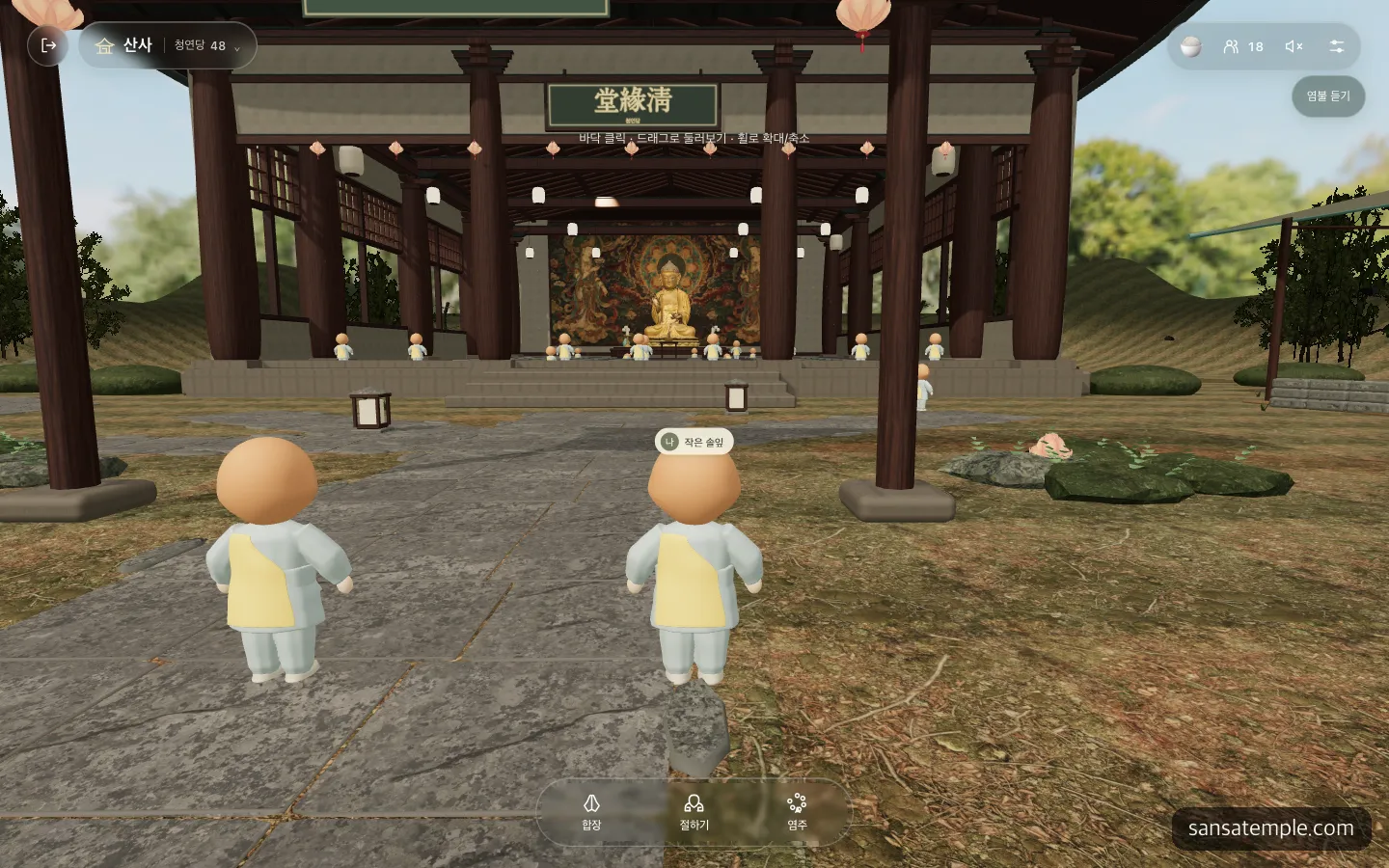
The Cheongyeondang courtyard where you start. The three buttons at the bottom and a few at the top are all the controls there are.
When you press the bow button, the character does not bow on the spot. A “Heading to a cushion” message and a stop button appear, because the character walks off to find an empty cushion. This is where the rule of one person per cushion shows. You cannot sit on top of someone else’s spot, and the personal wooden block (moktak) in place of a shared one comes from the same thinking.
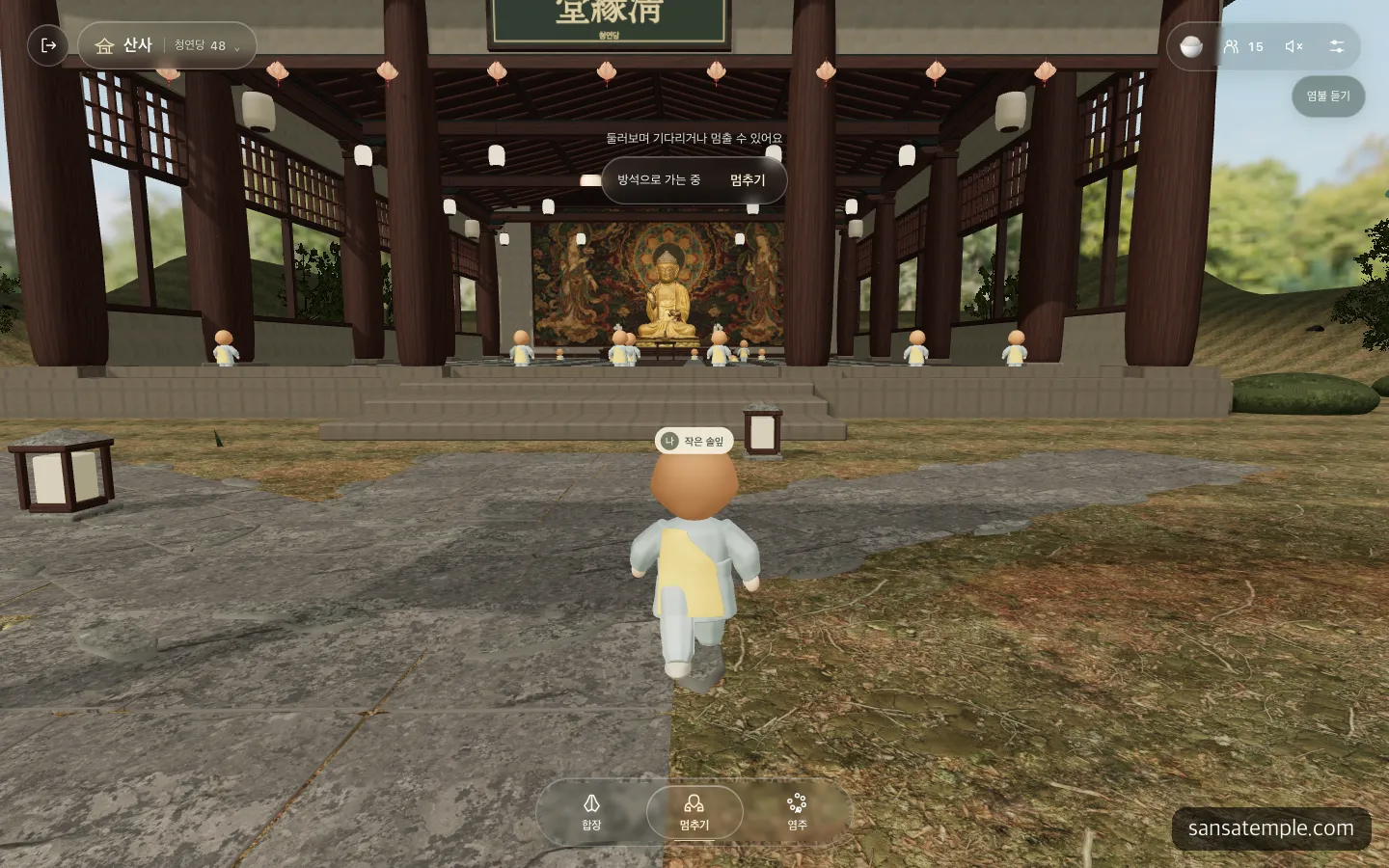
Press the bow button, and the character first walks to find an empty cushion.
The prayer beads open on a completely different screen. Wooden beads are laid out vertically on a beige background, and a counter at the bottom left climbs toward 108. One drag upward took it from 0 to 5. You cannot see anyone else on this screen, so it feels like stepping out of the hall into a private room for a moment.
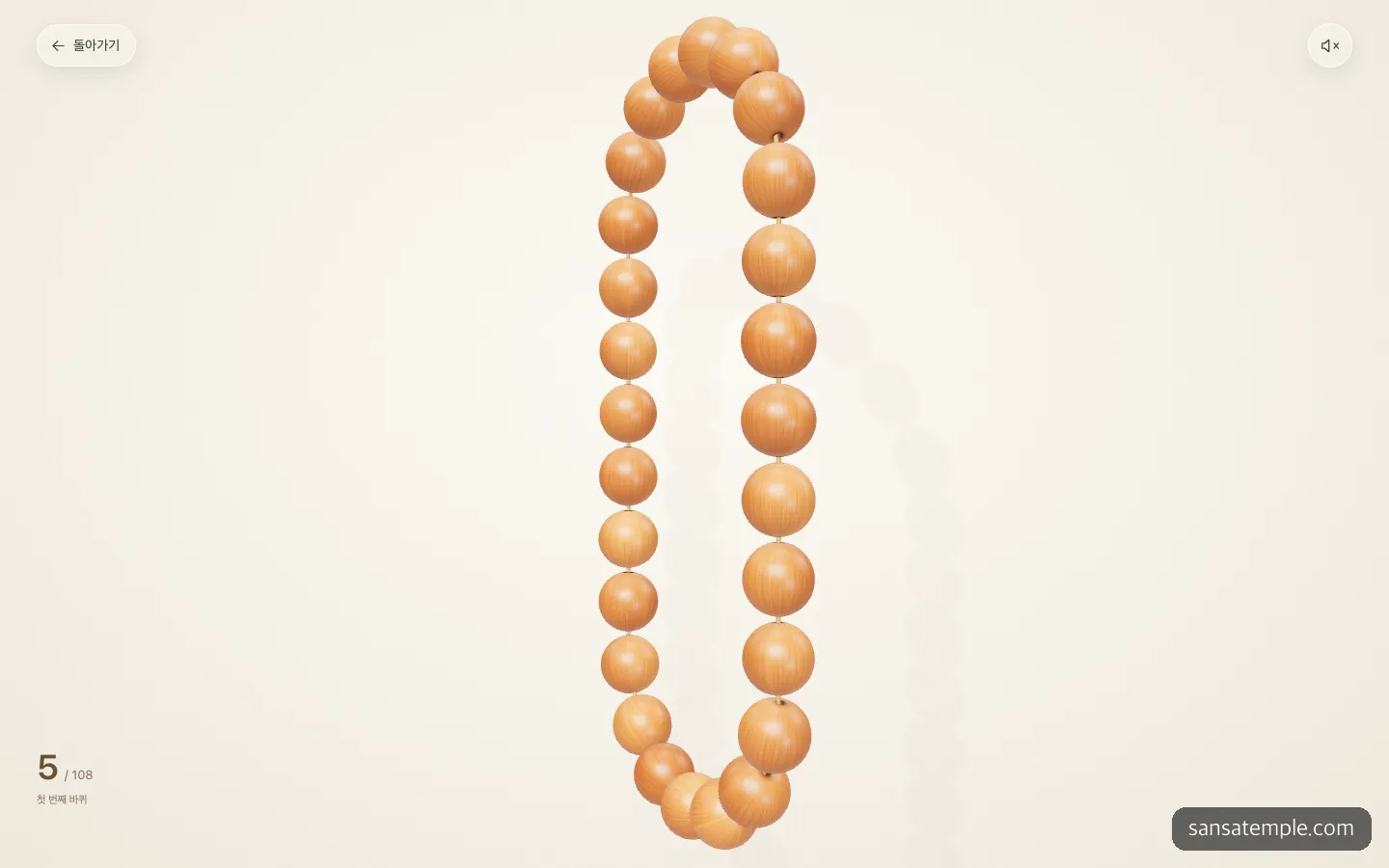
The prayer bead screen. One drag upward raised the counter from 0 to 5.
Walking the Hall on a Phone
The same hall loads on a phone with nothing to install. The palms-together, bow, and prayer bead buttons on the bottom bar grow large enough to tap easily, and the instructions change to “Tap to move, swipe to look around, pinch to zoom.” It never froze or crashed while I was there.
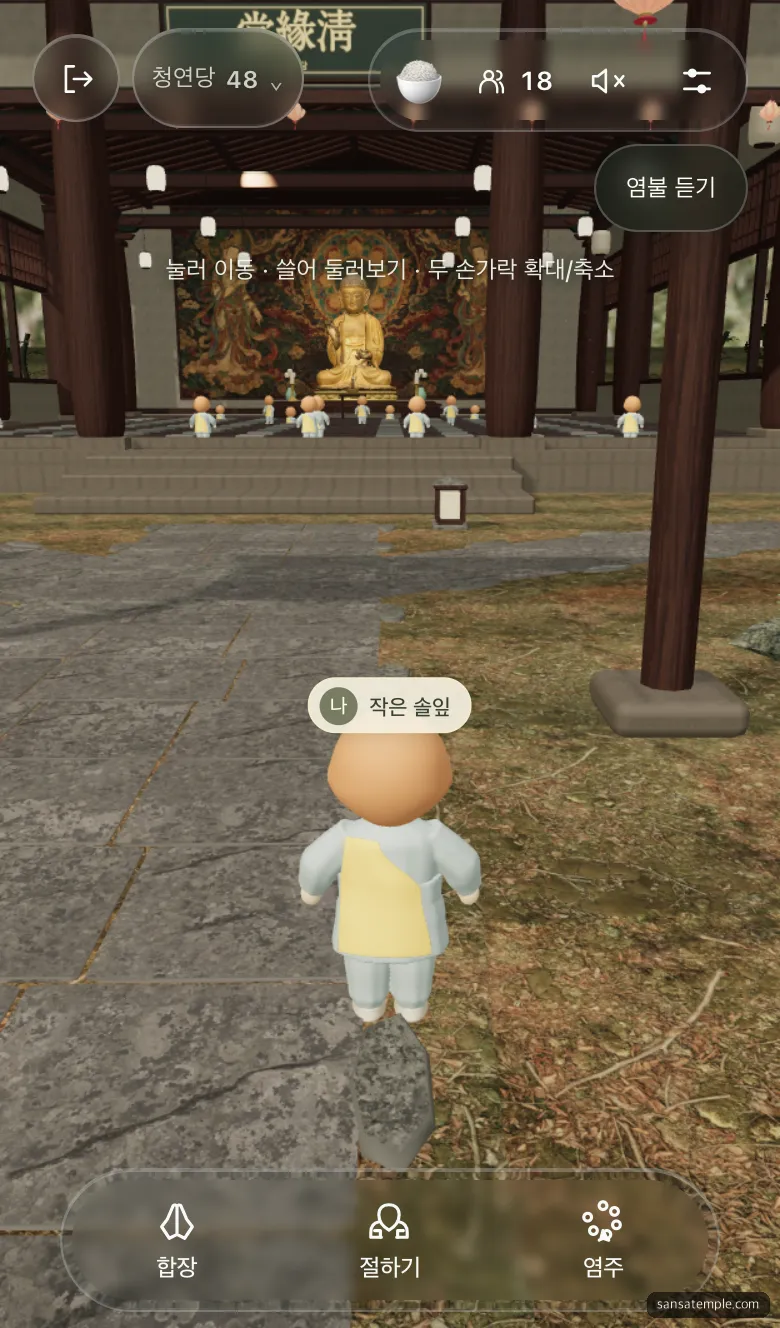
The same hall opens on a phone with no install, and the control instructions switch to touch.
There were clear downsides too. Reopening it on my phone took about 6 seconds to load, and the sound is off at first, so you have to tap the speaker icon yourself to get the chanting atmosphere. I could not spot any noticeable change on screen when I pressed the palms-together button. If you expect a big reaction every time you press a button, it may feel dull. If instead you want to sit quietly for a few minutes and leave, this plainness suits you. With no flashy effects, it is a good place to drop in briefly before work or during a lunch break.
The donation side is still being sorted out too. He added an “offering rice” (gongyangmi) donation feature to cover server costs, but according to the developer’s Threads posts, the KakaoPay QR code was blocked, and the Buy Me a Coffee page he put up instead takes payment in dollars, so he is looking for another option.
A Cathedral, a Sauna, and a Mazu Temple Too
After Sansa took off, several outlets reported a string of virtual spaces themed on cathedrals, churches, fishing spots, saunas, clubs, campsites, and outer space. On Threads, an online cathedral called Inpeace and an online church called “Dawn Chapel” (Saebyeok Yebaedang) drew attention together, and there was also an online church shared through Claude Artifacts (ZDNet Korea). In the Chinese-speaking world, an online Mazu temple made by a Taiwanese user was introduced alongside it.
So is there a “copy Sansa”? As of November 1, 2026, no online temple that directly reuses Sansa’s design or code has been confirmed in news reports. The press also described these services as “inspired by its popularity,” not as “clones.” The three sites I actually visited had a similar mood, but each added its own mechanics.
| Sansa | Sauna Goyo | Inpeace | Online Mazu Temple | |
|---|---|---|---|---|
| Setting | A Korean temple hall | Hinoki cypress sauna, cold plunge, outdoor air bath | A Gothic cathedral | A Taiwanese Mazu temple |
| Talking to others | No chat | No chat or voice, greeting gestures | Checked only up to the entry screen | Chat and emoji buttons |
| Its own mechanics | One person per cushion, 108 prayer beads | Temperature and humidity, a course, set count | Lighting candles, a confessional | Casting divination blocks and drawing fortunes, lifting incense |
| Creator credit | Developer revealed himself in press and on Threads | No credit on the entry screen | ”made by one person” | Button to contact the creator |
The closest match is Sauna Goyo (“Quiet Sauna”). Its entry card reads “a place to sweat and rest together without a word,” which is almost the same construction as Sansa’s own intro line. Once you step inside, though, there are rules built from scratch for a sauna: a temperature that climbs from 82 to 87 degrees (Celsius), a course that runs from sauna to cold plunge to outdoor air bath, a set counter, and a guide character who pours water on the stones. The page does not mention Sansa. Having similar wording is different from copying, and the accurate way to see it is as the same idea moved to a different subject.
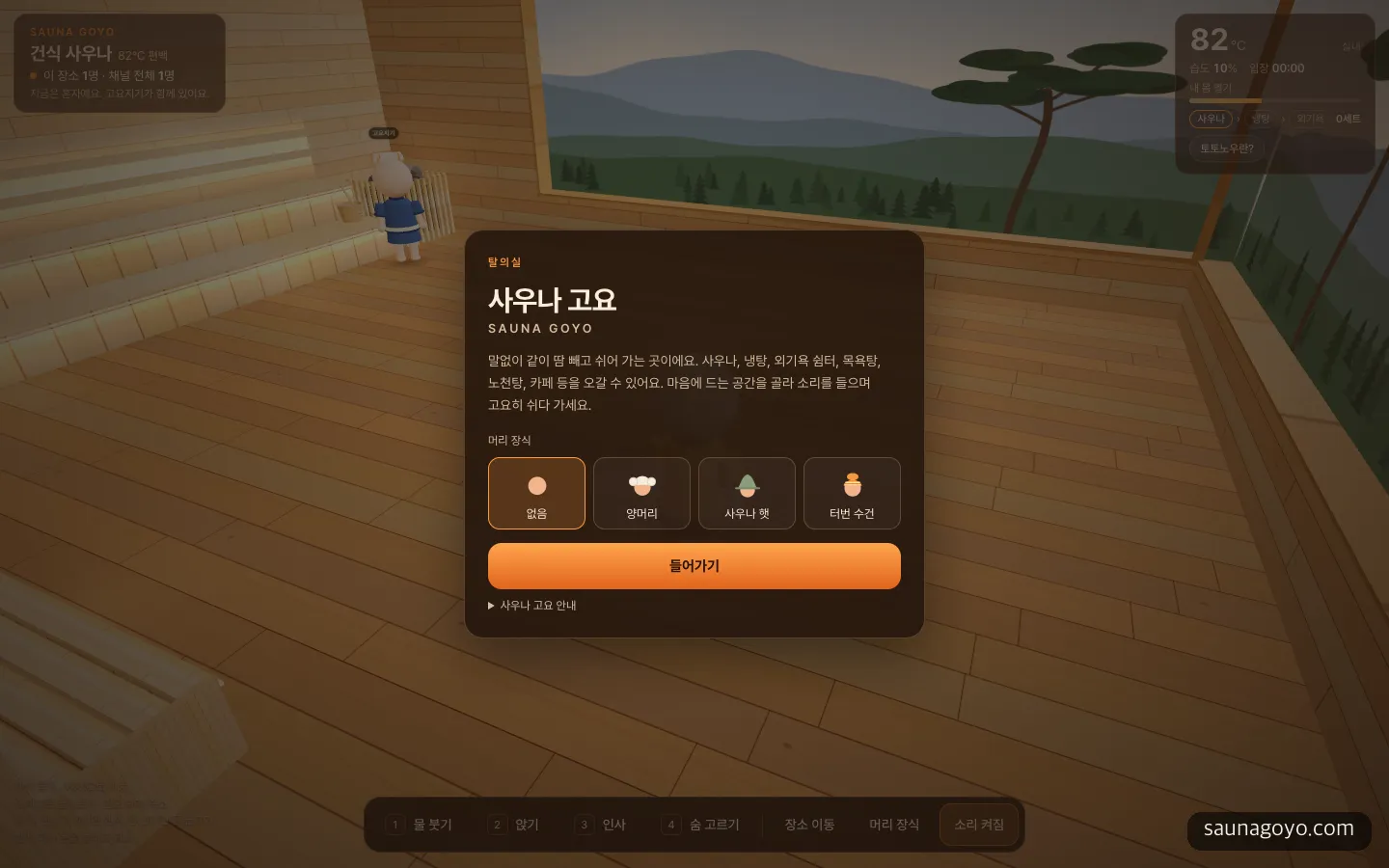
The Sauna Goyo entry screen. The intro wording is built like Sansa’s, but it has its own mechanics such as temperature and a course.
Inpeace is a virtual cathedral whose creator says it was made by one person. You enter without an account and light candles, and in the confessional, it says that what you write is neither sent nor saved. The entry screen first tells you to turn your sound on to hear the hymns, organ, and bells.
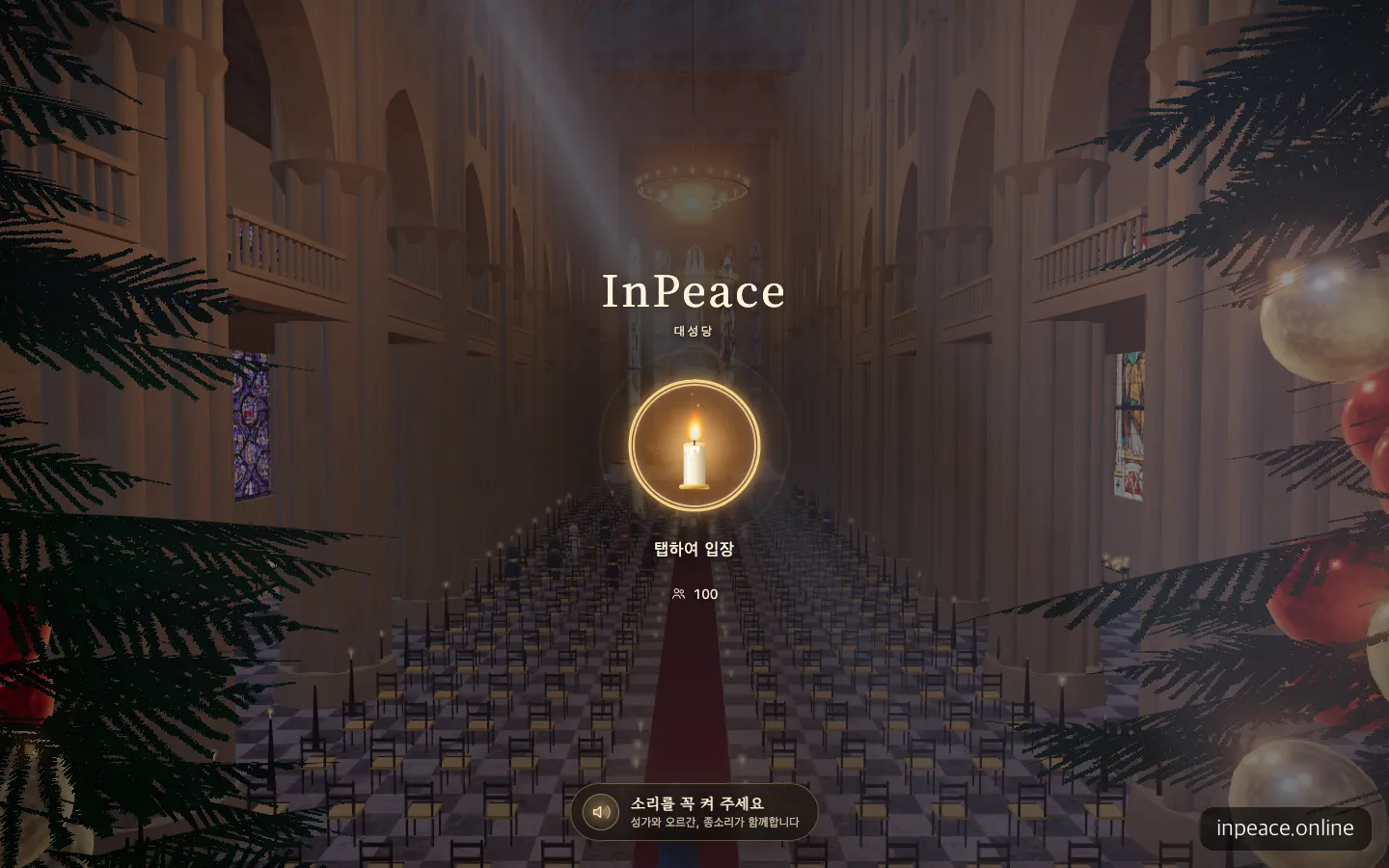
The entry screen of Inpeace, the virtual cathedral that drew attention alongside Sansa.
The online Mazu temple had the most different character. Before you enter, a large customization window lets you pick a face, hair, clothes, and even eyebrows, and in the main hall you find worship and fortune buttons, currency in units of 300, and an 11-step worship guide. It is less a place to sit in silence than one where you follow the worship sequence of a Taiwanese temple like a game. There is also a warning that your data may be erased if you open it inside the Threads or Instagram app, which seems aimed at people who arrive directly from social media links.
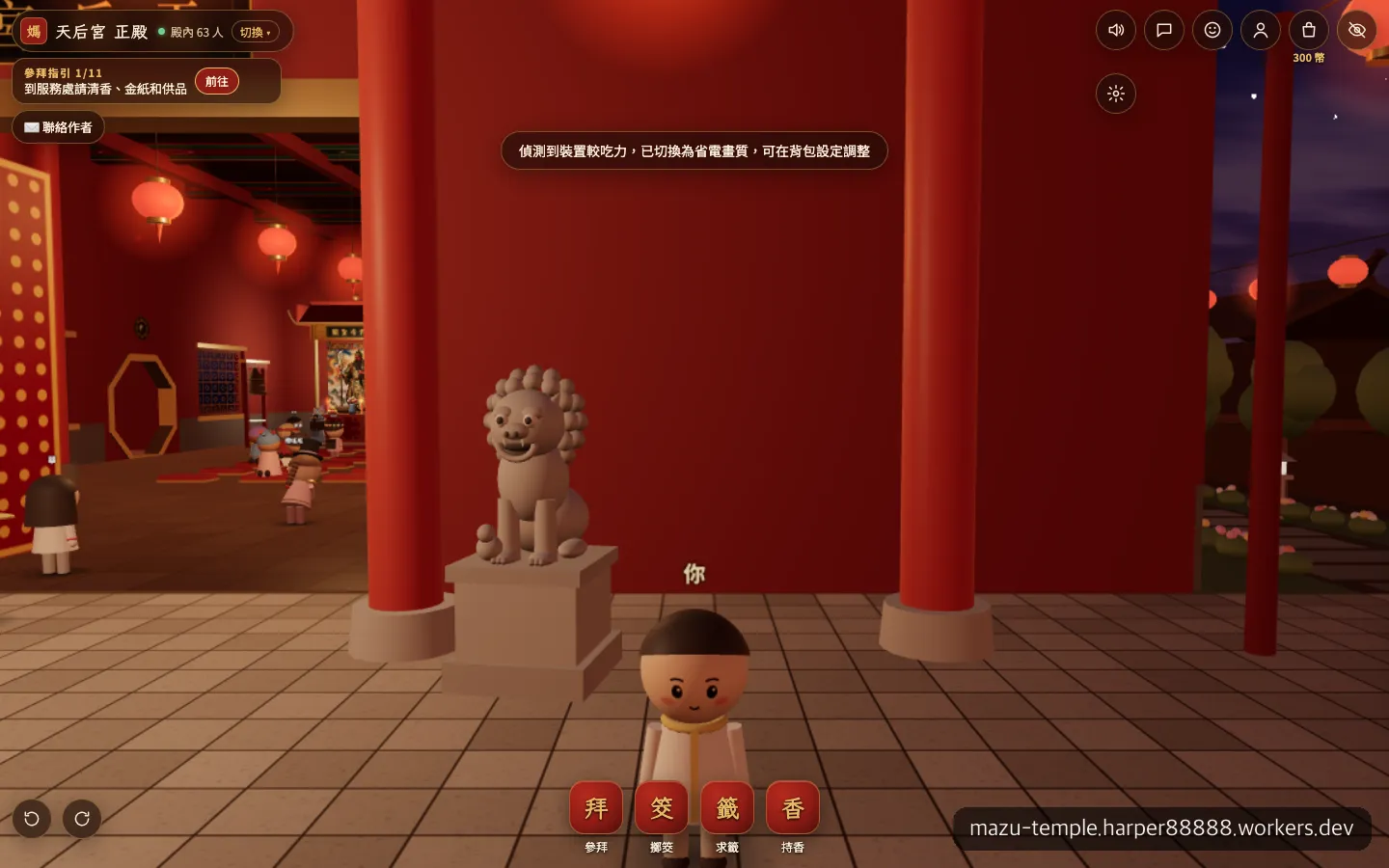
An online Mazu temple introduced as made by a Taiwanese user. It has a fortune button and a button to contact the creator.
How Do You Tell the Original from Similar Sites?
You cannot tell from the screen alone. A 3D space, a cute character, and a few buttons along the bottom are a template that anyone can now reproduce. The criteria lie outside the screen.
The first is the address. Sansa’s only official address is sansatemple.com, the one the developer’s Threads account points to. That is why the advice from a guide blog still holds: do not pick a similarly named site from search results, and type the address in yourself. Sansa is a place you enter without signing up, so a “Sansa” page that asks for a password or bank account information is reason enough for suspicion.
The second is whether the creator is visible. The Sansa developer has appeared in press interviews and on Threads himself, and Inpeace and the Mazu temple also say they were made by one person or leave a way to contact the creator. If you cannot tell who made a site at all, staying is fine, but it is better not to hand over money or personal information.
The third is whether the site has mechanics unique to its subject. Places that built new rules to fit their subject, such as the sauna’s temperature and course or the Mazu temple’s fortune casting, borrowed an idea to make something of their own. By contrast, if only the name and artwork changed and every action matches the original, that deserves a different view.
What Remains in an Era When Copying Is Easy
Sidae Ilbo traced the flood of similar spaces to the fact that AI now lets people build virtual spaces in a short time. The creator of Sansa himself was a job seeker who had graduated with an English literature degree, and GitHub has a publicly viewable repository for a 3D online chapel built with three.js. Putting up a single 3D temple hall is now the size of a weekend project.
The hard part comes after that. What drew so many people to Sansa in three days was not the graphics. Decisions such as removing conversation, letting only one person sit on a cushion, and having each visitor strike their own wooden block created the experience of being together without words. Those decisions do not carry over just because someone imitates the screen, since they are the marks of choosing what to leave out rather than what to put in.
So for anyone who wants to make something, the question Sansa leaves behind is closer to “What should I take out of my subject to put people at ease?” than “What should I copy?” If you are visiting Sansa for the first time, it is enough to type sansatemple.com into the address bar yourself, turn the sound on, and go find a cushion.
Frequently Asked Questions
Is Sansa free?
Yes. As of November 1, 2026, you can walk in and bow right away with no sign-up or payment. The “offering rice” is an optional donation to help with server costs, and the developer is changing the payment method.
Can I make a site like Sansa myself?
The creator said he built it through vibe coding, describing features to an AI himself, and there is public code such as the 3D chapel repository. But the harder part is not getting a space up. It is deciding what rules will put people at ease.
Sources 14
- 산사 공식 사이트
- “부장님 몰래 잠시 다녀 올게요”…서버 터졌다는 온라인 절 ‘산사’ (농민신문)
- "출근 전에 절 가서 108배"…하루 10만명 몰린 사찰 어디길래 (머니투데이)
- "덕분에 심신의 평화가"...온라인 사찰 하루 10만명 몰렸다 (시대일보)
- “말없이 쉬고 싶어서”…사흘간 60만명 찾은 온라인 절 ‘산사’ (세계일보)
- “방구석 누워 108배”…사흘간 60만명 다녀간 온라인 ‘산사’ 폭발적 호응 (디지털타임스)
- Finding peace, one click at a time: AI-made virtual sanctuaries draw young Koreans (The Korea Herald)
- "마음이 복잡할 땐 클릭하세요"…온라인 절·성당·교회 인기 (ZDNet Korea)
- 절하고 염주 굴리고…하루 만에 10만명 몰린 온라인 사찰 (한경비즈니스)
- 메타몽(@metamong.dev) 스레드 프로필
- 韓國正夯「虛擬寺廟」哪裡玩?網站連結、玩法一次看 (Marie Claire Taiwan)
- 사우나 고요, 온라인 사우나
- InPeace · Cathedral
- GitHub - SimonAipick/onlinechurch
AI helped with research and the first draft; the operator tried the subject firsthand, checked and edited this article before publishing. Let us know if you spot a mistake.