 EasyTicket
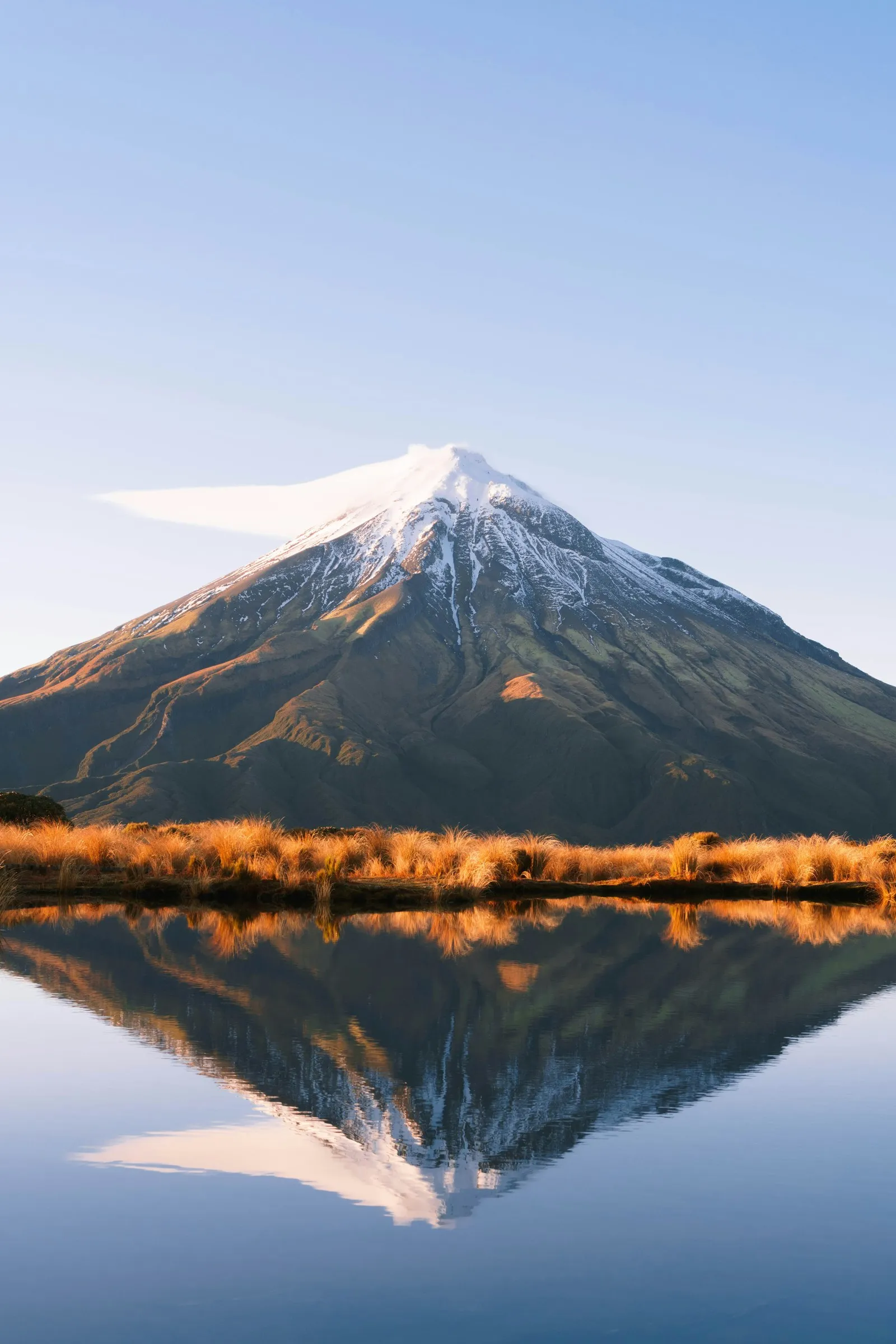
 When people think of Mount Fuji views, most picture Kawaguchiko to the north, but the Mount Fuji you see from Shizuoka in the south stands beyond the sea and a pine forest. It’s as close as 53 minutes from Tokyo Station on the Hikari shinkansen, with a one-way reserved seat in the standard car running ¥6,470, so it’s an easy pick if you want something other than another trip back to Tokyo.
Why Shizuoka Instead of Kawaguchiko?
If Kawaguchiko’s signature shot is the “upside-down Fuji” reflected in the lake, Shizuoka’s is a view where the sea, pine trees, and tea fields all stack up in front of Mount Fuji. Miho no Matsubara was registered together with Mount Fuji as a component asset when it became a UNESCO World Heritage site in 2013, so that postcard-like scenery has effectively been recognized as heritage in its own right.
Access is different too. From Tokyo, Kawaguchiko requires transferring to a bus or the Fujikyu Line, but Shizuoka Station is a stop on the Tokaido Shinkansen. That said, the Nozomi doesn’t stop at Shizuoka Station — you’ll need to take the Hikari (53 minutes at the shortest) or the Kodama (roughly 1 hour 20 minutes). Direct flights from Incheon to Mt. Fuji Shizuoka Airport are also running, so it’s possible to build a route that skips Tokyo altogether.
Mount Fuji’s outline tends to show up more clearly from late fall through early spring, when the air is clearer than in summer. Scheduling your viewpoint visit for early morning cuts down the odds of a cloudy no-show.
Nihondaira: A 360-Degree View from the Tea Field Hills
Nihondaira is a hill rising between downtown Shizuoka and Suruga Bay. Both sides of the road up the hill are lined with the green tea fields Shizuoka is known for, and from Nihondaira Yume Terrace at the top, Mount Fuji, Suruga Bay, and Miho no Matsubara all come into a single view.
Yume Terrace and Ropeway Info
Yume Terrace is free to enter. The observation corridor is open all day, and the exhibition hall runs 9:00–17:00 Sunday through Friday, extending to 21:00 on Saturdays (closed the second Tuesday of every month and around year-end). That makes Saturday evening the only real window if you want to catch the night view too.
The Nihondaira Ropeway, which runs down from the summit toward Kunozan Toshogu, charges a separate fare.
| Type | Adult | Child |
|---|---|---|
| Ropeway one-way | ¥700 | ¥350 |
| Ropeway round-trip | ¥1,250 | ¥630 |
| Round-trip + Kunozan Toshogu set | ¥1,750 | ¥830 (elementary) |
| Shizuoka Station ↔ Nihondaira bus (one-way) | ¥710 | — |
The ropeway runs 9:10–16:45 from Nihondaira Station (9:30–17:00 from Kunozan Station), so arriving too late in the afternoon means no round trip (source: Shizuoka Railway). I ended up reworking this stretch of the route twice trying to make the schedule work — since the bus from Shizuoka Station takes a bit over 45 minutes, it’s safer to catch it by 2:00 p.m. at the latest.
Miho no Matsubara: 30,000 Pine Trees and Mount Fuji
Miho no Matsubara is a pine-lined coast running along Suruga Bay. Step out onto the beach and you get Mount Fuji off to your left, with black sand and waves right at your feet.
Miho Shirube (the Miho no Matsubara Culture & Creativity Center) near the entrance is free to enter and open 9:00–16:30, every day of the year. Its rooftop doubles as a viewing area, so checking there first — before you head to the beach — to see whether Mount Fuji is visible that day can save you a wasted trip. The 173-space parking lot at Hagoromo Park just behind it is also free around the clock, so it’s no burden for anyone traveling by rental car either (source: Shizuoka City).
To get there, take a bus bound for Miho from JR Shimizu Station (about 25 minutes), get off at the ‘Miho no Matsubara Iriguchi’ stop, and walk about 15 minutes. Shizuoka Station to Shimizu Station is roughly 13 minutes by JR, so you can easily pair this with Nihondaira in a single day.
Sample One-Day Route (Car-Free)
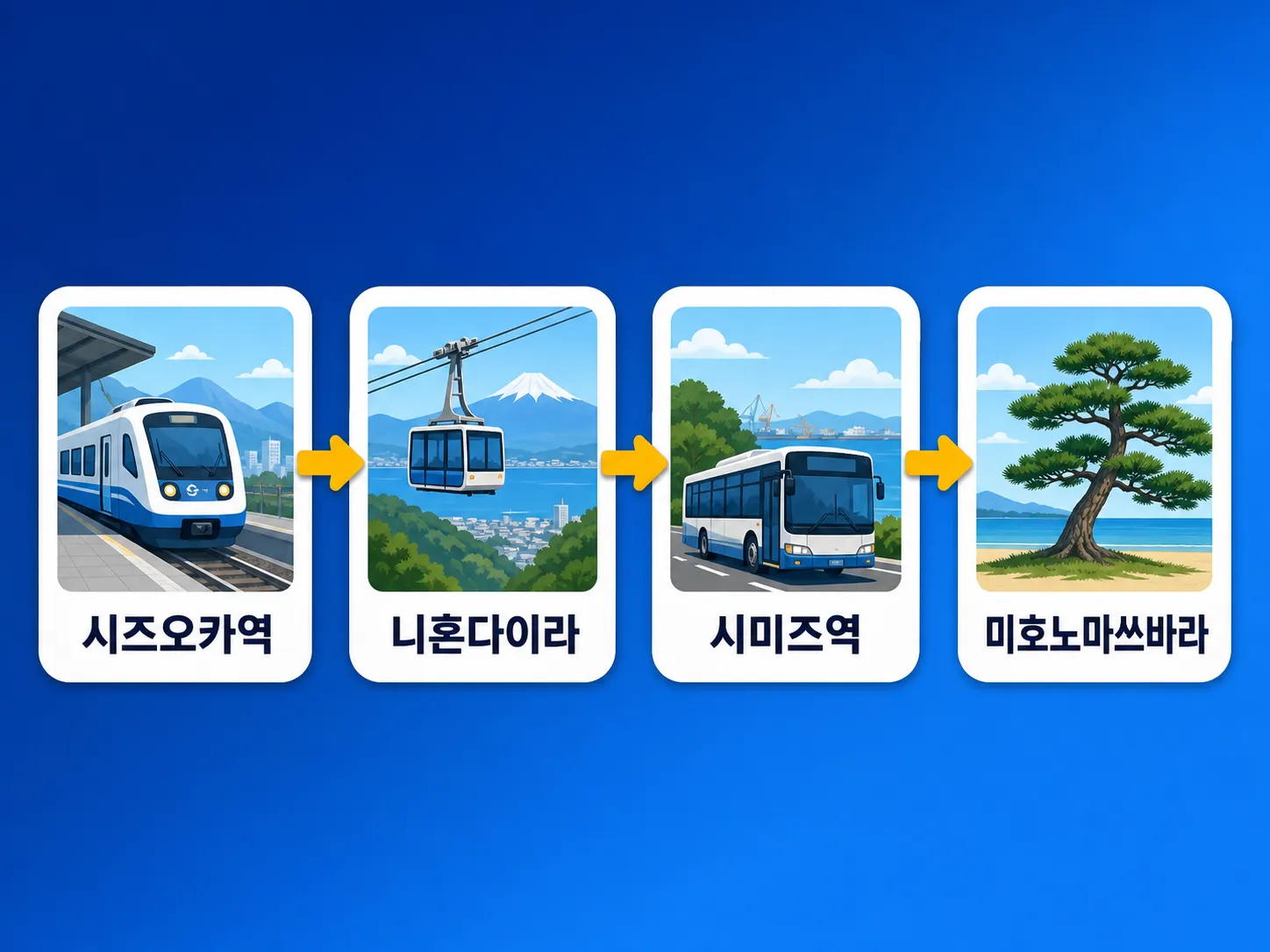
- 09:00 Arrive at Shizuoka Station → bus to Nihondaira from platform 11 (about 45 min, ¥710)
- 10:00 Nihondaira Yume Terrace observation corridor and a walk through the tea fields (free)
- 11:00 Ropeway round-trip (¥1,250) or the Kunozan Toshogu set (¥1,750)
- 13:30 Bus toward Shimizu → Shimizu Station
- 14:30 25-minute bus from Shimizu Station toward Miho → 15-minute walk from the Miho no Matsubara entrance stop
- 15:30 Miho Shirube and the beach (free)
- 17:00 Shimizu Station → Shizuoka Station (about 13 min by JR)
Book by the day before and there’s also a 1-day pass for ¥2,680 (junior high age and up) bundling the ropeway round-trip, Toshogu, and the bus together. It’s cash only, though, so if you’re planning to use this pass, bring yen in cash ahead of time.
💰 Trip Prep and Costs: Payment, Currency Exchange, and Connectivity
Shizuoka’s tourism infrastructure isn’t as dense as Tokyo’s, so how you prepare your payment methods can make or break the day. Here’s how it breaks down.
| Item | What to Prepare |
|---|---|
| City buses | Transit IC cards (Suica, Pasmo) and contactless payment both work. Top up in advance |
| Cash | The ropeway’s 1-day pass is cash only — bring small bills |
| Currency exchange | Bank-counter exchange often adds a fee of roughly ₩1.5–2 per yen, so exchanging online tends to work out cheaper |
| Travel card | Pay with a prepaid card like Travel Wallet or Travelog, and top up with cash from an ATM as needed |
| Connectivity | Install your eSIM by QR code before you leave — installing after you land requires Wi-Fi |
Add it all up, and the on-the-ground cost for this route runs about ¥3,000–4,000 per person (round-trip bus + round-trip ropeway + round-trip JR to Shimizu). With both viewing facilities free, the budget ends up smaller than you’d expect.
Pre-Departure Checklist
- Reserve a shinkansen seat (Hikari or Kodama) — the Nozomi doesn’t stop at Shizuoka
- Top up your IC card or have a contactless card ready
- For the 1-day pass, book by the day before and bring at least ¥2,680 in cash
- Install your eSIM before departure
- Check for any ropeway closures or maintenance notices
FAQ
Does the Nihondaira Ropeway Ever Close?
Some years it shuts down for a stretch, often around December, for equipment upgrades or inspections. Even when the ropeway isn’t running, the Yume Terrace observation corridor stays open, so just check the official operation notices before you go.
When Should I Go to Catch the Night View from Yume Terrace?
The exhibition hall stays open until 21:00 only on Saturdays. On weekdays and Sundays it closes at 17:00, which won’t line up with nightfall unless you’re visiting during a season with short days.
Can I See Both Nihondaira and Miho no Matsubara in One Day?
Yes. That said, the last ropeway ride (17:00 from Kunozan Station) can overlap with the Miho-bound bus schedule, so it’s less rushed if you put Nihondaira in the morning first.
What If I Can’t See Mount Fuji from Miho no Matsubara?
Clouds roll in fairly often, so the trick is checking from the Miho Shirube rooftop before heading out to the beach. Since admission is free, there’s no real loss in switching to the indoor exhibits on a day when the view isn’t cooperating.
Is It a Big Hassle Without a Rental Car?
Bus service isn’t as frequent as in Tokyo, but the routes are organized around Shizuoka Station and Shimizu Station as the two hubs, so it’s entirely manageable without a car. That said, saving the bus timetables ahead of time is pretty much essential.
It’s the same Mount Fuji, but where you stand changes the view completely. If a Mount Fuji framed by the sea and tea fields instead of a lake sounds appealing, work a day in Shizuoka into your next trip to Japan.
Image credits4
- 📷 Luke Galloway / Unsplash
- 📷 Yu / Unsplash
- 📷 Steve Sharp / Unsplash
- 📷 Sulthan Auliya / Unsplash