 EasyTicket
 If you missed the regular application, you can still file an after-deadline application through December 1, 2026. Keep in mind the payout drops to 95% of the assessed amount, and your Earned Income Tax Credit (EITC) payment date works out to within 4 months of your application date.
✅ 2026 EITC payment date: key schedule
The after-deadline application period runs from June 2 to December 1
Per the National Tax Service, the regular application period for 2025 income is May 1–June 1, 2026, and the after-deadline application period is June 2–December 1, 2026. Since the regular application deadline is June 1, after-deadline applications open the very next day.
Payment comes within 4 months of your application date
Regular applications are paid out by the end of September, while after-deadline applications are paid within 4 months of the application date. For example, if you apply in July, you should plan on receiving payment by November at the latest. You can check your exact status under Review Status Inquiry on Hometax.
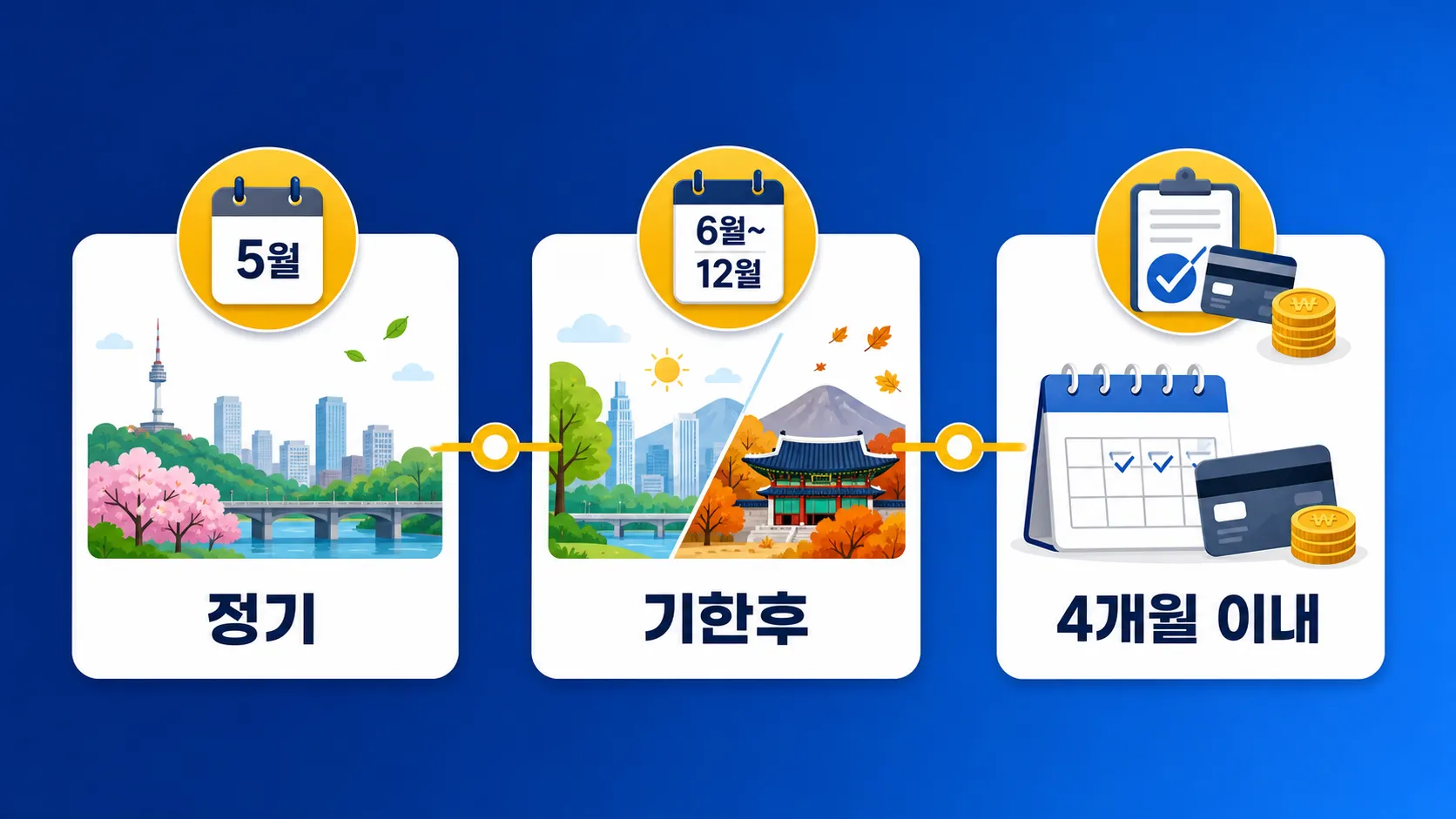
An after-deadline application is a way to “still get paid, even late” — but you only get 95% of the assessed amount, not the full amount. If you’re still eligible to apply, it’s better not to wait until December 1.
| Category | 2026 Schedule | Payment Timing |
|---|---|---|
| Regular application | May 1–June 1 | Paid by end of September |
| After-deadline application | June 2–December 1 | Within 4 months of application date |
| Biannual (1st half) | September 1–15 | Payment due by December 30 |
📌 EITC eligibility starts with your household type
The criteria differ for single-person, single-income, and double-income households
EITC eligibility first depends on your household type. A single-person household has no spouse, no dependent children under 18, and no dependent lineal ascendant (parent/grandparent) aged 70 or older. A single-income household is one where the spouse’s total earned income (or equivalent) is under KRW 3 million, or where there are dependent children or a dependent lineal ascendant aged 70 or older. A double-income household is one where both the applicant and spouse each have total earned income (or equivalent) of KRW 3 million or more.
Employees, freelancers, and multi-job earners need to look at combined income
The 2026 application is assessed based on annual income for 2025. It’s relatively straightforward for employees with only wage income, but for freelancers and multi-job earners, business income, other income, and interest/dividend/pension income can all factor into the total income calculation. If you’re a younger applicant, income thresholds tend to overlap across benefits, so it’s worth also checking Youth Welfare Points eligibility.
💰 Comparing income and asset thresholds
The total income threshold varies by household type
Your household’s combined annual total income for 2025 must fall under the thresholds below. That’s under KRW 22 million for single-person households, under KRW 32 million for single-income households, and under KRW 44 million for double-income households. The maximum benefit amounts are KRW 1.65 million, KRW 2.85 million, and KRW 3.3 million, respectively.
| Household type | Total income threshold | Maximum benefit |
|---|---|---|
| Single-person household | Under KRW 22 million | KRW 1.65 million |
| Single-income household | Under KRW 32 million | KRW 2.85 million |
| Double-income household | Under KRW 44 million | KRW 3.3 million |
Assets are assessed as of June 1, 2025
The combined assets of all household members — housing, land, buildings, deposits, and so on — must total under KRW 240 million. If total assets are KRW 170 million or more but under KRW 240 million, you only receive 50% of the assessed amount. It’s also easy to miss that debt is not subtracted from your asset value.
🔍 How to file an after-deadline application, and what you’ll need
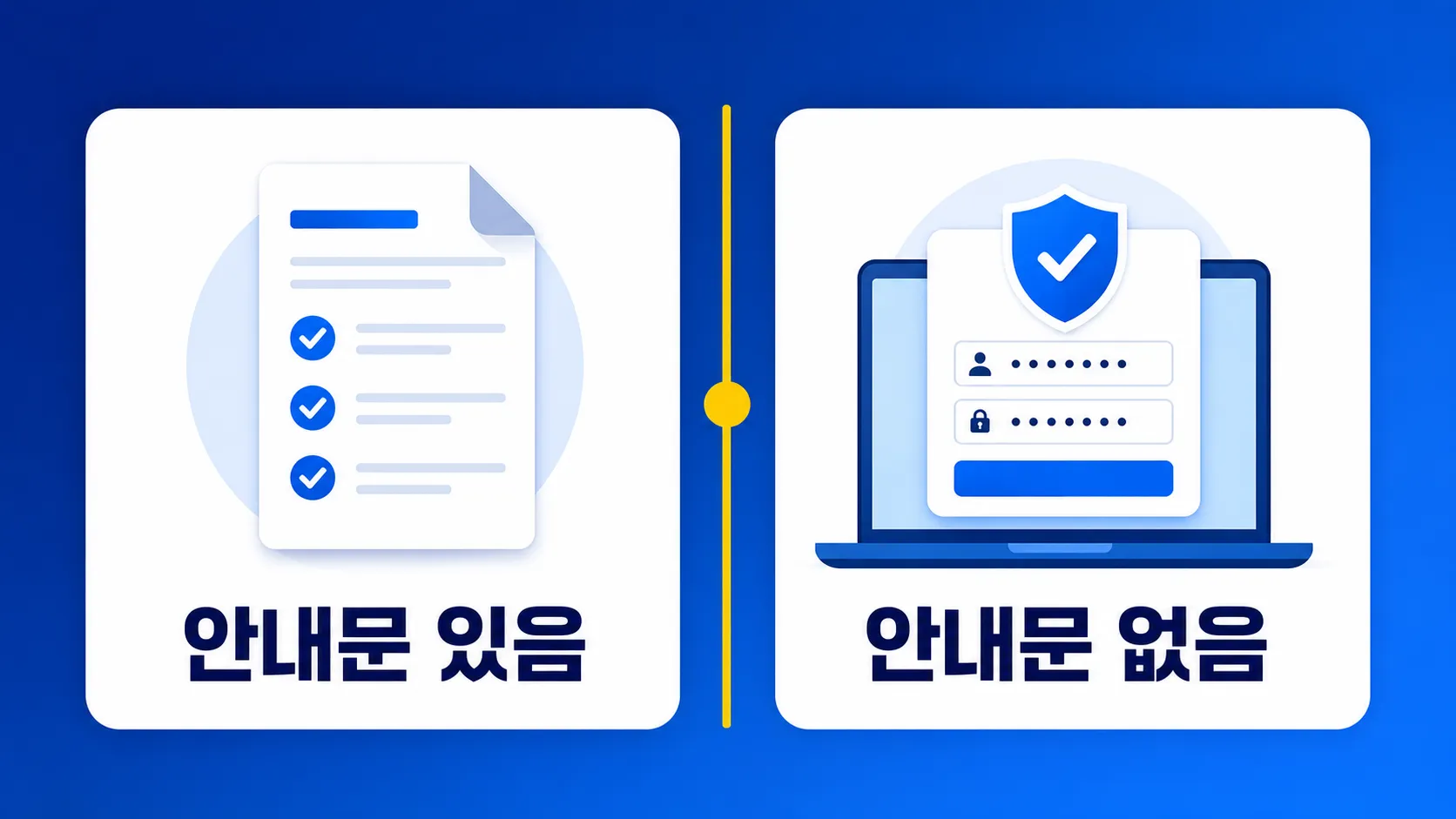
If you received a notice, you can apply quickly using your verification number
If you received an application notice, you can apply via ARS at 1544-9944, through Hometax (mobile or PC), or via the QR code on the notice. Hometax service hours are 6:00 AM–midnight (06:00–24:00). Entering your contact information and refund account correctly helps avoid payment delays.
You can still file a Direct Input Application even without a notice
Not receiving a notice isn’t a reason to give up right away. After identity verification on Hometax, you can check your household member details and income data and file through “Direct Input Application.” That said, without a notice, you’ll need to check the income and asset requirements more carefully yourself.
⚠️ Payment reductions and things to watch for
After-deadline applications are paid at 95% of the assessed amount
Even if you missed the regular application, you can still file — but an after-deadline application only pays out 95% of the credit. On top of that, if your total assets are KRW 170 million or more, the 50% reduction may apply first. In other words, the “95% for after-deadline” and “50% for assets” reductions need to be checked separately.
Unpaid taxes and false applications also affect your payout
If you have delinquent taxes, up to 30% of your refund amount can be applied toward that debt. A false application can lead to clawback of the payment, additional tax penalties, and even restrictions on future applications — so it’s important that your income data checks out. Living-expense support programs have their own separate requirements too, like Energy Voucher eligibility, which is worth checking on its own terms.
📋 Checklist for employees, freelancers, and multi-job earners
Employees should check the KRW 5 million average monthly wage exception
Among regular employees who are continuously employed as of December 31, 2025, anyone with average monthly earned income of KRW 5 million or more may be excluded specifically from the EITC application. Daily workers are not subject to this exception.
Freelancers and multi-job earners should break down their total income
When earned income, business income, and other income are mixed together, “total earned income (or equivalent)” and “total income” are calculated differently. In the National Tax Service’s credit review, business income isn’t counted at its full gross amount — an industry-specific adjustment rate is applied instead.
- I’ve confirmed which category my 2025 income falls under
- I’ve identified my household type — single-person, single-income, or double-income
- I’ve checked whether my assets as of June 1, 2025 are under KRW 240 million
- I’ve entered my refund account and contact information with up-to-date details
- I’ve factored in the 95% reduction for after-deadline applications
🎯 FAQ
If I file an after-deadline application on December 1, when will I get paid?
After-deadline applications are paid within 4 months of the application date. If you apply on December 1, 2026, the maximum payment deadline — after review — would be around April 1, 2027.
If I didn’t get a regular application notice, does that mean I’m not eligible?
No. The notice is just a convenience for applying — you can still verify your identity on Hometax and file a Direct Input Application. That said, you’ll need to confirm on your own whether you meet the income and asset requirements.
I’m applying in 2026 — why does it look at my 2025 income?
Both regular and after-deadline applications are assessed based on annual income for 2025. Assets are also assessed based on the combined household assets as of June 1, 2025.
Is there a quick way to just check my EITC payment date?
You can check Review Status Inquiry under the credit application menu on Hometax. Once you’ve filed, the fastest way to stay on top of it is to track your application date, review status, and payment progress together in one place.
If you missed the regular application, what to do next isn’t complicated. Just make sure to file an after-deadline application before December 1, 2026, confirm your household type, income, and assets, and register your refund account. Mark your calendar using the rule that your EITC payment date falls “within 4 months of your application date,” and you won’t miss it.