 EasyTicket
 If you’re a salaried worker without a home who’s preparing to buy your first place, there are really only two real estate policy changes you need to check right now. ① You can borrow less money (lending restrictions), and ② the tax clock on selling has ticked past a deadline (the grace period on the multi-home transfer tax surcharge has ended). Mortgages in regulated areas are now capped twice over — by a 40% LTV ratio and by price-tier limits (600 million/400 million/200 million won) — and the grace period exempting multiple homeowners from the transfer tax surcharge ended on May 9, 2026. Let’s break it down below in order: loans, taxes, then housing subscriptions.
Real Estate Policy Changes at a Glance
Let’s start with the big picture in table form. I’ve ordered it by how much of an impact each change has for genuine end-users.
| Category | What changed | Effective |
|---|---|---|
| Mortgage LTV | Regulated areas 70% → 40% (60% for low- to middle-income/genuine end-user buyers, 60% for Bogeumjari Loan apartments) | From Oct 16, 2025 |
| Mortgage amount cap | 600 million won for homes up to 1.5 billion won, 400 million won for 1.5–2.5 billion won, 200 million won above 2.5 billion won | From Oct 16, 2025 |
| DSR | 40% at banks, 50% at second-tier lenders / 60% DTI for the Didimdol Loan | In effect |
| Jeonse loans | DSR now applies to jeonse loans for one-home owners in the Seoul metro area/regulated areas; guarantee ratio cut from 90% to 80% | From Oct 29, 2025 |
| Real-residence requirement | 2 years of actual residence required when buying in a land-transaction permit zone | For contracts from Oct 20, 2025 |
| Transfer tax | Grace period for the multi-home surcharge has ended (+20 percentage points for 2 homes, +30pp for 3+ homes) | Ended May 9, 2026 |
| Bank regulation | Minimum mortgage risk weight raised from 15% → 20% | From Jan 1, 2026 |
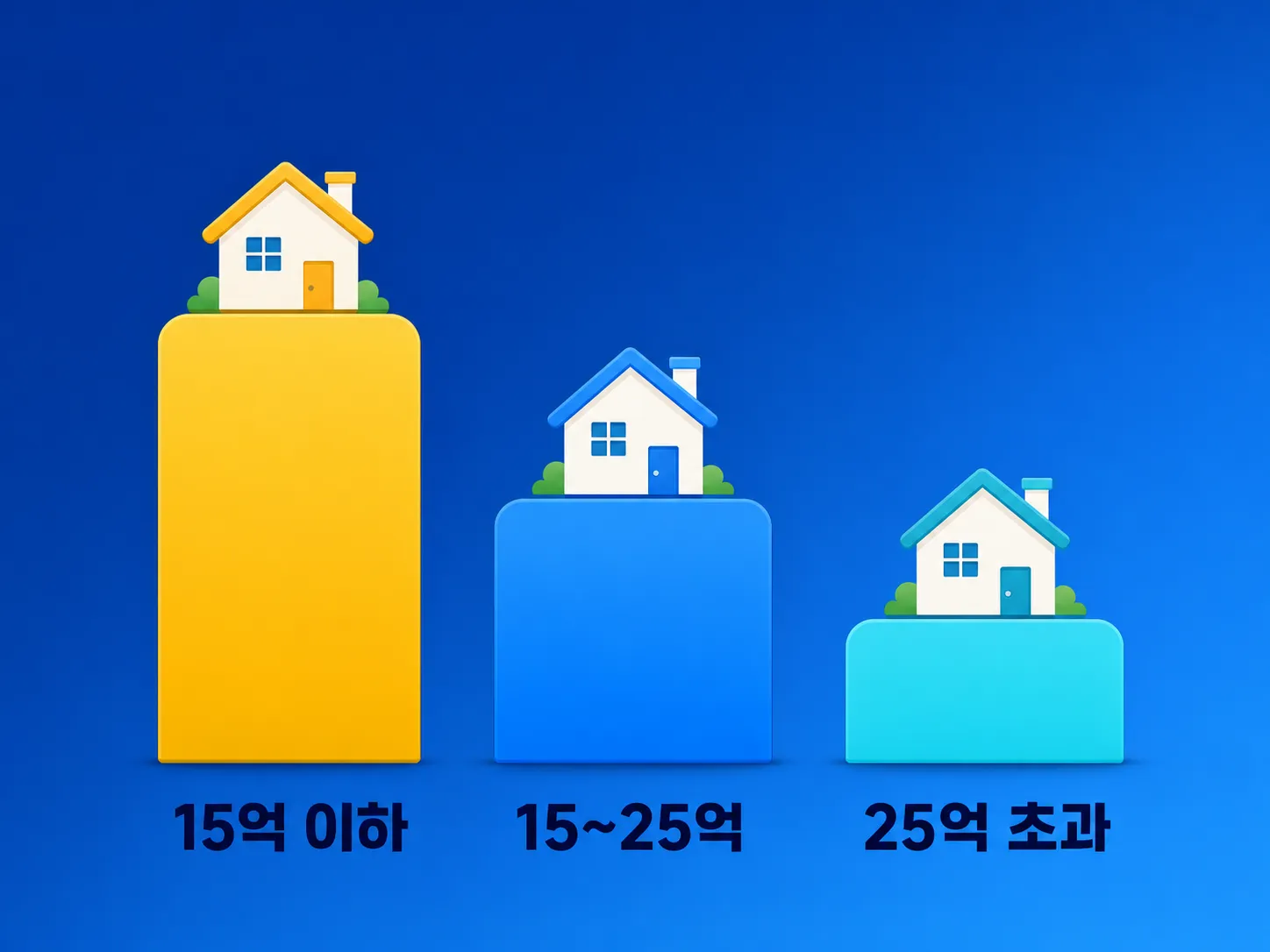
Lending Restrictions: Your Limit Gets Capped Twice
The biggest change is in lending restrictions. In regulated areas, both the LTV ratio and the amount cap apply at the same time, so whichever gives the lower figure becomes your actual limit.
What an LTV of 40% Actually Means
Last year’s October 15 measures cut the LTV ratio in regulated areas from 70% to 40%. For a 1 billion won apartment, that means the old math of borrowing up to 700 million won now tops out at 400 million won. If you qualify as a low- to middle-income or genuine end-user buyer, though, 60% still applies — and the same 60% applies to Bogeumjari Loan apartments (source: Financial Services Commission).
Two Thresholds: 1.5 Billion and 2.5 Billion Won
On top of that, there’s another layer: an amount cap. It’s 600 million won for homes priced at 1.5 billion won or below, 400 million won for homes between 1.5 and 2.5 billion won, and 200 million won for homes above 2.5 billion won. For a 2 billion won home, 40% LTV would allow 800 million won, but the tier cap of 400 million won kicks in first, so 400 million won ends up being your final limit. I ran the numbers on this calculator more than a few times myself, and once you remember the rule — “whichever is lower” — it gets a lot less confusing.
The Third Wall: DSR, Set by Your Income
Even if you clear both of those, there’s still DSR (40% at banks, 50% at second-tier lenders) to get past. The Didimdol Loan, a policy loan product, uses a 60% DTI instead. In short, your actual borrowing capacity gets trimmed three times over — by home price, then by the tier cap, then by your income.
The regulated areas / land-transaction permit zones cover all of Seoul plus 12 areas in Gyeonggi Province (Gwacheon, Gwangmyeong, Seongnam’s Bundang, Sujeong, and Jungwon districts; Suwon’s Yeongtong, Jangan, and Paldal districts; Anyang’s Dongan district; Yongin’s Suji district; Uiwang; and Hanam). Buy a home in these areas and you’re bound by a 2-year real-residence requirement, which rules out buying with a sitting tenant’s jeonse deposit.
Don’t Miss the Changes to Jeonse Loans, Either
One thing that surprised me while digging through this — it’s not just home-purchase loans that got tightened. Jeonse loans did too.
- DSR now applies to one-home owners’ jeonse loans: In the Seoul metro area and other regulated areas, the interest portion of a jeonse loan taken out by someone who already owns one home now counts toward that tenant’s DSR (effective October 29, 2025).
- Lower guarantee ratio: The guarantee ratio for jeonse loans in the Seoul metro area and regulated areas dropped from 90% to 80%, making bank screening stricter.
- Recall on purchase: If you buy an apartment priced above 300 million won in an overheated speculation district or similar zone, any existing jeonse loan on it gets recalled on the date ownership transfers (with a grace period if the tenant’s lease still has time left).
- Tighter rules on bank soundness: From January 1, 2026, the minimum risk weight on mortgage loans rose from 15% to 20%, and from July 1, banks were banned from folding statutory costs — like contributions to guarantee funds — into their add-on interest rates.
If your plan is to live in jeonse a while longer to save up funds, don’t estimate your jeonse loan limit using the old rules — look it up fresh.
Tax Changes: May 9 Was the Turning Point

Transfer Tax — the Multi-Home Surcharge Grace Period Ends
The grace period on capital gains tax surcharges for multiple homeowners, which had been running since May 10, 2022, ended on schedule on May 9, 2026. When selling a home in an adjustment target area, owners of two homes now pay the base rate +20 percentage points, and owners of three or more homes pay the base rate +30 percentage points (source: National Tax Service).
There is a cushion, though. If you applied for land-transaction permission by May 9, 2026, got it, signed a sales contract, and then transfer the property within a set window from the contract date, you can get an additional grace period. For homes in Gangnam, Seocho, Songpa, and Yongsan, that window is 4 months (until September 9, 2026); for homes in areas newly designated as adjustment target areas on October 16, 2025, it’s 6 months (until November 9, 2026). This doesn’t directly apply if you don’t own a home, but it’s the schedule that determines when listings hit the market, so it’s worth knowing for negotiating.
Acquisition Tax — a Break Worth Claiming for First-Time Buyers
If this is your very first home, acquisition tax has good news for you. First-time buyers can get an acquisition tax reduction of up to 2 million won, with no restrictions on home price or annual income. Also, the surcharge-exemption threshold for low-priced homes outside the Seoul metro area was eased — from an officially assessed price of 100 million won to 200 million won — so homes at or below that threshold get the base rate (1%). On the flip side, multiple homeowners face a surcharge: 8% starting from a third home outside adjustment target areas, and 12% on gifted homes with an officially assessed price of 300 million won or more inside adjustment target areas. It’s safest to double-check your own rate on Wetax or with your local government office before signing a contract.
Housing Subscriptions and Policy Loans: What’s Still on the Table for Non-Homeowners
Lending got tighter, but the door stayed open for genuine end-user buyers who don’t yet own a home.
- No-priority subscription lottery (for leftover units, not tied to the usual priority ranking): Eligibility is now limited to non-homeowners, and the real-residence verification process was tightened too, so you’re no longer competing against people who already own a home.
- Higher threshold for “non-homeowner” status: The reference price for small, low-cost homes rose from 130 million won to 160 million won in the Seoul metro area, and from 80 million won to 100 million won outside it — so owning a home under that price still counts as “non-homeowner” status for subscription purposes.
- Didimdol Loan: For couples with combined annual income up to 85 million won, the cap is 150 million won (200 million won for first-time buyers), at an interest rate of roughly 2.45–3.55% per year.
- Beotimmok Jeonse Loan: The cap is 120 million won in the Seoul metro area and 80 million won outside it, and income requirements for newlyweds have been eased.
Even in a regulated area, a 60% LTV applies if you qualify as a low- to middle-income or genuine end-user buyer. When you’re putting together your financing plan after winning a subscription, that could mean working from 60% instead of 40% — so check whether you meet the requirements first.
Checklist Before You Buy Your First Home
Before signing on the dotted line, here’s the order I’d check things in.
- Check whether the property is in a regulated area or land-transaction permit zone (2-year real residence required if so)
- Calculate your limit using whichever is lower — LTV (40%/60%) or the tier cap (600M/400M/200M won)
- Get a pre-check from your bank on whether you clear 40% DSR based on your income
- If you have an existing jeonse loan, check whether it’s subject to recall upon purchase
- Check whether you qualify for the 2-million-won first-time-buyer acquisition tax reduction
- If you’re preparing for a subscription, recheck the non-homeowner threshold (160 million won in the Seoul metro area)
- Compare your income against the requirements for policy loans like Didimdol and Beotimmok
Frequently Asked Questions
I signed my contract before the area was designated as regulated — do the old lending rules apply to me?
The mortgage cap rules took effect on October 16, 2025. The old rules only apply if you signed the sales contract and paid the down payment by the day before, October 15. Your contract date and the record of the down-payment transfer serve as proof, so keep those documents safe.
Is buying with a sitting tenant’s jeonse deposit (gap investment) no longer possible?
In all of Seoul and the 12 areas of Gyeonggi Province designated as land-transaction permit zones, buying a home comes with a 2-year real-residence requirement. Since you have to move in yourself after paying the balance, gap investment — buying with a tenant’s jeonse deposit — is effectively blocked.
Now that the transfer tax surcharge grace period has ended, could more listings come onto the market?
Properties for which land-transaction permission was applied for by May 9, 2026 get an additional grace period if transferred within 4 months for the Gangnam 4 districts (by September 9) or 6 months for newly designated adjustment target areas (by November 9). Listings could come onto the market as owners settle up ahead of those deadlines, so it’s worth watching how the second half of the year plays out.
Does a high income disqualify me from the first-time-buyer acquisition tax reduction?
Right now, first-time buyers can get a reduction of up to 2 million won with no restrictions on home price or annual income. That said, there are follow-up requirements — like applying for the reduction and actually living in the home — so check the guidance from your local government office.
Subscription or a direct purchase — which makes more sense right now?
Since loan limits have shrunk, you need a bigger share of your own funds. That said, some subscription thresholds have come down — like the higher non-homeowner cutoff and the no-priority lottery now being limited to non-homeowners — so if you’re short on funds, it’s more realistic to pursue a subscription in parallel and buy yourself more time to prepare.
In the end, the heart of these real estate policy changes comes down to one sentence: “you can borrow less than before.” If you leave your financing plan built on the old math, you’re likely to come up short when it’s time to pay the balance. Just running a limit check on your banking app and an acquisition tax calculation on Wetax today will make your next steps a lot clearer.
Sources
- Financial Services Commission – FAQ on the “10.15 Housing Market Stabilization Measures”
- Korea Policy Briefing – May 9: Grace Period on Multi-Home Capital Gains Tax Surcharge Ends (National Tax Service)
- Financial Services Commission – Financial System Changes for the New Year 2026
- Financial Services Commission – Loan Demand Management Measures for Housing Market Stabilization
- Korea Policy Briefing – No-Priority Subscription Limited to “Non-Homeowners”… Real-Residence Verification Also Strengthened
- Korea Policy Briefing – First-Time Homebuyers Can Get Up to 2 Million Won Off Acquisition Tax
- Korea Policy Briefing – Acquisition Tax Surcharge Threshold for Low-Priced Regional Homes Eased (100 Million → 200 Million Won)
- Korea Housing Finance Corporation – Didimdol Loan Product Overview
- Housing and Urban Fund – Didimdol/Beotimmok Loan Interest Rate Adjustments and Preferential Rate Improvements