 EasyTicket
 The basic duty-free allowance for overseas travel is US$800, with separate limits for alcohol, tobacco, and perfume. EasyTicket reviewed the key customs declaration points based on the Korea Customs Service’s 2026 guidelines.
✅ Duty-Free Allowance Basics: It Starts at $800
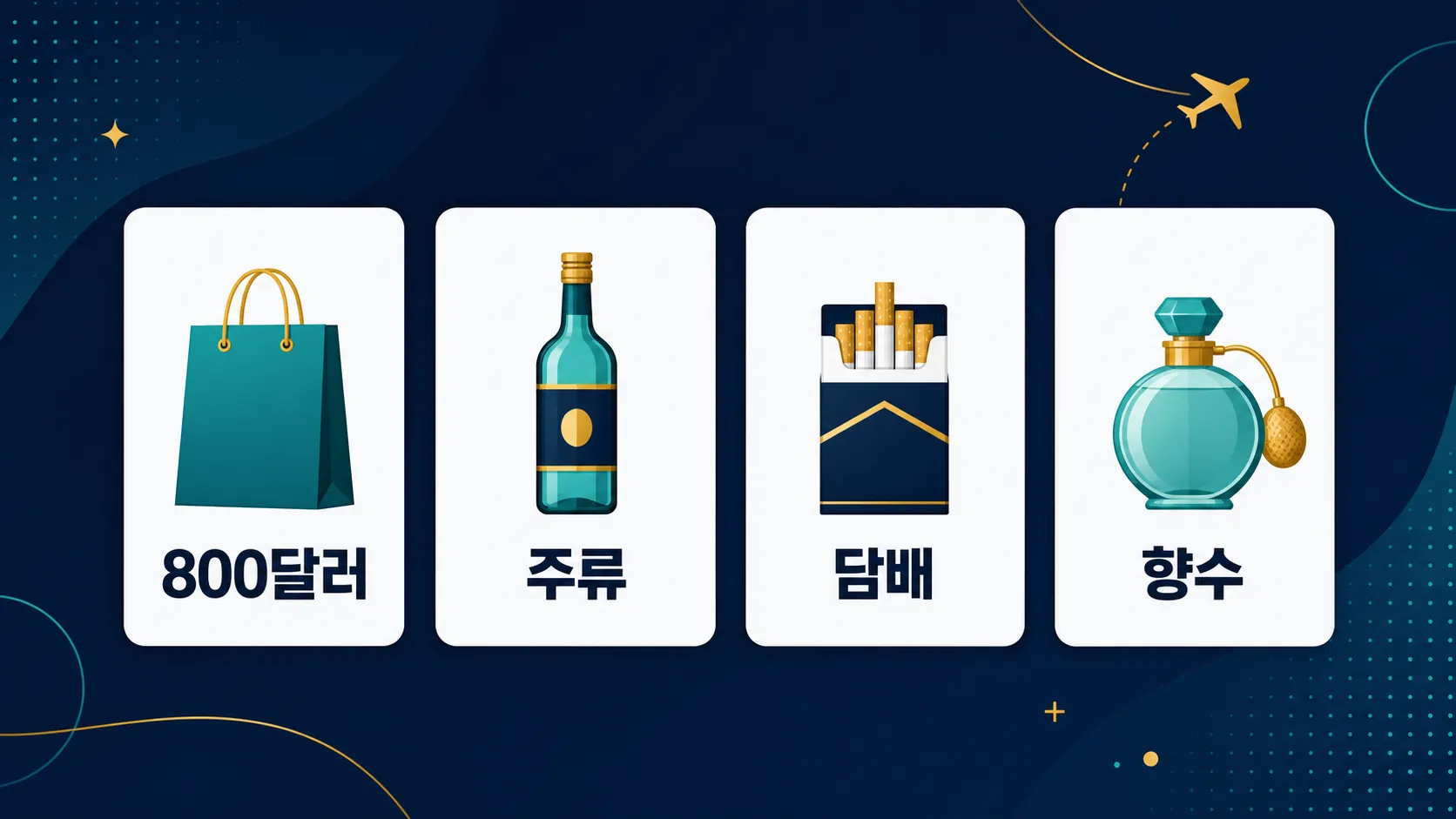
The Basic Allowance Is $800 Per Traveler
Items you bought overseas, at downtown duty-free shops, at departure-area duty-free shops, and at arrival-area duty-free shops are all added together when you enter the country. The basic duty-free allowance for a traveler’s personal belongings is a combined dutiable value of US$800 or less (source: Korea Customs Service).
Alcohol, Tobacco, and Perfume Have Separate Limits
The limits for alcohol and tobacco are separate from the $800 allowance. Alcohol is capped at a total of 2L or less with a combined value of $400 or less, filtered cigarettes at 200 sticks, and perfume at 100ml. Travelers under age 19 have no duty-free allowance for alcohol or tobacco.
| Category | Duty-Free Limit |
|---|---|
| General items | US$800 or less |
| Alcohol | 2L or less total + $400 or less total |
| Filtered cigarettes | 200 sticks |
| E-cigarette nicotine liquid | 20ml, under 1% nicotine |
| Perfume | 100ml |
📌 Comparing Duty-Free Purchases: Everywhere You Bought It Counts Together
What Matters Is the Total at Entry, Not Where You Bought It
Buying something at a duty-free shop doesn’t automatically make it duty-free. The system looks at whether your combined purchases from overseas stores, downtown duty-free shops, departure-area duty-free shops, and arrival-area duty-free shops exceed $800. If you’re shopping on a business trip or vacation, sorting your receipts by place of purchase makes customs declaration much faster.
Arrival-Area Duty-Free Shops Also Have an $800 Purchase Limit
At arrival-area duty-free shops, you can buy items other than alcohol and perfume up to US$800. Alcohol and perfume can be purchased additionally within their own separate allowances, and purchases at arrival-area duty-free shops are combined with your overseas purchases for tax purposes (source: Korea Customs Service).
When buying a single high-priced item, like a designer bag, it’s smarter to calculate whether you’ll be over $800 at entry first, rather than just checking off “payment completed at the duty-free shop.”
💡 How to Make a Customs Declaration: If You Have Something to Declare, Submit It Right Away
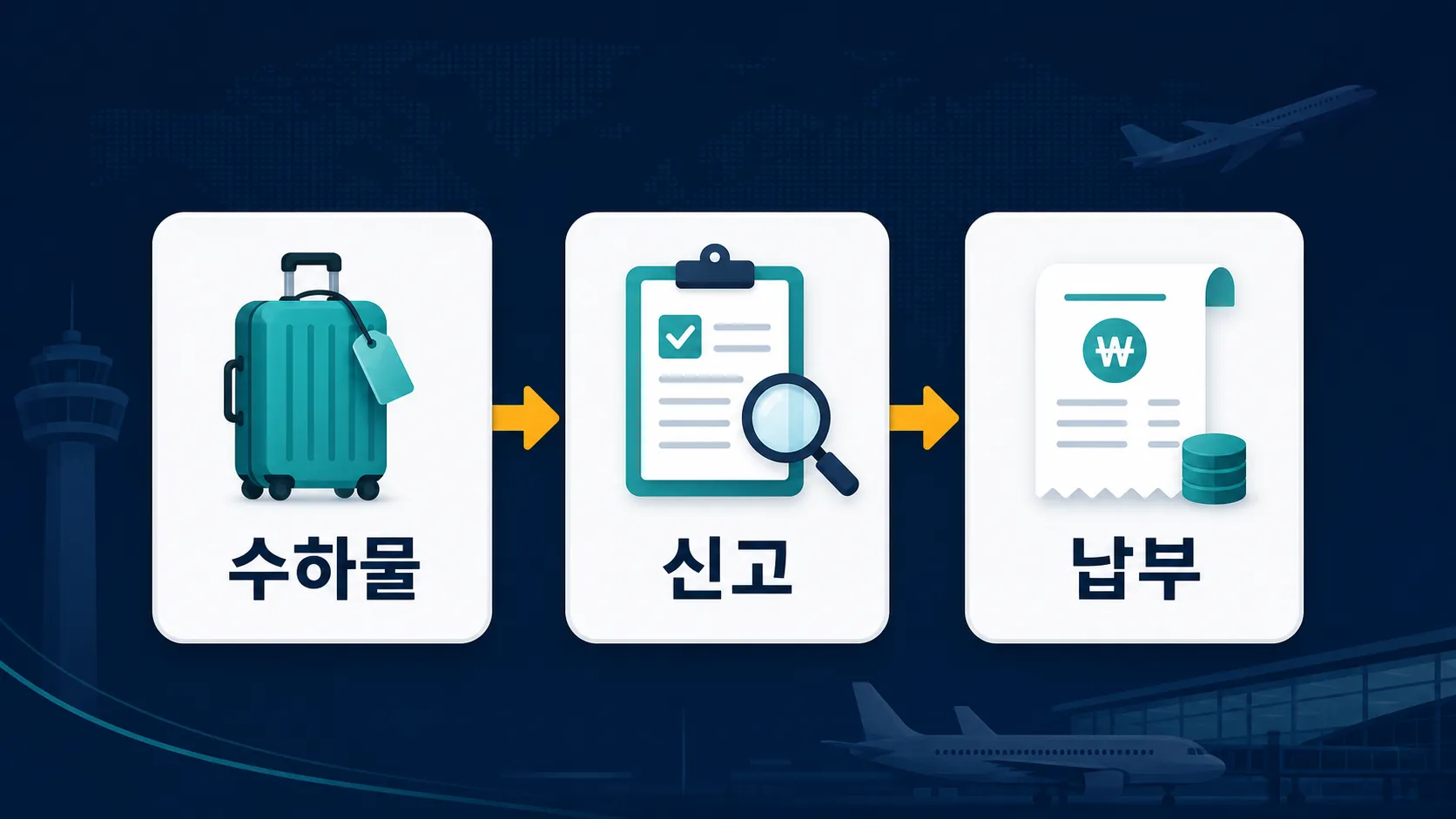
It’s Not Just Items Over $800 That Need Declaring
Items requiring customs declaration aren’t limited to goods over the duty-free allowance — they also include company samples, repair tools, and commercial goods, plants, animals, and food products, items that infringe intellectual property rights, and goods subject to import restrictions. Means of payment exceeding US$10,000 must also be declared.
Use Either the Mobile App or a Paper Declaration
If you have items to declare, collect your baggage after entering the country and submit a customs declaration form. Filing a voluntary declaration through the mobile app lets you receive and pay a mobile notice of assessment. If you have nothing to declare, you can skip the form and use the “nothing to declare” channel, though you may still be selected for a customs inspection.
⚠️ Pros and Cons of Voluntary Declaration: Much Better Than Not Declaring
Voluntary Declaration Cuts Your Duty by 30%
If you’ve gone over the duty-free allowance, declaring is better than hiding it. According to Korea Customs Service guidelines, a voluntary declaration reduces your duty by 30%. If you did some high-value shopping, it’s more realistic to think of customs declaration as a way to cut costs.
Getting Caught Without Declaring Adds a Penalty
If you’re caught not declaring, a penalty of 40% is added to the tax you owe. If you’re caught two or more times within two years, it rises to as much as 60%. Rather than assuming “it’s only a little over, it’ll be fine,” it’s better to do the math against your receipts first.
📋 A Recommended Pre-Shopping Checklist for Working Travelers
Keep Your Receipts and Card Statements Together
If you don’t have much time to shop during your trip, it’s easy for the math to get tangled up on the flight home. To judge your duty-free allowance, keep the price, place of purchase, and currency of each item together on one screen.
- Checked whether the total for general items exceeds $800
- Checked the alcohol limit of 2L / $400 separately
- Checked the limits of 200 cigarettes and 100ml of perfume
- Separated out company samples and bulk gift purchases
- Checked whether I have any food, fruit, plant, or animal products
For Agricultural, Livestock, and Fishery Products, Check Weight and Value Too
For agricultural, livestock, and fishery products, the guidelines also cover limits of 5kg per item, 40kg in total, and a combined overseas purchase value of 100,000 won or less. For items that may be restricted, such as jerky, fruit, seeds, or herbal medicine ingredients, don’t just check the duty-free value — check whether you’re allowed to bring them in at all.
🔍 Entry Declaration FAQ
If a Designer Bag Costs $900, Is the Whole Amount Taxed?
The basic structure deducts the $800 duty-free allowance and taxes only the amount over that. That said, tax rates can vary by item category, so for a high-priced item like a $900 bag, it’s cleanest to handle it through a customs declaration.
Can Family Members Combine Their Duty-Free Allowances?
The key point is that the duty-free allowance is calculated per traveler. It’s risky to assume you can split one expensive item bought by one person across several people’s allowances. Organize your declaration based on what each individual purchased and is bringing in.
Does Buying 2 Bottles of Liquor Automatically Mean Duty-Free?
You can’t just look at the number of bottles. Alcohol has to meet both conditions at once: a total volume of 2L or less and a total value of $400 or less. Also keep in mind that minors have no duty-free allowance for alcohol at all.
🎯 Conclusion: Just Remember 3 Things Before You Shop
Duty-free limits and customs declaration might look complicated, but the standards are simple: $800 for general items, separate limits for alcohol, tobacco, and perfume, and a voluntary declaration if you go over. Sort your receipts just once before you land, and you won’t be caught off guard even while standing in line at the airport.